Role of AI in eCommerce in 2026: How AI makes shopping smarter and faster
Published: 14 Nov 2026
Understanding the role of AI in eCommerce means knowing how smart technology is changing online shopping.
I’ve seen it make shopping faster, smarter, and more personal. AI helps businesses understand what customers want, suggest products, manage inventory, and prevent fraud. It also helps buyers find the right products quickly and enjoy smoother transactions.
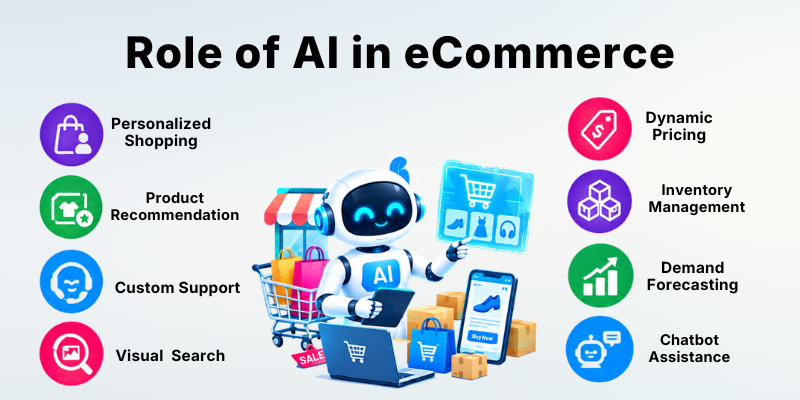
In this guide, I’ll explain how AI is transforming eCommerce and improving the experience for both sellers and shoppers.
Influence of AI in eCommerce
Here are 20 unique roles of AI in eCommerce that are reshaping online shopping:
- Personalized Shopping
- Product Recommendation
- Customer Support
- Visual Search
- Dynamic Pricing
- Inventory Management
- Demand Forecasting
- Chatbot Assistance
- Customer Behavior Analysis
- Fraud Detection
- Voice Search Optimization
- Marketing Automation
- Return Management
- Sentiment Analysis
- Order Tracking
- Supply Chain Optimization
- Customer Retention
- Upselling and Cross Selling
- Review Analysis
- Virtual Try On
Let’s go through each use case of AI in e-commerce.
1. Personalized Shopping
I always enjoy it when an online store seems to know what I want. AI studies my past searches, clicks, and purchases to understand my preferences. It shows products I’m likely to buy without me searching too much. This saves time and makes shopping more fun. For businesses, it builds trust and encourages repeat purchases. Personalized shopping makes every visit feel unique and relevant.
Benefits:
- Shows products that match your style.
- Saves time while browsing.
- Builds stronger customer loyalty.
Example: Amazon recommends products based on your previous purchases.
2. Product Recommendation
AI checks what other shoppers like me are buying and suggests items I may want. I find it helpful because it introduces me to products I didn’t know about. It makes shopping easier and more enjoyable. Sellers can increase sales without pushing products aggressively. It also improves overall user engagement. Recommendations feel like a personal assistant guiding me.
Benefits:
- Increases cart size naturally.
- Improves customer engagement.
- Promotes related products effectively.
Example: Netflix suggests shows based on your viewing habits.
3. Customer Support
I love how AI chatbots provide instant answers. They can solve simple problems, answer FAQs, and guide me during checkout. I don’t have to wait for a human agent. This makes the experience smooth and stress free. Businesses save time and reduce support costs. Chatbots handle repetitive tasks while humans focus on complex issues.
Benefits:
- Offers 24/7 support.
- Reduces waiting time.
- Increases customer satisfaction.
Example: Shopify stores use AI chatbots to answer customer queries.
4. Visual Search
Sometimes I just have a picture of a product but don’t know its name. AI can identify the product and show me similar items online. It checks patterns, colors, and designs to find matches. This makes searching easier and faster. I can find exactly what I want without typing. It also encourages me to explore new items I might like.
Benefits:
- Speeds up product discovery.
- Improves user experience.
- Enhances product visibility.
Example: Pinterest Lens allows users to find products using a photo.
5. Dynamic Pricing
AI helps adjust prices based on demand, season, and competitor rates. I’ve noticed this keeps prices fair and competitive. Sellers can maximize profits while attracting more buyers. Prices can change automatically depending on market trends. It reduces guesswork and manual updates. Dynamic pricing keeps businesses profitable and customers happy.
Benefits:
- Maximizes revenue and sales.
- Keeps pricing competitive.
- Adjusts automatically to market trends.
Example: Amazon changes product prices throughout the day using AI.
6. Inventory Management
AI tracks stock levels and predicts when items will run out. I’ve seen this prevent both overstocking and shortages. It keeps warehouses organized and efficient. Businesses can restock products at the right time. This reduces waste and saves money. Inventory management becomes smarter and simpler with AI.
Benefits:
- Prevents stockouts and overstocking.
- Improves warehouse efficiency.
- Reduces operational costs.
Example: Walmart uses AI to manage thousands of products efficiently.
7. Demand Forecasting
AI predicts which products will be in demand next. I like how it helps businesses plan better. Stores can order the right amount of stock and avoid losses. It also helps with promotions by predicting trends. Customers benefit because popular items are always available. Demand forecasting reduces waste and increases profit.
Benefits:
- Anticipates customer needs.
- Reduces waste and overproduction.
- Improves stock planning.
Example: Zara uses AI to forecast fashion trends and inventory needs.
8. Chatbot Assistance
AI chatbots can guide customers through product selection, checkout, and returns. I find it convenient because I get instant help. Businesses save time on repetitive queries. Chatbots also collect useful data about customer preferences. They make shopping feel personal even without a human agent.
Benefits:
- Reduces support workload.
- Offers real time help.
- Enhances customer experience.
Example: Many Shopify and WooCommerce stores use AI chatbots.
9. Customer Behavior Analysis
AI watches how I browse, click, and purchase products. I’ve noticed it helps sellers understand what customers want. It can suggest improvements in product placement and marketing. Businesses can personalize offers based on this data. I feel more satisfied when the store shows relevant products. AI makes every decision data driven.
Benefits:
- Understands shopping patterns.
- Improves marketing strategies.
- Helps optimize product placement.
Example: Shopify analytics uses AI to track user behavior in stores.
10. Fraud Detection
AI monitors transactions for suspicious activity. I feel safer buying online knowing fraud can be detected instantly. It reduces financial losses for both sellers and buyers. Businesses can block fake payments automatically. AI keeps the platform secure and trustworthy. Fraud detection builds customer confidence.
Benefits:
- Prevents financial losses.
- Detects suspicious transactions fast.
- Improves online security.
Example: PayPal uses AI to flag fraudulent transactions immediately.
11. Voice Search Optimization
AI allows me to search for products by speaking. It understands my voice and finds what I want quickly. It’s especially convenient when I’m multitasking. Businesses can optimize for this trend to reach more users. Voice search makes online shopping faster and simpler. It feels natural and hands free.
Benefits:
- Speeds up the search process.
- Improves accessibility.
- Increases customer engagement.
Example: Alexa and Google Assistant help users order products with voice commands.
12. Marketing Automation
AI automates email campaigns, ads, and promotions. I like how it targets me with offers I’m likely to accept. Businesses save time and money while boosting sales. AI can also adjust campaigns in real time based on performance. This ensures better results than manual efforts. Marketing automation increases reach and efficiency.
Benefits:
- Improves ad targeting.
- Saves time on campaigns.
- Boosts conversion rates.
Example: Mailchimp uses AI to suggest personalized emails.
13. Return Management
AI helps track why products are returned and reduces returns over time. I find it convenient because the process becomes smoother. It also helps stores improve product quality. Customers feel confident knowing returns are simple. AI can predict which items are likely to be returned. This reduces losses and improves planning.
Benefits:
- Simplifies return process.
- Reduces product returns.
- Improves customer satisfaction.
Example: Amazon predicts and manages returns using AI insights.
14. Sentiment Analysis
AI reads reviews, social posts, and feedback to understand customer feelings. I’ve seen it help businesses improve products and services. It highlights positive trends and warns about potential issues. AI also guides marketing campaigns based on customer mood. This ensures that sellers know what their audience really thinks.
Benefits:
- Identifies customer opinion trends.
- Improves product quality.
- Enhances customer service.
Example: MonkeyLearn analyzes reviews for sentiment in online stores.
15. Order Tracking
AI tracks packages and updates customers automatically. I like how I know exactly where my order is. Businesses save time answering queries about delivery. It also reduces complaints and increases trust. Customers feel confident when orders arrive on time.
Benefits:
- Provides real time delivery updates.
- Reduces manual tracking efforts.
- Improves customer experience.
Example: DHL and FedEx use AI to provide live tracking.
16. Supply Chain Optimization
AI helps plan delivery routes and manage logistics efficiently. I’ve noticed it reduces delays and costs. Businesses can handle large volumes without mistakes. AI ensures timely delivery and proper inventory flow. Customers get their products faster and reliably. Supply chain optimization saves money and improves satisfaction.
Benefits:
- Reduces delivery costs.
- Improves efficiency.
- Speeds up shipments.
Example: Amazon optimizes warehouse routes with AI.
17. Customer Retention
AI identifies customers likely to leave and suggests ways to keep them. I’ve seen personalized offers bring me back to stores. It tracks engagement and predicts churn. Businesses can proactively reach customers with discounts or reminders. This strengthens loyalty. Retention strategies keep shoppers coming back.
Benefits:
- Reduces customer churn.
- Improves loyalty programs.
- Increases repeat purchases.
Example: AI CRMs send personalized emails to retain customers.
18. Upselling and Cross Selling
AI suggests complementary or higher value products during checkout. I find it helpful when it shows items I might actually need. Businesses increase revenue naturally. Customers discover items they might have missed. Upselling feels subtle but effective. Cross selling improves the overall shopping experience.
Benefits:
- Increases order value.
- Boosts customer satisfaction.
- Promotes related products.
Example: When buying a laptop, AI suggests a mouse or backpack.
19. Review Analysis
AI scans product reviews to detect trends or repeated complaints. I’ve seen it guide product improvements. Businesses can remove low quality items or fix issues. It also ensures feedback is real and useful. Customers feel their opinions matter. Review analysis helps make smarter business decisions.
Benefits:
- Understands product performance.
- Improves quality.
- Builds trust with customers.
Example: eBay uses AI to filter fake reviews.
20. Virtual Try On
AI allows me to see how clothes, shoes, or furniture look before buying. It reduces uncertainty when shopping online. Businesses experience fewer returns. Customers feel confident with their choices. Virtual try on improves engagement and satisfaction. It makes online shopping more interactive and fun.
Benefits:
- Reduces return rates.
- Boosts customer confidence.
- Enhances engagement.
Example: IKEA and L’Oréal allow virtual previews of products online.
Benefits of AI in eCommerce
AI makes shopping easier for buyers and operations simpler for businesses. I’ve noticed it saves time, reduces errors, and improves overall experience.
- Speeds up product discovery and purchases.
- Makes shopping personalized for every user.
- Improves marketing and ad targeting.
- Reduces errors in stock and orders.
- Prevents online fraud and fake transactions.
- Enhances customer support and satisfaction.
- Predicts trends for smarter planning.
- Reduces operational costs and manual work.
These benefits help brands meet customer needs and create smoother online shopping experiences.
Challenges of AI in Digital Commerce
AI is powerful, but it comes with challenges:
- High initial setup cost for small businesses.
- Need for skilled staff to manage AI tools.
- Risk of mishandling sensitive customer data.
- Dependence on AI may reduce human decision making.
- AI predictions may fail in sudden market changes.
Despite these challenges, AI in eCommerce delivers value when businesses combine skilled teams, data security, and human oversight.
Future of AI in Digital Commerce
I believe the future of AI in eCommerce is very promising. AI will make online shopping even more personalized and predictive. Stores will anticipate what we want before we search. Deliveries will become faster, returns easier, and customer service smoother. Businesses that adopt AI early will gain a huge advantage. AI will continue to shape the future of eCommerce worldwide.
Final Note
In this guide, we explored the role of AI in eCommerce in detail. I covered 20 roles, benefits, challenges, and future trends. AI is transforming the way businesses operate and how customers shop. If you want to improve your online store and make customers happy, using AI tools is now essential. Start implementing AI today and see how it can grow your eCommerce business.
FAQs: Ecommerce and Artificial Intelligence
Here are some of the most commonly asked questions related to ecommerce and AI:
1. What is AI for eCommerce?
AI for eCommerce helps online stores understand customer needs and improve shopping experiences. It can recommend products, personalize web pages, automate orders, and support smarter business decisions.
2. How does machine learning for eCommerce work?
Machine learning analyzes customer behavior and purchase history to identify patterns and predict future needs. It works in three simple steps:
- Collect data: Study browsing habits and purchases.
- Find patterns: Identify customer interests.
- Make predictions: Recommend products and improve inventory planning.
3. What is AI commerce?
AI commerce uses artificial intelligence to make online selling smarter and more efficient. It supports automated pricing, personalized marketing, and customer service while helping businesses save time and reduce errors.
4. What are common AI use cases in eCommerce?
Common AI use cases in eCommerce include:
- Product recommendations: Suggest relevant items.
- Chatbots: Answer customer questions instantly.
- Fraud detection: Identify suspicious transactions.
- Inventory management: Track stock levels.
- Marketing optimization: Improve campaigns and predict trends.
5. Can you give examples of AI in eCommerce?
| Company or tool | AI application |
| Amazon | Personalized product recommendations |
| IKEA | AI powered visualization and virtual furniture placement |
| Netflix | Personalized movie and show recommendations |
| Online stores | AI chatbots for instant customer support |
These examples show how AI helps users discover products and find relevant content more easily.
6. What are the benefits of AI in eCommerce?
The main benefits of AI in eCommerce include:
- Faster product discovery and purchases.
- Personalized shopping experiences.
- More effective marketing campaigns.
- Fewer inventory and order errors.
- Better fraud detection.
- Lower operational costs and less manual work.
7. What is the role of AI in eCommerce?
The role of AI in eCommerce is to make online stores smarter, faster, and more efficient. It automates repetitive tasks, tracks inventory, recommends products, and improves customer support. These capabilities help businesses make better decisions and serve customers more effectively.
8. How does AI improve customer experience in eCommerce?
AI improves the customer experience by making online shopping more convenient. A better shopping journey often includes:
- Personalized product suggestions.
- Faster product searches.
- Instant chatbot assistance.
- Relevant offers and recommendations.
These features can reduce waiting times and help customers find what they need.
9. Can AI help with marketing in eCommerce?
Yes! AI helps eCommerce businesses deliver more relevant marketing through:
- Audience targeting: Identify potential customers.
- Personalized offers: Match promotions to customer interests.
- Campaign analysis: Measure engagement and results.
- Predictive insights: Improve future marketing decisions.
This helps businesses create more effective campaigns and potentially increase sales.
10. Is AI in eCommerce safe for users?
AI in eCommerce can be safe when businesses use strong security measures and handle customer data responsibly.
Safety checklist:
- Protect personal and payment information.
- Monitor suspicious transactions.
- Follow relevant privacy regulations.
- Keep AI systems secure and updated.
AI can help detect fraud, but it does not eliminate every security risk. Responsible data handling remains essential.




- Be Respectful
- Stay Relevant
- Stay Positive
- True Feedback
- Encourage Discussion
- Avoid Spamming
- No Fake News
- Don't Copy-Paste
- No Personal Attacks
- Be Respectful
- Stay Relevant
- Stay Positive
- True Feedback
- Encourage Discussion
- Avoid Spamming
- No Fake News
- Don't Copy-Paste
- No Personal Attacks
