Role AI in Logistics in 2026 – Future Tech in Transforming Modern Supply Chains
Published: 30 Oct 2026
Guys, to understand the role of AI in logistics, we need to focus on how it helps move goods efficiently. I see logistics as the backbone of every business, from warehouses to delivery.
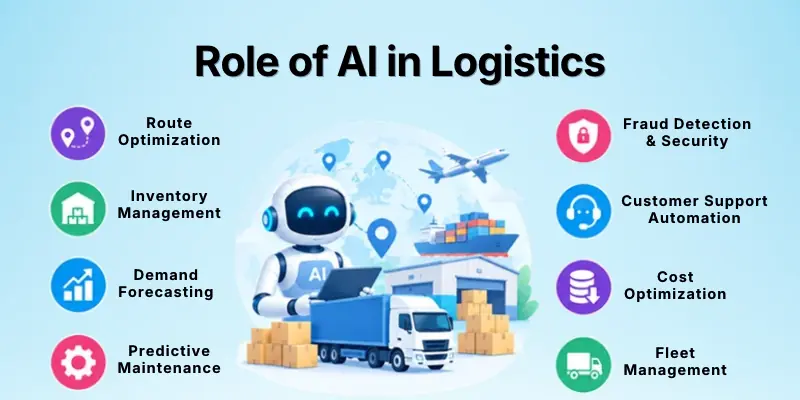
AI in logistics helps plan routes, manage inventory, and predict delays. It makes operations faster, reduces mistakes, and saves money. I will also cover applications, benefits, challenges, and real world examples in this guide.
So, let’s get started!
What are the Major Roles of AI in Inventory and Distribution?
Here are the main applications of AI in inventory and distribution . I will explain how each works and why it matters:
- Route Optimization
- Inventory Management
- Demand Forecasting
- Predictive Maintenance
- Automated Warehousing
- Real Time Tracking
- Supply & Demand Planning
- Fraud Detection & Security
- Customer Support Automation
- Cost Optimization
- Fleet Management
- Delivery Scheduling
- Cargo Loading Optimization
- Returns & Reverse Logistics
- Performance Analysis
Let us learn about each in detail.
1. Route Optimization
I always want deliveries to arrive on time. Route optimization helps me find the fastest paths and avoid traffic. I can plan multiple deliveries efficiently. This reduces fuel use and delivery delays. I feel confident that shipments arrive exactly when expected.
Benefits:
- Saves fuel and time
- Reduces driver stress
- Improves customer satisfaction
Examples:
- Delivery trucks adjusting routes in real time
- Fleet software suggesting optimal paths
AI-powered route optimization helps logistics teams choose faster and smarter delivery routes. It saves time, lowers fuel costs, and keeps shipments moving efficiently.
2. Inventory Management
I like to know what stock we have at all times. Inventory management tracks products and materials in warehouses. I can reorder items before they run out. This avoids delays and overstock. I feel organized knowing everything is ready.
Benefits:
- Prevents stock shortages
- Reduces excess inventory
- Improves warehouse efficiency
Examples:
- Sensors counting items automatically
- Software predicting reorder times
AI-powered inventory management keeps stock levels accurate and easier to control. It helps businesses avoid shortages, reduce excess stock, and improve warehouse operations.
3. Demand Forecasting
I plan ahead using demand forecasting. It predicts which products will be needed and when. I avoid overstock or shortages. This keeps production and delivery on track. I feel prepared for busy seasons.
Benefits:
- Improves planning accuracy
- Reduces waste
- Saves money
Examples:
- Predicting online shopping trends
- Planning warehouse stock for seasonal goods
AI demand forecasting helps logistics businesses prepare for changing customer needs and market trends. It supports better inventory planning, reduces waste, and keeps deliveries on schedule.
4. Predictive Maintenance
I want trucks and equipment to work without breakdowns. Predictive maintenance tells me when vehicles or machines might fail. I can schedule repairs before issues happen. This keeps logistics moving smoothly. I feel confident there will be no delays.
Benefits:
- Reduces downtime
- Saves repair costs
- Extends vehicle life
Examples:
- Fleet sensors alerting engine problems
- Conveyor belts scheduled for maintenance
AI-powered predictive maintenance helps detect vehicle and equipment problems before they cause major breakdowns. This keeps logistics operations running smoothly and reduces unexpected downtime.
5. Automated Warehousing
I love seeing machines handle heavy lifting in warehouses. Automated warehousing uses robots to store and move items. I can manage high volumes with fewer mistakes. This speeds up operations. I feel proud when the warehouse runs smoothly.
Benefits:
- Increases speed and efficiency
- Reduces human errors
- Saves labor costs
Examples:
- Robots picking and packing orders
- Automated sorting systems for parcels
AI-powered automated warehousing makes storing, picking, and moving products faster and more accurate. It helps warehouses handle large order volumes while reducing manual work and errors.
6. Real Time Tracking
I want to know where every shipment is. Real time tracking lets me see packages moving. I can inform customers or adjust routes quickly. This reduces lost or delayed shipments. I feel confident deliveries arrive safely.
Benefits:
- Improves delivery accuracy
- Enhances customer trust
- Reduces lost shipments
Examples:
- GPS tracking of trucks
- Barcode scanning in transit
AI-powered real time tracking gives businesses better visibility into shipments from start to finish. It helps improve delivery accuracy, respond to delays quickly, and build customer trust.
7. Supply & Demand Planning
I try to balance stock with customer needs. AI helps plan supply and deliveries together. I avoid empty shelves or overstock. Operations run smoother. I feel satisfied when everything is ready on time.
Benefits:
- Reduces delays
- Optimizes warehouse space
- Improves customer satisfaction
Examples:
- Coordinating shipments to multiple stores
- Adjusting warehouse stock based on sales trends
AI-based supply and demand planning helps businesses match inventory with changing customer needs. It improves supply chain efficiency while reducing shortages, excess stock, and delivery delays.
8. Fraud Detection & Security
I worry about theft or mistakes. AI spots unusual patterns and alerts me. I can act quickly to prevent losses. This makes logistics safer. I feel secure knowing shipments are protected.
Benefits:
- Protects goods
- Reduces losses
- Improves trust
Examples:
- Monitoring delivery routes for unusual stops
- Detecting fake orders
AI-powered fraud detection strengthens logistics security by identifying unusual activities and potential risks. It helps protect shipments, reduce financial losses, and make supply chain operations more secure.
9. Customer Support Automation
I want customers to get answers fast. AI chatbots respond instantly to questions about deliveries. I can track orders and solve issues quickly. This improves customer satisfaction. I feel confident that support is always ready.
Benefits:
- Provides 24/7 support
- Reduces manual queries
- Improves customer experience
Examples:
- Chatbots answering delivery status
- Automated notifications for late shipments
AI-powered customer support automation helps logistics companies answer delivery questions quickly and efficiently. It improves communication, reduces response times, and creates a better customer experience.
10. Cost Optimization
I always look to reduce expenses. AI finds ways to save on fuel, labor, and storage. I can adjust routes, schedules, and staff efficiently. This lowers overall logistics costs. I feel proud of saving money while keeping service fast.
Benefits:
- Reduces operational costs
- Increases efficiency
- Improves profit margins
Examples:
- Optimizing delivery routes
- Balancing staff shifts in warehouses
AI-driven cost optimization helps logistics companies control spending while maintaining fast and reliable services. It can reduce fuel, labor, storage, and transportation costs through smarter decisions.
11. Fleet Management
I manage all trucks and delivery vehicles. Fleet management monitors vehicle health and routes. I can assign tasks efficiently. This ensures all vehicles are used properly. I feel confident every truck is ready for work.
Benefits:
- Improves vehicle usage
- Reduces maintenance issues
- Saves fuel
Examples:
- Assigning deliveries based on truck location
- Monitoring fuel consumption
AI-powered fleet management helps businesses monitor vehicles, routes, fuel use, and maintenance needs in one place. It improves fleet efficiency while reducing unnecessary costs and downtime.
12. Delivery Scheduling
I want deliveries to reach on time. Delivery scheduling plans who delivers what and when. I can avoid delays and overlaps. This keeps customers happy. I feel organized knowing every package is scheduled.
Benefits:
- Reduces delays
- Improves customer satisfaction
- Optimizes workforce
Examples:
- Scheduling morning and evening delivery routes
- Assigning packages by driver location
AI-powered delivery scheduling helps logistics teams organize drivers, routes, and delivery times more efficiently. It reduces scheduling conflicts and helps ensure packages reach customers on time.
13. Cargo Loading Optimization
I always want trucks loaded efficiently. Cargo loading optimization arranges goods to save space. I reduce trips and shipping costs. This also prevents damage during transport. I feel confident every shipment is safe.
Benefits:
- Reduces transport costs
- Saves fuel and trips
- Protects goods
Examples:
- 3D loading software for trucks
- Arranging pallets for maximum space
AI-powered cargo loading optimization helps businesses use available truck and warehouse space more effectively. It can reduce unnecessary trips, lower transportation costs, and help protect goods during delivery.
14. Returns & Reverse Logistics
I handle returned items efficiently. AI helps track returns and decide how to restock or recycle. I avoid delays and lost items. This keeps operations smooth. I feel satisfied when returns are processed quickly.
Benefits:
- Speeds up return process
- Reduces losses
- Improves customer service
Examples:
- Automating warehouse returns
- Tracking damaged or defective products
AI-powered reverse logistics makes it easier to track, process, and manage returned products. It helps businesses reduce return related costs while improving customer satisfaction and operational efficiency.
15. Performance Analysis
I always want to know how logistics is performing. Performance analysis monitors delivery times, costs, and errors. I can find areas for improvement. This makes operations faster and cheaper. I feel confident running a smooth logistics system.
Benefits:
- Identifies bottlenecks
- Improves efficiency
- Reduces errors
Examples:
- Dashboards tracking delivery performance
- Reports on warehouse efficiency
AI-powered logistics performance analysis helps businesses monitor delivery speed, costs, errors, and overall efficiency. These insights make it easier to identify problems and improve supply chain performance.
Benefits of AI in Logistics
In this section, I’ll share how AI helps every person involved in logistics. I have seen it change daily work for managers, drivers, and customers. It makes everything faster, easier, and more reliable. Everyone gets value in their own way.
Here’s how AI helps each role in logistics:
- Logistics Manager: I can plan routes, track vehicles, and manage deliveries better. I see fewer delays and lower costs.
- Warehouse Worker: My work is easier with robots and smart systems. I make fewer mistakes and handle more orders.
- Truck Driver: I get the best route every time. I avoid traffic, save fuel, and deliver on time.
- Inventory Planner: I always know what’s in stock. I can plan orders early and prevent shortages.
- Customer Support Agent: I can respond faster with order details and delivery updates. Customers are happy with quick answers.
- Fleet Supervisor: I track every vehicle’s condition and schedule repairs before breakdowns. This keeps our trucks on the road.
- Business Owner: I save money and improve customer trust. My operations run smoothly and profitably.
- Customer: I can track my parcel and know when it will arrive. I trust the delivery process more.
AI in logistics creates practical benefits across the entire supply chain, from warehouse operations to final delivery. By using smart automation and data-driven tools, businesses can improve efficiency, reduce costs, and deliver better customer experiences.
Challenges of Implementing AI in Logistics
I have also faced some real challenges while using AI in logistics. The benefits are great, but setup and management can be tricky. It takes planning, training, and investment to get everything right.
Here are the main challenges I see:
- High Setup Cost: I need a big budget for smart systems, sensors, and software.
- Integration Problems: Old systems and new tools do not always work well together.
- Skilled Workforce: I need trained staff to manage and maintain these systems.
- Data Issues: Wrong or missing data can affect decisions.
- Cybersecurity Risks: Online systems can face hacking threats.
- Resistance to Change: Some workers feel worried that machines might replace their roles.
- Maintenance Needs: Regular updates and fixes are needed to keep systems running well.
- Connectivity: Internet or system failures can pause tracking or automation.
Although AI can improve logistics operations, businesses need to plan carefully before adopting new technologies. Managing costs, data, cybersecurity, staff training, and system integration can help ensure a smoother and more successful AI implementation.
Final Note
In this guide, we have covered all about the role of AI in logistics in great detail. I have shared how it helps in delivery, tracking, warehousing, and planning. AI is making logistics faster, safer, and more reliable each day. The future looks bright for smarter and smoother supply chains.
Thank you for reading! Stay tuned for more guides where I’ll share how AI is changing other industries too, from AI in supply chain to AI in transportation.
FAQs on AI in Logistics
These frequently asked questions explain how AI in logistics is changing transportation, warehousing, tracking, and supply chain operations. Each answer focuses on a practical point to help readers understand the topic quickly.
1. What is AI logistics?
AI logistics means using artificial intelligence and smart systems to plan, move, and track goods. It helps businesses manage routes, warehouses, inventory, and deliveries more efficiently.
2. How does artificial intelligence logistics improve delivery work?
Artificial intelligence logistics can improve delivery operations by:
- Finding faster delivery routes
- Predicting possible delays
- Tracking shipments in real time
- Reducing delivery errors
This helps businesses make deliveries faster and more cost effective.
3. Why is AI in logistics important for companies?
AI in logistics helps companies manage transportation, storage, and supply chains with greater accuracy.
Key advantages include:
- Less manual work
- Lower operating costs
- Better planning
- More reliable logistics operations
4. What is automation in logistics?
Automation in logistics means using machines, software, and AI tools to complete repetitive tasks.
How it works:
- AI receives and analyzes logistics data.
- Automated systems handle routine tasks.
- Businesses monitor the results and make better decisions.
This makes logistics work faster and reduces human errors.
5. How does an AI logistics company work?
An AI logistics company uses data, sensors, software, and automation to manage goods from one location to another.
| Area | How AI Helps |
| Transportation | Plans routes and monitors vehicles |
| Warehousing | Tracks and organizes inventory |
| Deliveries | Predicts delays and improves scheduling |
| Tracking | Provides real time shipment updates |
These tools help improve accuracy, efficiency, and customer satisfaction.
6. How do logistics and artificial intelligence work together?
Logistics and artificial intelligence work together by using data to make transportation and supply chain decisions smarter.
- Route planning
- Shipment tracking
- Warehouse management
- Inventory planning
- Delivery scheduling
Together, these technologies can save time and improve overall supply chain control.
7. What are the main benefits of AI in logistics?
The main benefits of AI in logistics include:
- Faster deliveries
- Better route planning
- Fewer human errors
- Lower operational costs
- Improved shipment tracking
- Better customer communication
These benefits help businesses create a more efficient and responsive supply chain.
8. How is AI in transportation and logistics used today?
AI is already being used in transportation and logistics to improve everyday operations. Common uses include:
- Route optimization: Finding efficient delivery paths.
- Vehicle tracking: Monitoring trucks in real time.
- Fuel management: Identifying ways to reduce fuel use.
- Delay prediction: Detecting possible delivery problems early.
This can improve delivery speed, efficiency, and road safety.
9. Can you give some AI in logistics examples?
Yes. Some common AI in logistics examples include:
| AI Application | Example |
| Warehouse automation | Robots sorting and picking parcels |
| Demand forecasting | Predicting future product demand |
| Fleet management | Monitoring trucks and vehicle health |
| Route optimization | Finding faster delivery routes |
These applications help make modern logistics operations smoother and more efficient.
10. What is the future of AI in the logistics industry?
The future of AI in the logistics industry is expected to bring more automation, smarter decision making, and better delivery systems.
Future possibilities include:
- Self driving delivery vehicles
- Smarter automated warehouses
- More accurate demand forecasting
- Faster global shipping
- More efficient supply chains
As AI technology develops, logistics can become safer, faster, and more connected.






- Be Respectful
- Stay Relevant
- Stay Positive
- True Feedback
- Encourage Discussion
- Avoid Spamming
- No Fake News
- Don't Copy-Paste
- No Personal Attacks
- Be Respectful
- Stay Relevant
- Stay Positive
- True Feedback
- Encourage Discussion
- Avoid Spamming
- No Fake News
- Don't Copy-Paste
- No Personal Attacks
