The Hidden Role of AI in Personalization in 2026: Smarter Shopping, Streaming, and Ads
Published: 15 Nov 2026
I have seen how personalization changes the way people experience the internet. From shopping and streaming to emails and ads, everything feels designed just for you. This is because smart systems learn what you like and what you don’t. They adjust every detail based on your choices.
In this guide, I’ll explain the role of AI in personalization, how it works, what benefits it brings, the challenges it faces, and where it’s heading in the future.
Function of AI in Personalization
So, to understand the role of AI in personalization, we need to look at how it helps in real world settings. It is used in apps, websites, learning systems, healthcare, and almost every digital service.
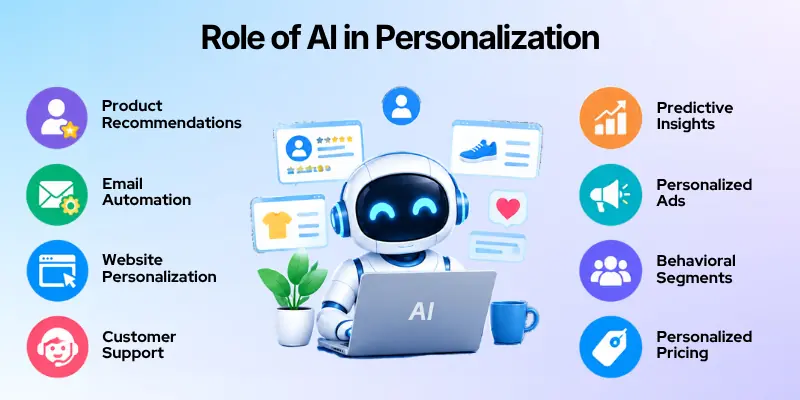
Here are the main roles of AI in personalization:
- Personalized Product Recommendations
- Content Personalization
- Email and Marketing Automation
- Dynamic Website Personalization
- Personalized Customer Support
- Predictive Personalization
- Personalized Advertising
- Behavioral Segmentation
- Personalized Pricing
- Personalized Search Results
- User Journey Optimization
- Personalized Learning and Training
- Social Media Personalization
- Personalized Healthcare Support
- Voice and Chat Personalization
Let’s explore all these in detail.
1. Personalized Product Recommendations
I’ve seen how AI can make shopping feel personal. It studies what users view, add to their cart, and buy. Then it predicts what they might want next. This saves time and keeps customers interested. I think it’s one of the smartest ways to make people happy while helping businesses sell more.
Benefits:
- Improves customer satisfaction
- Increases sales and loyalty
- Reduces product search time
Example: Amazon showing “You might also like” products based on past orders.
2. Content Personalization
AI helps decide what articles, videos, or posts a person will enjoy. It studies what you read, like, or skip. I’ve seen it make news feeds, blogs, and media platforms more engaging. It learns from user behavior and keeps suggesting better options. I feel it turns generic content into something made just for you.
Benefits:
- Keeps users engaged
- Improves content reach
- Builds audience trust
Example: Netflix showing movies similar to your past viewing choices.
3. Email and Marketing Automation
AI studies user habits to send personalized messages and offers. It learns when people open emails and what they click on. I think it helps brands stay in touch without being boring. It also saves time for marketers who no longer need to guess what people like. Each email feels more relevant and personal.
Benefits:
- Improves open and click rates
- Builds strong customer relationships
- Saves time with automation
Example: Spotify sending playlists based on your listening history.
4. Dynamic Website Personalization
AI changes a website’s look and feel based on who visits. It can show different banners, texts, and offers for each user. I find it amazing how two people can visit the same site and see different things. This makes websites more interesting and useful. It also helps brands connect with users more effectively.
Benefits:
- Increases user engagement
- Boosts conversions
- Makes websites more interactive
Example: E-commerce sites showing customized homepages for returning customers.
5. Personalized Customer Support
AI tools like chatbots give fast and personal help. They remember past issues and offer solutions quickly. I think this makes users feel heard and cared for. It also frees up human agents for more complex cases. Support becomes faster, smoother, and always available.
Benefits:
- Offers 24/7 support
- Reduces wait time
- Builds user trust
Example: Banking chatbots greeting customers by name and tracking old conversations.
6. Predictive Personalization
AI doesn’t just react; it predicts. It studies behavior and guesses what users may want next. I’ve seen how it helps businesses stay ahead of customer needs. It’s like the system learns to understand users before they even ask. This makes experiences smarter and more proactive.
Benefits:
- Anticipates user needs
- Improves satisfaction
- Boosts loyalty
Example: Fashion apps suggesting products before trends become popular.
7. Personalized Advertising
AI shows ads that match your interests. It studies what you search, like, and buy. I think this makes ads less annoying and more useful. It ensures that users see what they actually care about. It helps brands spend money more wisely too.
Benefits:
- Improves ad targeting
- Saves ad costs
- Increases engagement
Example: Facebook displaying ads related to your recent searches.
8. Behavioral Segmentation
AI groups users based on how they behave online. It studies clicks, purchases, and visits to form clear segments. I’ve noticed this helps brands send the right message to the right people. It also improves campaign accuracy. Every user gets content that fits their lifestyle.
Benefits:
- Better audience targeting
- Increases marketing results
- Saves time on research
Example: Travel sites dividing users into “frequent travelers” or “budget seekers”.
9. Personalized Pricing
AI analyzes market trends and customer behavior to set prices. It helps companies stay competitive while offering fair deals. I think this keeps both sides happy, the brand and the buyer. Prices become flexible and reflect real demand. It adds value to every transaction.
Benefits:
- Boosts sales
- Balances supply and demand
- Increases competitiveness
Example: Airlines adjusting prices based on seats left and travel dates.
10. Personalized Search Results
AI studies past searches and clicks to improve future results. It helps users find what they want faster. I feel this makes searching more helpful and smooth. It learns from your history to keep improving results over time. It’s like the search engine gets smarter with you.
Benefits:
- Saves user time
- Improves search accuracy
- Increases satisfaction
Example: Google showing different results for the same query based on your past activity.
11. User Journey Optimization
AI studies how users move across websites or apps. It helps remove friction and guide them easily. I’ve seen how this makes experiences smoother and more enjoyable. It helps brands know where users stop or get confused. This leads to better design and happier visitors.
Benefits:
- Improves user flow
- Boosts conversions
- Reduces bounce rates
Example: E-commerce platforms simplifying checkout for faster purchases.
12. Personalized Learning and Training
AI helps students and employees learn at their own pace. It tracks progress and suggests lessons that fit their level. I find it helpful for people who struggle with fixed learning styles. Everyone learns differently, and AI supports that. It makes education more flexible and effective.
Benefits:
- Improves learning speed
- Increases motivation
- Reduces frustration
Example: Language apps adapting lessons to match your current skill.
13. Social Media Personalization
AI decides which posts, videos, or ads appear in your feed. It learns from your likes, comments, and shares. I think it makes scrolling more fun and addictive. It keeps users connected to what they love most. Every feed becomes unique for every person.
Benefits:
- Boosts engagement
- Improves content reach
- Builds user loyalty
Example: TikTok showing videos similar to what you already enjoy.
14. Personalized Healthcare Support
AI helps doctors and patients with custom care plans. It studies health data and gives alerts when needed. I’ve seen it make healthcare safer and more personal. It reminds patients about medicine or appointments. It feels like having a digital health assistant.
Benefits:
- Improves treatment outcomes
- Reduces health risks
- Builds patient trust
Example: Health apps tracking steps and sending daily care tips.
15. Voice and Chat Personalization
AI voice systems remember your tone, words, and preferences. I find it amazing how it feels like talking to a person. It answers faster and adjusts to your style. Over time, it learns more about you. It makes daily tasks easier and more natural.
Benefits:
- Creates friendly conversations
- Saves user time
- Builds trust and comfort
Example: Siri or Alexa adapting answers based on your speaking habits.
Benefits of AI in Personalization
I’ve seen how AI helps companies, creators, and users all at once. It saves time, builds trust, and increases engagement everywhere.
Benefits (Overall):
- Delivers experiences users truly enjoy
- Improves business performance
- Builds stronger customer loyalty
- Saves time with automation
- Makes decisions smarter with data
- Boosts conversions and engagement
Overall, AI helps businesses deliver personalized experiences, improve customer satisfaction, build loyalty, and increase engagement through smarter recommendations.
Challenges of AI in Personalization
While AI offers many benefits, it also has limits. It must handle data carefully and fairly.
Challenges (Overall):
- Privacy risks due to personal data use
- High setup and tool costs
- Risk of bias in recommendations
- Some users find AI too unwanted
- Needs regular data updates
- Can miss emotional understanding
Overall, addressing these challenges is essential to using AI in personalization responsibly while protecting user privacy, reducing bias, and delivering relevant experiences.
Future of AI in Personalization
I believe the future of AI personalization is bright and human-like. Reports show that more than 70% of customers now expect tailored experiences from brands. Soon, personalization will go beyond clicks; it will read emotions, tone, and even voice mood. I think every digital space will feel like it knows you personally.
Final Note
In this guide, we explored the role of AI in personalization and how it helps in marketing, shopping, education, and healthcare. It’s clear that smart personalization isn’t just about data; it’s about making people feel seen. Thank you for reading, and now, let’s go through some quick FAQs below before we wrap up.
FAQs: AI and Personalization
AI and personalization help businesses create more relevant online experiences by understanding user preferences and behavior. Explore how AI personalizes shopping, streaming, advertising, and customer interactions in 2026.
Here are some of the most commonly asked questions related to the AI in personalization:
1. What is AI and personalization?
AI and personalization means using artificial intelligence to create experiences tailored to each user. It analyzes searches, clicks, and past behavior to recommend relevant content, products, and services.
2. How does AI and personalization work together?
AI personalizes experiences by learning from user behavior through these steps:
- Collect data: Gather information about user preferences and activities.
- Analyze patterns: Identify interests and predict what users may need.
- Personalize content: Recommend relevant products, videos, ads, and services.
- Improve results: Learn from new interactions to make recommendations more useful.
3. Why is AI and personalization important for businesses?
AI personalization helps businesses understand customers, improve marketing, and increase sales. When people receive relevant recommendations and offers, they are more likely to engage with a brand and become loyal customers.
4. How can AI and personalization improve customer experience?
AI makes customer experiences smoother by showing people information that matches their interests. It can also provide faster support and personalized recommendations, helping customers save time and find what they need.
5. Where is AI and personalization used most?
AI personalization is widely used across digital industries. Common examples include:
- Online shopping: Recommending products based on browsing and purchase history.
- Streaming platforms: Suggesting movies, music, and shows.
- Digital marketing: Displaying personalized ads and emails.
- Healthcare: Supporting more personalized information and services where appropriate.
6. What are the benefits of AI and personalization?
| Benefit | How it helps |
| Better engagement | Shows users content relevant to their interests. |
| Higher conversions | Recommends products and offers users may want. |
| Time savings | Helps users find information faster. |
| Customer loyalty | Creates more helpful and satisfying experiences. |
| Smarter marketing | Helps businesses target relevant audiences. |
7. Are there any challenges with AI and personalization?
Yes, AI personalization can create challenges if businesses do not manage user data responsibly.
- Privacy concerns: Collecting personal information may make users uncomfortable.
- Data security: Poor protection can expose sensitive information.
- Over personalization: Too many tailored ads can feel intrusive.
- Biased recommendations: Inaccurate data may lead to unfair or irrelevant results.
Businesses should protect customer data, explain how it is used, and respect user preferences.
8. How does AI and personalization help in marketing campaigns?
AI personalization makes marketing campaigns more relevant by matching messages with customer interests. Businesses can use it to:
- Send personalized email campaigns.
- Display relevant digital advertisements.
- Recommend products based on customer behavior.
- Adjust offers to improve engagement and conversions.
These strategies can reduce wasted marketing effort and help businesses connect with the right audience.
9. Can small businesses use AI and personalization tools?
Yes! Small businesses can use affordable AI tools and built in platform features to personalize customer experiences. They can start with simple solutions:
- Use email marketing tools to send targeted messages.
- Add product recommendations to an online store.
- Create personalized offers for different customer groups.
- Review customer engagement to improve future campaigns.
Even small businesses can use AI personalization to compete more effectively without a large budget.
10. What is the future of AI and personalization?
The future of AI personalization will focus on more adaptive, conversational, and context aware experiences. AI systems may better interpret user preferences, language, and emotional cues to provide more relevant recommendations.
As this technology develops, businesses will need to balance smarter personalization with privacy, transparency, and customer trust.
AI in Content Creation in 2026 - The Tools, Tricks & Strategies Create Better Content Faster




- Be Respectful
- Stay Relevant
- Stay Positive
- True Feedback
- Encourage Discussion
- Avoid Spamming
- No Fake News
- Don't Copy-Paste
- No Personal Attacks
- Be Respectful
- Stay Relevant
- Stay Positive
- True Feedback
- Encourage Discussion
- Avoid Spamming
- No Fake News
- Don't Copy-Paste
- No Personal Attacks
