Role of AI in Procurement – Transforming Purchasing for a Smarter Future
Published: 17 Nov 2026
Artificial intelligence is changing how organizations purchase goods and services. Procurement involves purchasing, supplier selection, contract management, and cost control. These activities are important for keeping business operations smooth and affordable.
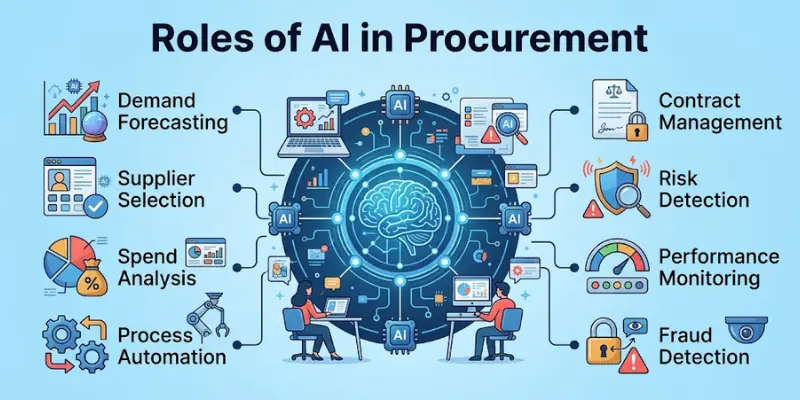
AI makes procurement faster and more accurate by analyzing data, automating routine tasks, and supporting better decisions. It helps businesses control expenses, choose reliable suppliers, and manage purchasing activities more efficiently.
In this guide, we will explore the major roles of AI in procurement, its practical applications, and how it can help organizations build smarter purchasing strategies.
Impact of AI in Procurement
AI strengthens procurement by automating processes, analyzing supplier information, and predicting future purchasing needs. It helps organizations save money, reduce risks, and improve daily operations.
Here are the 12 major roles of AI in procurement:
- Demand Forecasting and Planning
- Supplier Selection and Evaluation
- Spend Analysis and Cost Optimization
- Procurement Process Automation
- Contract Management and Compliance
- Risk Detection and Mitigation
- Supplier Performance Monitoring
- Purchase Order Automation
- Fraud Detection in Procurement
- Inventory and Stock Optimization
- Data-Driven Decision Support
- Strategic Sourcing Optimization
Let us explore each role and understand how AI makes procurement smarter and more efficient.
1. Demand Forecasting and Planning
AI analyzes historical purchasing data, customer demand, and market trends to predict future requirements. It helps procurement teams understand which products and materials they may need and when they should purchase them.
With better forecasts, businesses can plan their purchases in advance. This reduces stock shortages and prevents unnecessary overstocking. AI also supports smarter budget planning, allowing organizations to prepare for future needs instead of reacting to sudden changes.
Additional Points:
- Analyzes historical purchasing data.
- Predicts future demand more accurately.
- Reduces the chances of stock shortages.
- Prevents unnecessary overstocking.
- Supports proactive purchasing and budget planning.
Why It Matters: Better demand forecasting helps businesses purchase the right quantities at the right time. This keeps operations running smoothly and reduces unnecessary costs.
2. Supplier Selection and Evaluation
Choosing the right supplier is an important part of procurement. AI evaluates suppliers based on factors such as price, product quality, delivery history, and overall performance.
It can rank suppliers using available performance data. This helps procurement teams compare different vendors and identify reliable business partners. AI can also reduce personal bias by supporting decisions with measurable information.
Supplier scores can be updated as new performance data becomes available. As a result, organizations can monitor supplier quality and make better purchasing decisions.
Additional Points:
- Evaluates supplier performance data.
- Ranks suppliers using measurable information.
- Helps reduce selection bias.
- Improves vendor reliability.
- Supports stronger supplier relationships.
Why It Matters: A reliable supplier can improve product quality, delivery performance, and business operations. AI makes supplier evaluation more organized and data-driven.
3. Spend Analysis and Cost Optimization
AI helps businesses understand where their procurement money goes. It analyzes purchasing records, spending patterns, and supplier prices to identify unnecessary expenses and possible savings.
For example, AI can highlight pricing differences for similar products or services. Procurement teams can use these insights during supplier negotiations and budget planning.
It also improves cost transparency by showing where money is being spent. This allows organizations to control expenses and make better financial decisions.
Additional Points:
- Analyzes purchasing and spending patterns.
- Identifies cost-saving opportunities.
- Improves budget control.
- Highlights pricing differences and inefficiencies.
- Supports better supplier negotiations.
Why It Matters: Spend analysis gives businesses a clearer view of their purchasing expenses. It helps teams avoid waste and use their budgets more effectively.
4. Procurement Process Automation
Many procurement activities involve repetitive tasks, including purchase requests, approvals, and document preparation. AI can automate several of these activities and reduce the need for manual work.
Automation helps employees complete routine tasks more quickly. It can also reduce common data-entry mistakes and improve workflow consistency.
Instead of spending too much time on paperwork, procurement teams can focus on supplier relationships, planning, and strategic sourcing. This makes daily procurement operations more efficient.
Additional Points:
- Automates routine procurement tasks.
- Reduces manual errors.
- Speeds up purchasing processes.
- Improves workflow efficiency.
- Supports consistent business operations.
Why It Matters: Automating repetitive work saves time and allows employees to focus on important decisions. It also helps businesses manage procurement activities more smoothly.
5. Contract Management and Compliance
Organizations work with different suppliers and manage many contracts. Keeping track of contract terms, renewal dates, and compliance requirements can be difficult when everything is handled manually.
AI helps organize contract information and monitor important details. It can identify expiration dates, track contract terms, and flag possible compliance risks for review.
These features help procurement teams avoid missed renewals and identify potential problems earlier. They also make contract information easier to manage and review.
Additional Points:
- Tracks important contract terms.
- Monitors compliance requirements.
- Flags potential contract risks.
- Helps prevent missed renewal dates.
- Improves contract transparency.
Why It Matters: Better contract management helps organizations stay organized and reduce avoidable legal or financial problems. It also supports stronger relationships with suppliers.
6. Risk Detection and Mitigation
Procurement teams face different risks related to suppliers, markets, finances, and supply chains. These problems can affect product availability, delivery schedules, and business operations.
AI analyzes financial, geopolitical, and operational information to identify possible risks. It helps teams notice warning signs and prepare suitable responses before problems become more serious.
For example, AI-supported analysis may highlight supplier performance changes or market conditions that could affect future deliveries. Procurement teams can then review the situation and take preventive action.
Additional Points:
- Detects supplier and market risks.
- Supports early risk identification.
- Improves supply chain resilience.
- Helps reduce the impact of disruptions.
- Strengthens business continuity planning.
Why It Matters: Early risk detection gives businesses more time to prepare for unexpected problems. It helps protect supply chains and keeps important operations moving.
7. Supplier Performance Monitoring
Selecting a supplier is only the first step. Businesses also need to monitor supplier performance over time to make sure products and services meet their requirements.
AI tracks important performance factors, including delivery times, product quality, and supplier responsiveness. It can organize this information into dashboards and reports that help procurement teams understand supplier performance.
When problems appear, teams can investigate them and discuss improvements with suppliers. This supports accountability and encourages better long-term partnerships.
Additional Points:
- Monitors supplier performance metrics.
- Improves supplier accountability.
- Supports continuous improvement.
- Strengthens long-term partnerships.
- Enhances performance transparency.
Why It Matters: Regular supplier monitoring helps businesses maintain quality and reliable deliveries. It also makes it easier to identify problems before they affect operations.
8. Purchase Order Automation
A purchase order is an important document that confirms the details of a business purchase. Creating and managing these orders manually can take time, especially when an organization handles many transactions.
AI can help generate purchase orders using approved purchase requests and available purchasing information. It can also support order matching and help identify missing or incorrect details.
This reduces paperwork and improves order accuracy. Faster processing also helps suppliers receive purchasing information on time.
Additional Points:
- Automates purchase order creation.
- Reduces processing errors.
- Speeds up procurement cycles.
- Improves order accuracy.
- Supports better supplier communication.
Why It Matters: Purchase order automation makes purchasing activities faster and more organized. It helps procurement teams manage transactions with fewer manual steps.
9. Fraud Detection in Procurement
Procurement fraud can cause financial losses and damage business relationships. It may involve suspicious payments, unusual transactions, false invoices, or violations of purchasing policies.
AI can monitor procurement transactions and identify unusual patterns. When it detects something that needs attention, it can send alerts to the responsible team for further investigation.
AI systems can also use new transaction information to improve pattern detection. However, human review remains important because an unusual transaction does not always mean fraud has occurred.
Additional Points:
- Detects potentially fraudulent activities.
- Monitors unusual transactions.
- Sends alerts about suspicious patterns.
- Supports policy compliance.
- Strengthens procurement security.
Why It Matters: Fraud monitoring helps organizations protect their money and purchasing systems. Early alerts allow teams to investigate suspicious activities before losses become greater.
10. Inventory and Stock Optimization
Managing inventory is another important responsibility of procurement teams. Businesses need enough stock to meet demand without spending too much money on products they do not immediately need.
AI monitors inventory information and helps compare stock levels with expected demand. It can support purchasing decisions by identifying when supplies may need to be reordered.
This helps reduce excess inventory and lowers the risk of stock shortages. Better inventory planning can also improve warehouse operations and overall business efficiency.
Additional Points:
- Monitors inventory levels.
- Aligns purchasing with expected demand.
- Helps reduce inventory holding costs.
- Reduces the risk of stock shortages.
- Improves operational efficiency.
Why It Matters: Proper inventory planning helps businesses maintain product availability without keeping unnecessary stock. It supports better cost control and smoother operations.
11. Data-Driven Decision Support
Procurement generates a large amount of information about suppliers, prices, orders, contracts, and spending. Understanding all this information manually can be difficult and time-consuming.
AI analyzes procurement data and provides useful insights to support business decisions. It helps leaders compare options, understand spending patterns, and identify areas that need improvement.
These insights can make decision-making faster and more informed. However, procurement leaders should review AI recommendations and consider business requirements before making final decisions.
Additional Points:
- Provides useful procurement insights.
- Supports strategic decision-making.
- Improves the accuracy of analysis.
- Helps identify possible risks.
- Strengthens procurement planning.
Why It Matters: Data-driven decisions help organizations understand their purchasing activities more clearly. They also support better planning and stronger procurement strategies.
12. Strategic Sourcing Optimization
Strategic sourcing focuses on finding the best suppliers and purchasing options for an organization’s long-term needs. It considers price, quality, supplier reliability, and market conditions.
AI analyzes supplier markets, pricing trends, and available purchasing data. It can help procurement teams compare sourcing options and identify suitable strategies.
AI also supports supplier diversification by helping teams evaluate different vendors. This can reduce dependence on a single supplier and improve long-term sourcing plans.
Additional Points:
- Analyzes supplier market trends.
- Recommends suitable sourcing strategies.
- Supports supplier diversification.
- Helps identify opportunities to reduce sourcing costs.
- Strengthens long-term competitive advantage.
Why It Matters: Strategic sourcing helps businesses build reliable supplier networks and make better purchasing decisions. AI provides useful insights that support long-term growth and cost efficiency.
Future of AI in Procurement
The future of AI in procurement looks promising as organizations continue to explore smarter ways to manage purchasing activities. AI is expected to support more procurement tasks, improve supplier analysis, and provide faster insights from business data.
In the coming years, businesses may use AI more widely for demand forecasting, contract monitoring, fraud detection, and strategic sourcing. Routine manual work may decrease as automation becomes more common.
Procurement teams will still need human judgment, experience, and communication skills. AI can support their work, but people will remain important for reviewing recommendations, managing supplier relationships, and handling complex decisions.
Key Future Possibilities:
- More automated purchasing and approval workflows.
- Improved demand forecasting and inventory planning.
- Faster supplier evaluation and risk monitoring.
- Better analysis of procurement spending.
- Stronger support for strategic sourcing decisions.
Important Note: The future benefits of AI will depend on data quality, system integration, security, and responsible use. Businesses should introduce AI carefully and continue monitoring its results.
Final Note
In this guide, we explored the role of AI in procurement and how it can improve supplier selection, demand forecasting, purchasing automation, contract management, and cost control.
We also discussed how AI supports fraud detection, inventory optimization, risk management, and strategic sourcing. These applications can help organizations save time, reduce unnecessary expenses, and make better purchasing decisions.
In my view, AI will make procurement an even more important part of business strategy. It can help organizations move beyond routine purchasing and focus on smarter planning, stronger supplier relationships, and long-term efficiency. However, human experience and careful decision-making will remain essential.
Thank you for reading! Now, let’s explore some frequently asked questions about AI in procurement.
FAQs
Here are some commonly asked questions about the role of AI in procurement, along with simple answers.
1. What is AI in procurement?
AI in procurement means using artificial intelligence to improve purchasing activities. It analyzes business data, automates routine tasks, and supports better decisions. For example, businesses can use AI to:
- Compare supplier performance.
- Predict future purchasing needs.
- Analyze spending patterns.
- Monitor contracts and risks.
2. How does AI help in supplier selection?
AI evaluates suppliers using information such as price, quality, and delivery history. It helps procurement teams compare vendors and identify suitable options.
This makes supplier selection more organized and supports decisions based on performance data rather than personal opinions alone.
3. Can AI reduce procurement costs?
Yes, AI can help reduce procurement costs by identifying unnecessary expenses and improving purchasing decisions.
| AI Application | Possible Benefit |
| Spend analysis | Identifies unnecessary spending |
| Price comparison | Highlights pricing differences |
| Demand forecasting | Helps prevent overstocking |
| Supplier evaluation | Supports better supplier choices |
4. Does AI automate procurement processes?
Yes, AI can automate several repetitive procurement activities, including:
- Processing purchase requests.
- Supporting approval workflows.
- Preparing purchase orders.
- Organizing procurement documents.
- Monitoring routine purchasing information.
This allows employees to spend more time on planning and important business activities.
5. How does AI improve contract management?
AI helps procurement teams organize and monitor supplier contracts. It can track important terms, renewal dates, and compliance requirements.
Useful benefits include:
- Better contract organization.
- Alerts for important deadlines.
- Early identification of possible compliance issues.
- Improved access to contract information.
Human review is still important when interpreting legal terms and making contract decisions.
6. Can AI detect procurement risks?
Yes. AI can analyze supplier, market, financial, and operational information to identify possible warning signs.
Examples of risks it may help identify:
- Changes in supplier performance.
- Possible delivery disruptions.
- Financial warning signs.
- Market or geopolitical changes.
These insights help procurement teams investigate problems and prepare suitable responses.
7. How does AI support inventory management in procurement?
AI helps businesses monitor stock levels and compare inventory with expected demand.
Quick Checklist:
- Monitor available inventory.
- Identify products that may need reordering.
- Reduce unnecessary stock.
- Lower the risk of shortages.
- Support better purchasing plans.
These activities help organizations maintain suitable stock levels and control inventory costs.
8. Does AI help prevent procurement fraud?
AI can support fraud detection by monitoring transactions and identifying unusual patterns. For example, it may flag:
- Unusual payment activity.
- Suspicious purchasing patterns.
- Possible invoice irregularities.
- Transactions that may violate company policies.
These alerts help teams investigate possible problems. AI does not automatically prove that a transaction is fraudulent.
9. Can AI improve supplier performance management?
Yes. AI can help organizations monitor supplier performance through different measurements.
| Performance Factor | What AI Helps Monitor |
| Delivery | Delivery times and delays |
| Quality | Product quality information |
| Responsiveness | Supplier response patterns |
| Reliability | Overall performance trends |
These insights help procurement teams discuss problems with suppliers and identify areas for improvement.
10. What is the future of AI in procurement?
AI is expected to become more useful in procurement as businesses adopt smarter software and automation systems. Some important future developments may include:
- More automated purchasing workflows.
- Better supplier risk analysis.
- Improved demand forecasting.
- Faster procurement reporting.
- Smarter sourcing recommendations.
The main goal will be to make procurement more efficient while keeping human judgment involved in important decisions.
Role of AI in Civil Engineering - Building Stronger, Safer, and More Sustainable Structures




- Be Respectful
- Stay Relevant
- Stay Positive
- True Feedback
- Encourage Discussion
- Avoid Spamming
- No Fake News
- Don't Copy-Paste
- No Personal Attacks
- Be Respectful
- Stay Relevant
- Stay Positive
- True Feedback
- Encourage Discussion
- Avoid Spamming
- No Fake News
- Don't Copy-Paste
- No Personal Attacks
