Role of AI in Entertainment in 2026: Innovations Transforming the Entertainment World
Published: 13 Nov 2026
When we talk about the role of AI in entertainment, we mean how smart technology is changing the way we enjoy movies, music, games, and shows.
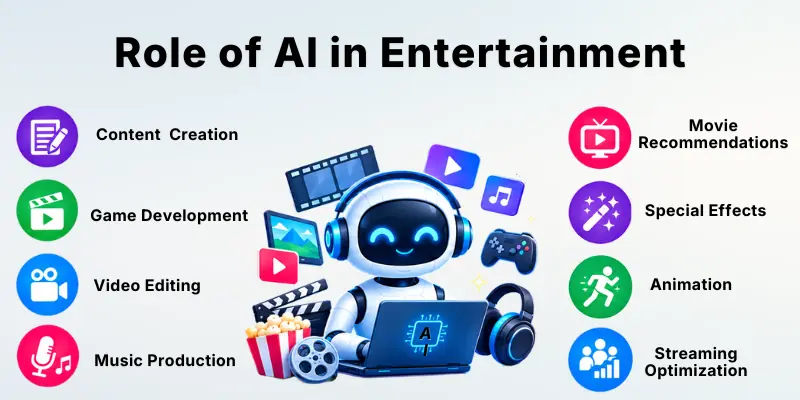
I see AI as a tool that makes creating, distributing, and personalizing entertainment faster and more exciting. It helps producers, artists, and platforms understand audiences better and deliver what they love.
In this guide, I will explain how AI works in different areas of entertainment, the benefits it brings, the challenges it faces, and what the future might look like. By the end, you’ll have a clear picture of AI’s impact in this creative industry.
Impact of AI in Entertainment
The role of artificial intelligence in entertainment is to make content creation, delivery, and consumption smarter. AI helps in understanding trends, predicting what audiences will like, and automating many tasks that used to take hours.
Here are the main roles of AI in entertainment:
- Content Creation
- Movie Recommendations
- Game Development
- Music Production
- Video Editing
- Special Effects
- Animation
- Audience Analysis
- Personalized Marketing
- Live Event Enhancement
- Script Analysis
- Streaming Optimization
Let’s go over all these roles in detail.
1. Content Creation
AI helps generate text, images, videos, and stories. I’ve seen tools that can write short scripts or suggest ideas for creative projects. It saves time and sparks creativity when I get stuck. AI can also help design visuals or promotional content quickly. It allows creators to focus more on storytelling rather than repetitive work. This makes production faster and often more innovative.
Benefits:
- Speeds up creative processes
- Provides new ideas for content
- Reduces manual work
Example: AI tools can write a draft of a short story or social media video script.
2. Movie Recommendations
AI studies what you watch and suggests movies or shows you’ll like. I like how it makes discovering new content easier. It keeps viewers engaged longer because they see things that match their interests. Platforms like streaming services use it to understand preferences. AI also updates recommendations based on what you watch next. This makes entertainment more personal and fun.
Benefits:
- Shows content suited to users
- Increases viewer engagement
- Helps discover new shows
Example: Netflix uses AI to recommend shows based on my previous viewing history.
3. Game Development
AI helps create smarter characters, realistic environments, and better game mechanics. I enjoy how it makes games more challenging and fun. Developers can also test levels faster using AI. It predicts player behavior and improves game design. This makes gameplay smoother and more immersive. AI also helps create personalized game experiences for players.
Benefits:
- Improves game design and player experience
- Reduces development time
- Creates intelligent game characters
Example: AI generates enemies that adapt to how I play strategy games.
4. Music Production
AI can compose music, mix tracks, and even suggest melodies. I find it amazing how it helps musicians explore new styles. It also automates repetitive tasks like adjusting sound levels. AI can predict which tunes might be popular with listeners. This saves time and inspires creativity. Artists can focus on expressing emotions rather than technical edits.
Benefits:
- Speeds up music creation
- Suggests new melodies and rhythms
- Reduces editing time
Example: AI can create background music for a video in minutes.
5. Video Editing
AI speeds up cutting, arranging, and enhancing videos. I use it to remove errors or adjust colors quickly. It can detect faces, voices, or objects automatically. This makes editing faster and more precise. Creators can focus on storytelling instead of technical work. AI also helps add transitions and effects efficiently.
Benefits:
- Saves editing time
- Improves video quality
- Automates repetitive tasks
Example: AI automatically highlights the best moments from recorded footage.
6. Special Effects
AI generates realistic effects in movies and shows. I enjoy seeing visuals that would be impossible or expensive without AI. It helps add explosions, weather effects, or magical scenes easily. AI also predicts how effects will look before final rendering. This makes production faster and cheaper. Filmmakers can try creative ideas without huge budgets.
Benefits:
- Creates realistic effects
- Reduces production cost
- Speeds up visual design
Example: AI creates realistic fire or rain effects in films without manual CGI work.
7. Animation
AI helps animate characters and scenes automatically. I find it amazing how it makes movements smooth and natural. It can predict motion, lip-sync, and facial expressions. This saves animators from doing every single frame by hand. AI also allows faster testing of animation sequences. Creators can focus on creative storytelling instead of repetitive work.
Benefits:
- Makes animation faster and smoother
- Reduces manual drawing work
- Improves realism in movement
Example: AI animates background characters in a scene automatically.
8. Audience Analysis
AI studies audience behavior to understand preferences. I see how this helps creators know what people enjoy. It tracks watch time, likes, and shares. Platforms can use this data to create more popular content. AI also helps plan promotions for the right audience. This makes entertainment more engaging and targeted.
Benefits:
- Understands audience preferences
- Improves content creation strategy
- Increases engagement and satisfaction
Example: A streaming service analyzes what type of shows I like most and suggests similar ones.
9. Personalized Marketing
AI helps send personalized ads and promotions to users. I like it because I see products or shows that interest me. It studies my behavior and predicts what I might like next. This improves user experience and boosts revenue for platforms. Creators can reach the right audience more effectively. AI also tests marketing strategies automatically.
Benefits:
- Targets the right audience
- Increases marketing efficiency
- Boosts content engagement
Example: A music app suggests playlists based on my listening habits.
10. Live Event Enhancement
AI improves live shows with lighting, sound, and real time visuals. I enjoy how it makes concerts or events more immersive. It can also help stream events smoothly online. AI monitors crowd reactions and adjusts settings instantly. This makes events safer and more exciting. Organizers can focus on performance while AI handles technical tasks.
Benefits:
- Improves live show experience
- Enhances safety and quality
- Automates technical adjustments
Example: AI changes stage lighting and sound based on audience reactions in a concert.
11. Script Analysis
AI reads and analyzes scripts to suggest improvements. I see how it helps writers identify plot holes or pacing issues. It can predict audience reactions to characters or storylines. This saves time in rewriting and testing ideas. AI also checks for grammar and tone automatically. Creators can make stories more engaging and polished.
Benefits:
- Improves script quality
- Predicts audience interest
- Saves time in rewriting
Example: AI highlights weak scenes in a movie script and suggests changes.
12. Streaming Optimization
AI manages streaming quality and reduces buffering. I notice how it adjusts video speed and resolution automatically. It also predicts peak times for better server use. This keeps viewers happy and engaged. Platforms can reduce technical issues and maintain smooth playback. AI ensures content reaches audiences without interruptions.
Benefits:
- Reduces buffering and delays
- Improves streaming quality
- Optimizes server usage
Example: AI adjusts video quality in real time based on my internet speed.
Benefits of Artificial Intelligence in Entertainment
In this section, we’ll explore the advantages of AI in entertainment by considering the different roles involved in this industry.
- Content Creation: Speeds up creative work and gives new ideas.
- Movie Recommendations: Shows personalized content to keep viewers engaged.
- Game Development: Builds smarter characters and better gameplay.
- Music Production: Suggests melodies and automates mixing tasks.
- Video Editing: Reduces editing time and improves quality.
- Special Effects: Creates realistic effects cheaply and quickly.
- Animation: Makes character movements smoother and faster.
- Audience Analysis: Understands viewers’ preferences to improve content.
- Personalized Marketing: Targets the right audience with relevant promotions.
- Live Event Enhancement: Improves shows with automated lighting, sound, and visuals.
- Script Analysis: Identifies story gaps and suggests improvements.
- Streaming Optimization: Reduces buffering and improves playback quality.
Overall, I see AI helping the entertainment industry save time, reduce errors, and give audiences better experiences.
Challenges of AI in Entertainment world
While AI brings huge benefits, it also comes with some challenges. Here are the main ones:
- High Cost: Setting up AI tools can be expensive.
- Data Quality: Bad or missing data gives wrong results.
- Skill Gap: Many teams lack AI knowledge.
- Integration Issues: Old systems may not work with new AI tools.
- Privacy Concerns: Handling user data needs strict security.
- Dependence on AI: Too much reliance may reduce human creativity.
- Maintenance Needs: AI systems need regular updates and support.
- Ethical Issues: AI may copy or misuse creative content.
- Job Impact: Some repetitive roles may be replaced by AI.
- Creativity Limits: AI may suggest ideas, but humans decide the final story.
Despite these challenges, AI can transform entertainment with smart use, human creativity, and fewer risks.
Future of AI in Entertainment Industry
The future of AI in entertainment looks exciting and full of opportunities. I believe AI will make content more personalized and interactive. Games, movies, and music will adapt in real time to what we like. AI will also help create experiences we can’t imagine today, like virtual concerts and immersive storytelling.
In the coming years, AI will not just assist creators, it will lead in planning, production, and distribution. This will make entertainment faster, smarter, and more enjoyable for everyone.
Final Note
In this article, we covered the role of AI in entertainment in great detail. We explored how AI helps in content creation, game development, music, video editing, animation, recommendations, and more. We also discussed the benefits, challenges, and future trends of AI in this creative industry. I hope this guide helps you understand how AI is shaping the way we enjoy movies, music, games, and shows.
If you want to stay ahead in the entertainment industry, start exploring AI tools today and see how technology can make creativity faster, smarter, and more personal.
FAQs about AI and Entertainment
Discover how AI is transforming movies, music, gaming, and streaming in 2026. These FAQs explain how artificial intelligence makes entertainment smarter, faster, and more engaging
Here are some commonly asked questions about AI in entertainment:
1. What is AI in entertainment?
AI in entertainment helps create, manage, and deliver content. It recommends movies, generates music, and improves game design to make experiences more engaging.
2. How does entertainment AI help movie recommendations?
Entertainment AI studies users’ viewing habits to suggest similar movies and shows. Platforms like Netflix and Disney use these recommendations to help viewers discover content they may enjoy.
3. What are artificial intelligence in entertainment examples?
Common examples include:
- AI-generated music
- Automated video editing
- Smart game characters
- Script analysis
- Live event enhancements
These applications help improve efficiency and content quality.
4. How is AI used in the AI entertainment industry?
AI supports the entertainment industry in three main ways:
| Application | Purpose |
| Content creation | Speeds up production |
| Streaming optimisation | Improves content delivery |
| Personalised marketing | Reaches relevant audiences |
5. How does AI in movies work?
AI assists filmmaking through these steps:
- Visual effects: Helps create realistic scenes.
- Animation: Supports animated content.
- Editing: Makes video editing more efficient.
- Script analysis: Helps analyse scripts and scenes.
6. How is AI in gaming useful?
AI improves gaming by creating smart characters, adaptive gameplay, and realistic environments. It makes games more challenging and personalised while helping developers improve player experiences.
7. What is AI music production?
AI music production helps musicians create melodies, automate mixing, and generate background tracks. It also allows them to experiment with different musical styles more quickly.
8. What are entertainment AI examples in live events?
AI enhances concerts and shows using:
- Dynamic lighting and sound
- Real time visual effects
- Adjustments based on crowd reactions
These features help create more immersive live experiences.
9. How does AI for content creation help creators?
AI supports content creators with a simple workflow:
- Generate: Create scripts, images, and videos.
- Automate: Reduce repetitive tasks.
- Improve: Develop ideas and focus more on storytelling.
10. How is AI in streaming used?
AI helps streaming platforms deliver smoother playback through several functions:
- Reducing buffering
- Adjusting video quality
- Predicting peak usage times
- Delivering content more efficiently worldwide
These features help improve the viewing experience.





- Be Respectful
- Stay Relevant
- Stay Positive
- True Feedback
- Encourage Discussion
- Avoid Spamming
- No Fake News
- Don't Copy-Paste
- No Personal Attacks
- Be Respectful
- Stay Relevant
- Stay Positive
- True Feedback
- Encourage Discussion
- Avoid Spamming
- No Fake News
- Don't Copy-Paste
- No Personal Attacks
