Role of AI in Transportation in 2026: Safer Roads, Less Traffic, Better Travel
Published: 12 Nov 2026
Transportation keeps people, goods, and cities moving every day. With new smart systems, travel has become safer, faster, and more organized. These systems study road data, traffic flow, and vehicle behavior to plan better journeys. They reduce accidents, save fuel, and improve city life.
In this guide, we will cover the role of AI in transportation, what these systems do, their main roles, benefits, challenges, and future in the transportation industry. So, let’s dig in!
Impact of AI in Transportation
Here we will cover the main discussion of our article. These are the major roles that smart systems play in modern transportation. Each one supports better mobility, management, and safety.
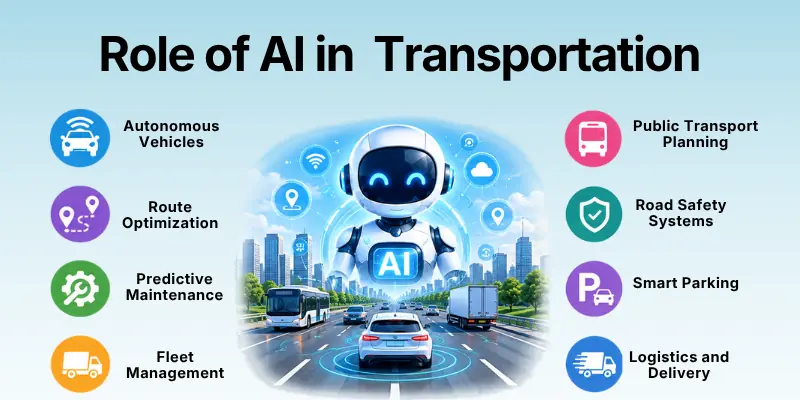
Here are the main roles of artificial intelligence in transport:
- Traffic Management
- Autonomous Vehicles
- Route Optimization
- Predictive Maintenance
- Fleet Management
- Public Transport Planning
- Road Safety Systems
- Smart Parking
- Logistics and Delivery
- Fuel Efficiency Control
- Weather and Traffic Forecasting
- Passenger Assistance
- Toll and Payment Automation
- Emergency Response
- Infrastructure Monitoring
Let us learn about each of these in detail.
1. Traffic Management
Traffic management helps control road flow and reduce congestion. I use smart systems that watch traffic lights, signals, and movement patterns. They make quick changes when roads get crowded. This keeps vehicles moving smoothly and cuts travel time.
Benefits:
- Reduces traffic jams
- Improves travel safety
- Saves time and fuel
- Keeps cities more organized
Example: Cameras and sensors adjust traffic lights in busy intersections automatically.
2. Autonomous Vehicles
Autonomous vehicles are self driving cars that use smart tools to move safely. I have seen how these systems can sense lanes, people, and signals. They drive smoothly without human help and follow road rules perfectly. This brings safer roads and fewer accidents.
Benefits:
- Reduces human driving errors
- Saves time for passengers
- Lowers crash risk
- Increases road safety
Example: A self driving taxi takes passengers through city traffic without manual control.
3. Route Optimization
Route optimization helps drivers take the fastest and safest path. It studies road conditions, weather, and traffic updates. I use such systems daily for travel planning. This saves time, reduces stress, and improves delivery accuracy.
Benefits:
- Shortens travel time
- Cuts fuel costs
- Reduces delays
- Improves customer satisfaction
Example: A delivery app chooses a faster route during rush hour automatically.
4. Predictive Maintenance
Predictive maintenance helps detect vehicle problems before they happen. These systems study engine data, tire pressure, and fuel use. I find it useful because it prevents breakdowns. It keeps vehicles running longer and saves repair money.
Benefits:
- Avoids sudden vehicle failure
- Extends vehicle life
- Reduces repair cost
- Improves road safety
Example: A truck system sends an alert for engine oil replacement before it fails.
5. Fleet Management
Fleet management keeps track of company vehicles. It helps owners monitor location, fuel use, and schedules. I use it to plan trips and control costs better. This makes transport businesses more organized and efficient.
Benefits:
- Tracks all vehicles in real time
- Reduces fuel and route costs
- Improves delivery speed
- Increases driver accountability
Example: A logistics company tracks 100 trucks through a single dashboard.
6. Public Transport Planning
Public transport planning focuses on buses, trains, and subways. These systems study passenger demand and travel times. I like how they make travel smoother for everyone. It helps cities avoid overcrowding and improve service timing.
Benefits:
- Improves passenger experience
- Cuts wait times
- Saves fuel and cost
- Balances city traffic
Example: A city uses travel data to add more buses during busy hours.
7. Road Safety Systems
Road safety systems help prevent accidents and alert drivers in time. They can detect obstacles, risky driving, or sudden lane changes. I have used such alerts, and they truly make driving safer.
Benefits:
- Warns of dangers early
- Prevents collisions
- Saves lives
- Promotes safe driving habits
Example: A car alerts the driver when another vehicle gets too close.
8. Smart Parking
Smart parking helps drivers find empty spots quickly. It studies parking space use and shares live updates. I like this feature because it saves time and reduces frustration. It also cuts pollution from cars circling for space.
Benefits:
- Reduces parking time
- Saves fuel
- Eases driver stress
- Keeps parking areas organized
Example: An app shows the nearest open parking space in real time.
9. Logistics and Delivery
Logistics and delivery systems use smart tracking for goods. They plan transport routes and times for fast delivery. I find it helpful for reducing delays and damage. It keeps both suppliers and customers satisfied.
Benefits:
- Improves delivery speed
- Tracks packages in real time
- Cuts transport cost
- Reduces human error
Example: A shipping company uses live tracking to update customers instantly.
10. Fuel Efficiency Control
Fuel efficiency systems help reduce energy waste in vehicles. They study driving style, road type, and load weight. I use these insights to plan smoother drives. This saves fuel and supports clean transport.
Benefits:
- Reduces fuel costs
- Lowers emissions
- Improves vehicle life
- Supports green travel
Example: A truck system adjusts gear shifts to save fuel on highways.
11. Weather and Traffic Forecasting
These tools predict weather and traffic together for safe trips. They help drivers plan ahead and avoid risky routes. I always check them before long journeys. This makes driving safer and less stressful.
Benefits:
- Prevents travel delays
- Keeps drivers safe
- Improves trip planning
- Reduces accident risk
Example: An app warns a driver of heavy rain before starting the trip.
12. Passenger Assistance
Passenger assistance systems make travel comfortable for everyone. They share updates, directions, and service alerts. I find them useful in trains, buses, and airports. It improves how people move and plan their time.
Benefits:
- Gives real time travel updates
- Improves comfort and access
- Reduces confusion and delay
- Builds trust in public systems
Example: An airport screen shows gate changes for passengers instantly.
13. Toll and Payment Automation
This system allows cars to pass tolls without stopping. It reads number plates or tags automatically. I enjoy how fast it makes road trips. It reduces long queues and saves travel time.
Benefits:
- Speeds up toll collection
- Saves fuel and time
- Reduces traffic jams
- Improves road flow
Example: A toll gate scans a car tag and charges automatically.
14. Emergency Response
Emergency response tools alert rescue teams faster after accidents. They send crash data and location within seconds. I believe this saves many lives each year.
Benefits:
- Sends help quickly
- Saves injured passengers
- Improves road safety
- Reduces rescue delays
Example: A car sensor sends a crash alert to the nearest hospital instantly.
15. Infrastructure Monitoring
Infrastructure monitoring checks roads, bridges, and tunnels for damage. It warns before cracks or failures appear. I have seen how it saves repair time and cost. It keeps transport networks strong and safe.
Benefits:
- Detects damage early
- Saves repair cost
- Prevents accidents
- Increases road life
Example: Sensors on a bridge warn the city of vibration and cracks.
Benefits of AI in Digital Transportation Systems
Guys, in this section we will learn the main benefits that come from these systems. These advantages show how drivers, companies, and cities all gain from smarter transportation.
For Drivers:
- Reduces road stress and confusion
- Saves fuel and time
- Keeps trips safe and smooth
- Helps find parking faster
For Companies:
- Cuts fuel and repair costs
- Improves delivery speed and accuracy
- Keeps fleets safe and efficient
- Builds stronger customer trust
For Cities and People:
- Reduces traffic jams and pollution
- Improves public safety
- Creates cleaner, smarter urban travel
- Supports green and digital growth
Challenges of Implementing AI in Transportation
Guys, in this section we will learn the main challenges this industry faces.
- Installing smart systems costs a lot of money.
- Many old vehicles lack support for new tools.
- Data security and privacy are hard to manage.
- Skilled workers are needed to handle the systems.
- Network or GPS errors cause data gaps.
- City rules and laws are not updated fast enough.
- Weather and road issues affect performance.
- Maintenance cost stays high in early years.
- Public trust takes time to build.
- System failure can cause safety risks.
Understanding these challenges helps the transportation industry plan better and use AI more safely and effectively.
Future of AI in Transport Networks
The future of transportation looks faster, safer, and fully connected. Smart cars, drones, and traffic systems will work together to manage roads. Vehicles will talk to each other and avoid collisions on their own. Cities will use data to design cleaner streets and shorter travel times. With these smart systems, travel will become easier and more sustainable for everyone.
Final Note
In this guide, we have covered the complete concept of the role of AI in transportation. We discussed how these systems manage traffic, vehicles, and passengers effectively. We also explored their main benefits, challenges, and what the future holds. To learn more, check out the FAQ section below.
FAQs: AI and Transportation
Discover how AI in transportation improves road safety, reduces traffic, saves fuel, and transforms public transport. Here are some of the most commonly asked questions related to the uses of AI in transportation:
1. How does artificial intelligence in transport improve road safety?
Artificial intelligence in transport monitors traffic and detects possible dangers. It alerts drivers in real time, helping reduce accidents and protect drivers and pedestrians.
2. What are some common AI in transportation examples?
Common examples include:
- Smart traffic lights that manage traffic flow.
- Driverless cars that use sensors to navigate.
- Route optimization tools that find better routes.
These technologies save time and help reduce road congestion.
3. How is AI used in transportation to save fuel?
AI helps reduce fuel consumption through these steps:
- Analyses traffic and road conditions.
- Find shorter or faster routes.
- Reduces idling time in traffic.
This can lower fuel costs and reduce pollution.
4. What changes has artificial intelligence in the transportation industry brought?
AI has made transport more efficient and predictable. It helps manage buses, trains, and trucks while improving delivery schedules and reducing transport costs.
5. How does AI for transportation help with public transport?
| AI application | Main benefit |
| Passenger tracking | Identifies busy periods |
| Smart scheduling | Improves bus and train timings |
| Route adjustment | Helps reduce waiting times |
These tools make public transport more convenient and efficient.
6. How does machine learning for transportation predict traffic jams?
Machine learning analyses road data, weather, and driving patterns to predict traffic congestion.
A typical process includes:
- Collecting real time traffic data.
- Identifying congestion patterns.
- Predicting possible traffic jams.
- Suggesting alternative routes or signal changes.
7. How is technology improving driver experience in smart vehicles?
Smart vehicle technology makes driving easier through:
- Live navigation and route guidance.
- Parking assistance.
- Real time traffic alerts.
- Support with safer driving.
These features can reduce stress and improve travel comfort.
8. What role does automation play in modern transport systems?
Automation helps perform driving tasks with less manual input. Common examples include:
- Automatic braking.
- Parking assistance.
- Lane keeping support.
These features can reduce some human errors and support safer driving.
9. How does transportation technology help reduce pollution?
Transportation technology can reduce pollution in several ways:
- Electric and hybrid vehicles: Can reduce tailpipe emissions, depending on the vehicle and energy source.
- Smart traffic systems: Help reduce unnecessary idling.
- Route optimisation: Can lower fuel use and emissions.
Together, these technologies can support cleaner urban transport.
10. What is the future of AI in transportation systems?
The future of AI in transportation may include:
- More advanced self driving vehicles.
- Smart highways and connected traffic systems.
- Better traffic prediction and route planning.
- Greener and more efficient transport networks.
These developments could make travel safer, smarter, and more sustainable.




- Be Respectful
- Stay Relevant
- Stay Positive
- True Feedback
- Encourage Discussion
- Avoid Spamming
- No Fake News
- Don't Copy-Paste
- No Personal Attacks
- Be Respectful
- Stay Relevant
- Stay Positive
- True Feedback
- Encourage Discussion
- Avoid Spamming
- No Fake News
- Don't Copy-Paste
- No Personal Attacks
