Role of AI in Cybersecurity in 2026 – Future Tech in Digital Security
Published: 30 Oct 2026
Guys, to understand the role of AI in cybersecurity, we need to look at how it helps protect systems, data, and people from online threats.
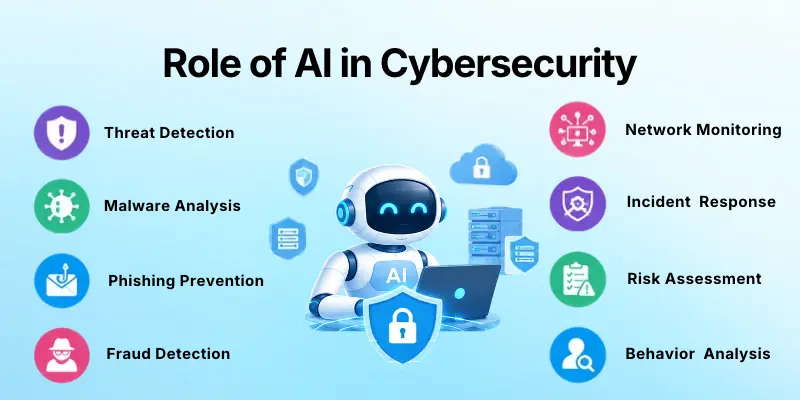
I have seen how attacks are becoming more complex every day, and traditional tools alone are not enough anymore. AI in cybersecurity helps detect risks faster, predict attacks, and automate responses. It keeps networks safer and saves time for security teams.
In this guide, I’ll explain its main roles, benefits, challenges, and the future of AI in this field.
What is the Major Role of AI in Cyber Defence
Here are the main roles of AI in cybersecurity:
- Threat Detection
- Malware Analysis
- Phishing Prevention
- Fraud Detection
- Network Monitoring
- Incident Response
- Risk Assessment
- Behavior Analysis
- Identity Verification
- Data Protection
- Intrusion Detection
- Endpoint Security
- Vulnerability Management
- Cloud Security
- Security Automation
Let’s cover all these applications of AI in cybersecurity.
1. Threat Detection
I use AI tools to detect threats before they cause harm. They analyze large amounts of data and spot unusual activities. I can respond quickly and stop attacks early. This gives me more control and confidence. It saves time and reduces damage.
Benefits:
- Finds hidden threats fast
- Reduces false alerts
- Protects systems 24/7
Examples:
- Detecting ransomware before it spreads
- Spotting unusual login attempts
Early threat detection helps security teams identify suspicious activities before they cause serious damage. Intelligent security tools make it easier to protect networks, devices, and sensitive information.
2. Malware Analysis
I often deal with viruses and harmful software. AI helps me study malware and understand how it works. It identifies patterns in infected files and blocks them. This prevents the same attack from happening again. I feel more secure knowing systems can learn from threats.
Benefits:
- Faster malware detection
- Prevents repeat attacks
- Reduces system downtime
Examples:
- Scanning files for suspicious code
- Detecting new malware variants
Advanced malware analysis helps identify harmful software and understand new attack methods. These smart security solutions reduce system risks and strengthen protection against evolving cyber threats.
3. Phishing Prevention
Phishing emails are everywhere, and I see many people fall for them. AI scans emails and links to find fake messages. It can block them before they reach users. This protects personal data and passwords. I like knowing my inbox is safer.
Benefits:
- Stops fake emails early
- Protects user data
- Reduces data theft risk
Examples:
- Email filters detecting phishing attempts
- Blocking fake login websites
Smart email security tools help users recognize phishing attempts before they steal passwords or personal information. This makes online communication safer and reduces the risk of cyber scams.
4. Fraud Detection
I use AI to catch online frauds before they cause loss. It studies spending patterns and flags anything suspicious. I can act before damage happens. It helps banks, shops, and people stay safe. I feel confident knowing fraud can be stopped in time.
Benefits:
- Detects unusual activity fast
- Prevents financial losses
- Builds customer trust
Examples:
- Spotting fake credit card use
- Detecting false insurance claims
Intelligent fraud detection systems help businesses identify suspicious transactions and prevent financial losses. They also improve payment security and build greater trust among customers.
5. Network Monitoring
I need to know what happens in my network every second. AI tools monitor data flow and spot problems instantly. They alert me if something looks wrong. I can fix issues before they grow. I feel in control of my whole network.
Benefits:
- Real time network tracking
- Prevents system overloads
- Improves response time
Examples:
- Monitoring data transfer patterns
- Flagging suspicious connections
Real time network monitoring helps organizations identify unusual traffic and resolve security problems quickly. Automated monitoring tools support reliable network performance and stronger digital protection.
6. Incident Response
When an attack happens, I must act fast. AI helps me respond automatically. It can isolate infected systems and stop the spread. This limits the damage. I trust it to handle emergencies quickly.
Benefits:
- Reduces damage from attacks
- Speeds up recovery
- Supports human response teams
Examples:
- Shutting down infected servers
- Blocking compromised user accounts
Automated incident response helps security teams contain cyberattacks and recover affected systems more quickly. This approach limits potential damage and improves an organization’s ability to handle security emergencies.
7. Risk Assessment
I use AI to check where my systems are weak. It scans all devices and finds possible risks. I can fix them before hackers do. It keeps my business one step ahead. I feel safer knowing vulnerabilities are under control.
Benefits:
- Identifies weak areas early
- Improves overall security
- Reduces human error
Examples:
- Scanning for outdated software
- Checking firewall settings
Smart risk assessment tools help businesses identify vulnerabilities and prioritize important security fixes. Taking action early reduces exposure to cyberattacks and supports better cybersecurity planning.
8. Behavior Analysis
I like knowing when something unusual happens with user behavior. AI studies how people normally act online. If it spots something strange, it alerts me. This helps find insider threats or hacked accounts. I feel confident about system safety.
Benefits:
- Detects insider threats
- Reduces data misuse
- Keeps user accounts secure
Examples:
- Spotting login from an unknown location
- Detecting abnormal file downloads
Machine learning helps security systems recognize unusual user activities that may indicate compromised accounts or insider threats. This extra layer of monitoring helps protect sensitive information from misuse.
9. Identity Verification
I use AI to verify user identities during logins. It checks faces, voices, or fingerprints to confirm real users. This stops fake accounts and unauthorized access. It makes systems more secure. I like how fast and easy it works.
Benefits:
- Prevents identity theft
- Strengthens login security
- Reduces password fraud
Examples:
- Facial recognition at login
- Voice verification in banking apps
Biometric authentication and intelligent verification systems make it harder for unauthorized users to access protected accounts. These methods strengthen digital identity security while supporting convenient login experiences.
10. Data Protection
I always protect personal and company data. AI helps by encrypting and monitoring sensitive information. It prevents leaks and warns if someone tries to access restricted files. This gives me peace of mind.
Benefits:
- Keeps data private
- Stops leaks
- Detects data misuse
Examples:
- Monitoring file access logs
- Encrypting customer data automatically
Advanced data security solutions help organizations monitor sensitive files, prevent unauthorized access, and identify possible leaks. Strong protection measures also support data privacy and customer confidence.
11. Intrusion Detection
Hackers try to break into networks all the time. I use AI to detect these intrusions quickly. It analyzes traffic and spots unwanted access. I can stop them before damage happens. It makes me feel secure.
Benefits:
- Detects hackers early
- Protects systems from breach
- Improves network safety
Examples:
- Identifying suspicious logins
- Blocking unauthorized users
Intelligent intrusion detection systems analyze network traffic to identify suspicious access attempts and possible attacks. Faster alerts help security teams protect critical systems before threats cause greater damage.
12. Endpoint Security
Every computer or phone connected to the network can be a risk. AI helps secure these endpoints. It checks for harmful apps or files. I can protect every device easily. This keeps the network strong.
Benefits:
- Protects all connected devices
- Reduces malware risk
- Ensures system compliance
Examples:
- Scanning devices for threats
- Blocking unsafe downloads
Smart endpoint protection helps secure laptops, computers, smartphones, and other connected devices against malware and unauthorized access. Keeping these devices protected reduces security risks across the entire network.
13. Vulnerability Management
I don’t want weak points in my systems. AI scans and updates software regularly. It finds missing patches or outdated programs. I can fix them before they cause issues. This keeps everything up to date.
Benefits:
- Prevents attacks through weak spots
- Keeps systems updated
- Reduces manual workload
Examples:
- Automated software patching
- Scanning for old versions
Automated vulnerability management helps organizations discover outdated software, missing patches, and exploitable weaknesses. Regular security checks make it easier to fix problems and reduce the chances of successful attacks.
14. Cloud Security
I store most of my data in the cloud. AI helps secure it by monitoring access and detecting risks. It keeps track of who enters and what changes. This prevents leaks and unauthorized access. I trust my data to stay safe.
Benefits:
- Monitors cloud access
- Prevents data leaks
- Improves account control
Examples:
- Tracking unusual cloud logins
- Detecting misconfigured storage
Intelligent cloud security solutions help businesses monitor account activity, detect configuration errors, and protect stored information. These measures strengthen cloud access controls and reduce the risk of data exposure.
15. Security Automation
I like to save time on routine work. AI automates many security tasks like scanning, alerts, and reporting. It frees my time for big problems. This makes security faster and stronger. I see it as my best assistant.
Benefits:
- Saves time and effort
- Reduces human error
- Improves system accuracy
Examples:
- Automatic threat response
- Generating daily security reports
Automated cybersecurity solutions simplify routine tasks, from monitoring alerts to generating security reports. By reducing manual work, these tools allow security professionals to focus on complex threats and important decisions.
Benefits of AI in Cybersecurity
In this section, I want to show how AI helps everyone involved in cybersecurity. It improves work for every person, from analysts to business owners.
- Security Analyst: I detect and solve threats faster. My work is more accurate.
- IT Manager: I can monitor all systems easily and make better decisions.
- Business Owner: I feel safer knowing my company’s data and money are protected.
- Employee: My accounts and personal data stay secure.
- Customer: I trust the company more because my data is safe.
From faster threat detection to improved data protection, intelligent security technologies help organizations manage digital risks more effectively. These advantages support security professionals, businesses, employees, and customers in an increasingly connected world.
Challenges of AI in Cybersecurity
While AI is powerful, I also face challenges while using it. Some are technical, and others are related to cost or setup.
- High Costs: Installing advanced tools can be expensive.
- Data Privacy: Sensitive data must be protected during training.
- False Alerts: Sometimes, systems detect normal actions as threats.
- Lack of Skills: I need experts who understand both AI and security.
- Integration Issues: Old systems may not support AI tools.
- Cyber Attacks on AI Systems: Hackers can target the AI itself.
Despite its advantages, implementing intelligent cybersecurity solutions requires careful planning, skilled professionals, and reliable data protection. Addressing these challenges helps organizations use modern security technologies responsibly and effectively.
Future of AI in Cybersecurity
I believe the future of AI in cybersecurity looks strong and promising. Attacks are growing smarter, but AI is growing faster. I expect to see more automated defense systems that fix problems on their own. AI will also help predict attacks before they even happen. I’m excited for a future where digital security is faster, safer, and easier to manage.
Final Note
In this guide, we have covered everything about the role of AI in cybersecurity in detail. I shared how it helps detect threats, protect data, and improve online safety. AI is already changing how we fight cybercrime, and its future looks even stronger.
Thank you for reading! Stay connected for more guides where I’ll share how AI is shaping other sectors like AI in data privacy and AI in cloud protection.
FAQs on AI in Cybersecurity
Here are some common questions about artificial intelligence and cybersecurity, with simple answers to help you understand how these technologies improve digital security.
1. What is artificial intelligence with cybersecurity?
Artificial intelligence with cybersecurity means using intelligent computer systems to protect networks, devices, and data. These tools help detect suspicious activities, identify threats, and respond to cyberattacks more quickly.
2. How are cybersecurity and artificial intelligence connected?
Cybersecurity and artificial intelligence work together to improve digital protection in several ways:
- Threat Detection: Identifies suspicious activities before they cause serious harm.
- Risk Monitoring: Finds unusual behavior and possible security weaknesses.
- Automated Response: Helps security teams respond to threats faster.
- Data Protection: Reduces the risk of unauthorized access and data theft.
3. Why do we need artificial intelligence for cybersecurity?
We need artificial intelligence for cybersecurity because modern cyber threats can change quickly and affect many systems at once. Intelligent security tools help organizations:
- Analyze large amounts of data quickly.
- Detecting new and unusual attack patterns.
- Monitor systems around the clock.
- Reduce the time needed to investigate threats.
4. What is the role of cybersecurity and artificial intelligence in data protection?
These technologies help protect sensitive information through the following steps:
- Monitor Data: Track access to important files and databases.
- Identify Risks: Detect unusual activity or possible data leaks.
- Alert Security Teams: Report suspicious actions for investigation.
- Support Protection: Help enforce access controls and other security measures.
5. How does AI and cybersecurity improve online safety?
AI-powered security tools help protect people from common online threats. Here is how they improve online safety:
| Security Feature | How It Helps |
| Phishing Detection | Identifies fake emails and harmful links |
| Fraud Monitoring | Flags suspicious online transactions |
| Malware Detection | Finds harmful files and software |
| Login Protection | Detects unusual sign-in attempts |
These features make online browsing, digital payments, and account access safer.
6. What is AI cybersecurity used for?
AI cybersecurity is used to detect, investigate, and respond to different digital threats. Common uses include:
- Detecting malware and ransomware.
- Blocking phishing attempts.
- Monitoring network traffic.
- Identifying suspicious login activities.
- Supporting automated incident response.
7. How does artificial intelligence in cybersecurity help companies?
Artificial intelligence in cybersecurity helps companies improve security operations and manage digital risks more effectively. Businesses can use these tools to:
- Detecting cyber threats earlier.
- Reduce repetitive security tasks.
- Protect customer and company data.
- Improve incident response.
- Help security teams use their time more effectively.
8. What is security in artificial intelligence?
Security in artificial intelligence means protecting AI systems, their data, and their operations from misuse or cyberattacks. It involves controlling access, protecting sensitive information, monitoring system behavior, and reducing the risk of manipulated data or harmful inputs.
9. How does AI-powered network security work?
AI-powered network security works through a simple process:
- Collects Data: Monitors network traffic and system activities.
- Analyzes Patterns: Compares current activity with normal behavior.
- Detects Threats: Flags suspicious connections or unusual traffic.
- Triggers Alerts: Notifies security teams so they can investigate and respond.
10. What are the benefits of AI in cybersecurity today?
The main benefits of AI in cybersecurity include:
- Faster Threat Detection: Finds suspicious activities more quickly.
- Improved Data Protection: Helps safeguard sensitive information.
- Reduced Manual Work: Automates repetitive security tasks.
- Better Risk Management: Helps identify weaknesses before attackers exploit them.
- Quicker Response: Supports security teams during cyber incidents.
Although these technologies offer valuable protection, human oversight remains important for accurate decisions and effective cybersecurity management.






- Be Respectful
- Stay Relevant
- Stay Positive
- True Feedback
- Encourage Discussion
- Avoid Spamming
- No Fake News
- Don't Copy-Paste
- No Personal Attacks
- Be Respectful
- Stay Relevant
- Stay Positive
- True Feedback
- Encourage Discussion
- Avoid Spamming
- No Fake News
- Don't Copy-Paste
- No Personal Attacks
