Role of AI in Retail in 2026 – The Future of Smart Shopping
Published: 29 Oct 2026
The retail industry is changing fast with the use of new technology. Today, many retail businesses use artificial intelligence to make shopping easier and smarter.
The role of AI in retail is to help stores understand what customers want, improve sales, and manage stock better. It supports both online and in store shopping by offering quick and personal experiences. From product suggestions to smart checkouts, artificial intelligence in retail is helping brands serve customers in better ways.
In this guide, we will cover how AI is used in retail, its benefits, real examples, and what the future holds for this growing technology.
What is the Role of AI in the Shopping Industry?
To understand artificial intelligence in retailing, it helps to look at how it supports every part of the shopping process.
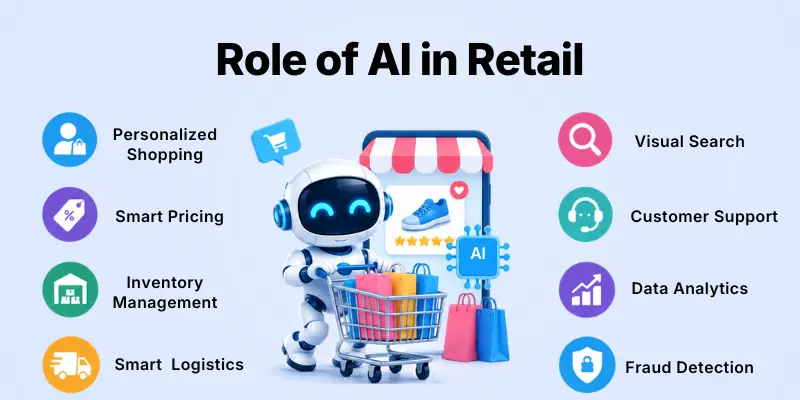
AI is now a key tool for retailers to know their customers, improve service, and manage work more efficiently. It changes how stores plan, sell, and connect with buyers every day.
Main AI use cases in retail are:
- Personalized Shopping
- Product Recommendations
- Smart Pricing
- Demand Forecasting
- Inventory Management
- Supply Chain Control
- Visual Search
- Customer Support
- Chatbots and Assistants
- Fraud Detection
- Trend Prediction
- Store Automation
- Checkout Systems
- Data Analytics
- Marketing Insights
- Virtual Try-Ons
- Shelf Monitoring
- Customer Behavior Analysis
- Loss Prevention
- Smart Logistics
Let us cover all these roles in detail in the next sections.
1. Personalized Shopping
I see personalized shopping as one of the most important roles of AI in retail. It helps stores show products that match what customers like. I can get suggestions based on my past choices or browsing habits. This makes shopping faster and more enjoyable. Stores can make me feel special by offering items I might need. It also helps me discover new products I did not know about.
Benefits:
- Saves customer time
- Improves shopping experience
- Increases purchase chances
- Encourages repeat visits
Example: Amazon shows me products based on what I bought or searched before.
2. Product Recommendations
I notice product recommendations every time I shop online. They suggest items I might like based on what I have seen or bought before. I can quickly find products that fit my taste. Stores can show me related items or popular choices to make shopping easier. I feel more confident buying something new because the suggestions match my interests.
Benefits:
- Speeds up shopping
- Improves customer satisfaction
- Boosts sales
- Increases engagement
Example: Netflix and Amazon recommend products or shows based on my previous choices.
3. Smart Pricing
I see smart pricing helping stores adjust prices in real time. AI looks at demand, competition, and season trends to set the best price. I can get good deals while stores protect profits. Prices can change automatically to match market conditions. I feel prices are fair and competitive.
Benefits:
- Optimizes profits
- Offers competitive pricing
- Increases sales
- Reduces losses
Example: Amazon changes the prices of popular products based on demand and competition every day.
4. Demand Forecasting
I notice demand forecasting helps stores plan better. AI predicts what products will sell more and when. I rarely face out of stock situations because stores prepare in advance. It also helps stores reduce extra inventory. I feel shopping is smoother and more reliable.
Benefits:
- Reduces stockouts
- Improves planning
- Saves storage costs
- Supports better production
Example: Walmart uses AI to forecast demand for groceries during holidays.
5. Inventory Management
I see inventory management keeping stores organized. AI tracks stock in real time. I can find the products I want without delay. Stores know what to reorder and when. It reduces waste and prevents overstocking.
Benefits:
- Maintains proper stock levels
- Reduces waste
- Improves availability
- Saves cost
Example: Zara uses AI to track inventory across all stores and warehouses efficiently.
6. Supply Chain Control
I notice AI in supply chain control helping products reach stores faster. AI plans delivery routes and manages warehouses. I get my orders on time and stores reduce delays. It makes logistics smooth and cost effective.
Benefits:
- Faster deliveries
- Lower logistics cost
- Efficient operations
- Reduces errors
Example: FedEx uses AI to optimize delivery routes and predict delays.
7. Visual Search
I enjoy visual search when I can upload a photo to find a product. AI scans images and finds similar items in stores. I do not need to describe products with words. Shopping becomes easier and fun. Stores increase engagement by showing products I like instantly.
Benefits:
- Quick product search
- Better customer experience
- Increases sales
- Reduces search effort
Example: ASOS allows me to upload a picture of clothing to find similar items online.
8. Customer Support
I see AI helping customer support work faster. AI answers my queries instantly. I do not need to wait long for help. It solves common problems and directs me to solutions. I feel more satisfied with my shopping experience.
Benefits:
- Faster response
- 24/7 support
- Reduces workload
- Improves satisfaction
Example: Sephora uses AI chat support to answer customer questions about products anytime.
9. Chatbots and Assistants
I use chatbots and assistants to get help while shopping. They guide me through purchases or suggest items. AI makes them smart and responsive. I get answers quickly without human help. It makes shopping smoother and faster.
Benefits:
- Instant help
- Reduces staff pressure
- Improves shopping speed
- Increases engagement
Example: H&M chatbot helps me choose sizes, colors, and new arrivals online.
10. Fraud Detection
I see AI protecting stores and customers from fraud. AI monitors transactions and identifies unusual activity. I feel safer buying online. Stores can stop fraud before it happens. It protects money and trust.
Benefits:
- Prevents financial loss
- Enhances security
- Detects fraud early
- Builds trust
Example: PayPal uses AI to detect suspicious transactions and prevent fraud in real time.
11. Trend Prediction
I see trend prediction helping stores know what customers want next. AI analyzes buying patterns and social trends. I can find products that are becoming popular before they sell out. Stores plan stock and marketing based on this information. It makes shopping more up to date and exciting.
Benefits:
- Predicts popular products
- Reduces overstock
- Supports marketing plans
- Improves customer satisfaction
Example: H&M uses AI to predict fashion trends and prepare collections accordingly.
12. Store Automation
I notice store automation making shopping faster. AI controls lighting, security, and other systems. Staff can focus on customers instead of routine tasks. I get a smooth shopping experience. Stores save time and reduce errors.
Benefits:
- Reduces manual work
- Improves efficiency
- Enhances customer experience
- Saves cost
Example: Amazon Go uses AI for cashier less stores where I just walk out after picking products.
13. Checkout Systems
I see AI improving checkout systems to make them faster. AI scans products and calculates bills automatically. I do not need to wait long in lines. Stores handle more customers efficiently. It also reduces mistakes in billing.
Benefits:
- Faster checkout
- Reduces errors
- Improves customer experience
- Increases store efficiency
Example: Walmart uses self checkout systems with AI for quick billing.
14. Data Analytics
I notice AI analyzing sales and customer data. It helps stores understand what I like and need. Stores make decisions based on real information. I get better offers and service. AI helps businesses grow smarter.
Benefits:
- Informed decisions
- Understands customer needs
- Improves sales strategies
- Supports growth
Example: Target uses AI to analyze shopping patterns and create personalized offers.
15. Marketing Insights
I see AI helping stores improve marketing. It tells stores which campaigns work best. I see ads and offers that match my interests. Stores spend money efficiently. It helps me discover products I want quickly.
Benefits:
- Better targeting
- Saves marketing costs
- Increases engagement
- Improves conversion rates
Example: Starbucks uses AI to send personalized offers through their app.
16. Virtual Try-Ons
I enjoy virtual try-ons to see how clothes or makeup look on me. AI uses my picture or camera to simulate the product. I can decide before buying. It reduces returns and makes shopping fun. Stores attract more customers with this technology.
Benefits:
- Helps buying decisions
- Reduces product returns
- Improves shopping experience
- Engages customers
Example: Sephora lets me try makeup virtually before buying.
17. Shelf Monitoring
I notice AI monitoring shelves to see what is out of stock. Cameras and sensors check products automatically. Stores can refill items quickly. I always find what I need. It prevents missing products and improves sales.
Benefits:
- Ensures product availability
- Reduces stockouts
- Improves inventory accuracy
- Supports store planning
Example: Walmart uses AI cameras to monitor shelves and restock in time.
18. Customer Behavior Analysis
I see AI analyzing how I shop in store or online. It tracks my clicks, views, and purchases. Stores understand my habits and preferences better. I get recommendations and offers that fit me. Businesses improve their services based on this insight.
Benefits:
- Understands customer habits
- Supports personalization
- Improves product placement
- Increases engagement
Example: Amazon tracks my browsing and buying history to improve recommendations.
19. Loss Prevention
I notice AI helping stores reduce theft or damage. Cameras and sensors detect suspicious behavior. Staff get alerts to prevent losses. I feel safer shopping. Stores save money and protect products.
Benefits:
- Reduces theft
- Enhances security
- Prevents financial loss
- Improves safety
Example: Macy’s uses AI surveillance to spot unusual activity in stores.
20. Smart Logistics
I see smart logistics making deliveries fast and accurate. AI plans routes, schedules shipments, and predicts delays. I get my online orders on time. Stores save transportation costs and reduce errors.
Benefits:
- Faster deliveries
- Reduces transportation cost
- Improves efficiency
- Enhances customer satisfaction
Example: FedEx and DHL use AI to plan delivery routes and manage packages efficiently.
Benefits of AI in Retail Services
Guys, in this section we will learn the main advantages of AI in retail in a simple way. AI helps stores work better and makes shopping easier for customers.
- AI improves the shopping experience for every customer.
- It helps stores make smarter business decisions daily.
- AI saves time for both customers and staff.
- It reduces costs by optimizing store operations efficiently.
- AI increases sales through better product recommendations and offers.
- It helps stores predict demand and manage inventory better.
- AI enhances marketing by targeting the right customers.
- It prevents losses by detecting fraud and theft early.
- AI improves delivery speed and logistics for online orders.
- It offers helpful information about customer behavior patterns.
By using AI in retail, stores can improve customer satisfaction, save money, and increase sales. These benefits help retail businesses grow faster and provide customers with a smoother and more enjoyable shopping experience.
Challenges of Implementing AI in Retail Market
Using AI in retail is very helpful, but it comes with some challenges. I notice that not every store can use it easily. Some problems can make adoption difficult for businesses.
Main Challenges:
- High Costs: AI tools and setup can be expensive for small stores.
- Data Privacy Issues: Collecting and using customer data must follow strict rules.
- Integration Problems: Older systems may not work well with AI solutions.
- Skill Gaps: Staff need training to use AI tools effectively.
- Over Reliance on Technology: Stores can struggle if AI systems fail.
- Maintenance Needs: AI systems require regular updates and monitoring.
Understanding these challenges of AI in retail helps businesses choose the right AI tools, protect customer data, and control costs. With proper planning and staff training, stores can use AI more safely and improve their business operations.
Future of AI in Retail Business
I see AI becoming even more important in retail in the coming years. Stores will use AI to make shopping faster, smarter, and more personal. I think it will help retailers understand customers better than ever.
New tools will make online and in store shopping more connected. AI will also help stores reduce waste and save money. Ultimately, smarter AI solutions will shape the future of retail.
Key Future Trends:
- AI will enable hyper personalized shopping experiences for everyone.
- Voice and visual search will simplify the shopping process.
- AI will improve supply chains and delivery systems further.
- Predictive AI will help stores plan products and marketing.
- Virtual try-ons and AR will make buying online more fun.
As AI technology continues to grow, retailers can offer smarter shopping experiences, faster deliveries, and more personalized services. These future AI trends will help retail businesses meet customer needs, reduce costs, and stay competitive.
Conclusion
In this guide, we have covered the detailed concept of the role of AI in retail. We explained how AI helps stores improve shopping experiences, manage inventory, support marketing, and boost sales.
We also discussed real examples, key benefits, challenges, and future trends. AI is changing retail and making it smarter, faster, and more personal for customers. To learn more and find quick answers, check out the FAQs below.
Frequently Asked Queries About AI in Retail Operations
These FAQs explain how artificial intelligence in retail works, its main benefits, and how stores use AI to improve shopping. Find quick answers to common questions about retail AI technology below.
1. What Is Artificial Intelligence in Retail?
Artificial intelligence in retail means using smart technology to improve store operations, understand customers, manage stock, and make shopping easier.
2. How Is AI Used in Retail Stores?
Retail stores use AI in several ways:
- Product recommendations: Suggest items customers may like.
- Smart checkouts: Make payments faster.
- Inventory tracking: Help stores monitor stock.
- Chatbots: Answer customer questions quickly.
3. What Is the Role of Artificial Intelligence in Retail?
AI helps retailers understand customer needs, improve pricing decisions, manage deliveries, and provide personalized shopping experiences. It also helps businesses save time and make smarter decisions.
4. How Does AI Improve Retail Business Operations?
AI supports retail businesses through these simple steps:
- Collects data: Learns about sales and customer preferences.
- Finds patterns: Identifies popular products and buying trends.
- Suggests actions: Helps stores plan stock, offers, and prices.
- Improves results: Supports better service and business decisions.
5. What Is Deep Learning in Retail?
Deep learning is a type of AI that finds complex patterns in large amounts of data. Retailers can use it for:
- Predicting customer demand.
- Detecting unusual transactions.
- Improving product recommendations.
6. What Are Some Examples of AI in Retail?
Here are a few common examples of artificial intelligence in retail:
| Example | How It Helps |
| Product recommendations | Suggests relevant products |
| Virtual try-ons | Lets customers preview products |
| AI chatbots | Answers customer questions |
| Demand forecasting | Helps predict stock needs |
For example, Amazon offers product recommendations, while Sephora provides virtual makeup try-on features.
7. How Big Is the AI in the Retail Market?
The AI in the retail market is growing as more businesses use smart technology. Retailers are investing in AI to improve customer service, manage inventory, automate tasks, and increase efficiency.
8. How Does Machine Learning Work in Retail?
Machine learning helps retail systems learn from data and improve predictions over time. The process usually includes:
- Studying past sales and customer activity.
- Finding patterns in shopping behavior.
- Predicting demand or recommending products.
- Using new data to improve future results.
9. What Are the Benefits of Machine Learning in Retail?
Machine learning offers several benefits for retailers. Use this quick checklist to understand its value:
- Helps manage inventory more accurately.
- Reduces waste and unnecessary costs.
- Supports personalized product recommendations.
- Helps predict sales and customer demand.
- Improves marketing and business planning.
10. Is AI Changing the Future of Retail?
Yes, AI is changing the future of retail by making shopping more personal, efficient, and convenient. Future trends include voice search, virtual try-ons, smarter delivery systems, and AI-powered customer service.





- Be Respectful
- Stay Relevant
- Stay Positive
- True Feedback
- Encourage Discussion
- Avoid Spamming
- No Fake News
- Don't Copy-Paste
- No Personal Attacks
- Be Respectful
- Stay Relevant
- Stay Positive
- True Feedback
- Encourage Discussion
- Avoid Spamming
- No Fake News
- Don't Copy-Paste
- No Personal Attacks
