Role of AI in Smart Cities in 2026 – Discover the Future of Smarter, Safer Cities
Published: 6 Nov 2026
Smart cities are modern urban areas that use technology to make life easier and more organized. They focus on solving daily city problems like traffic, waste, energy, and safety. These cities use smart systems that collect data and act on it in real time.
The goal is to create safe, clean, and sustainable places for people to live. I believe such cities bring comfort, speed, and better control over public services.
In this guide, we will cover what smart cities are, how AI supports them, their roles, benefits, challenges, and what the future looks like for this technology.
Major Role of AI in Smart Cities
Here we will cover the main discussion of our article. Smart cities depend on digital systems that help manage all important areas, from roads to water.
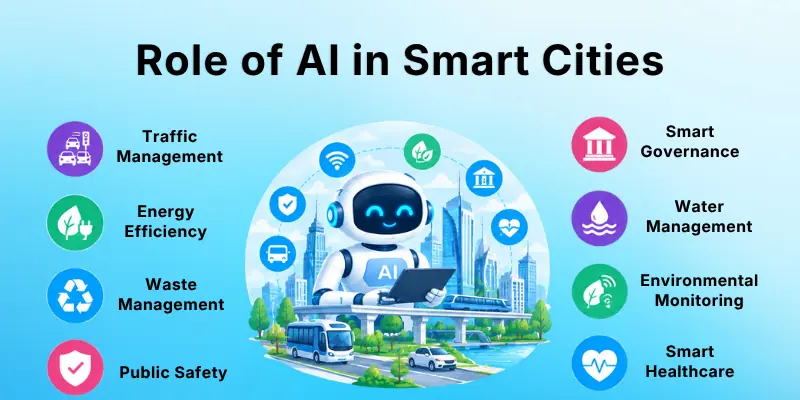
These systems collect information, study it, and help make smart decisions. I see this as a way to keep everything running without delay or confusion.
Main uses of AI in smart cities:
- Traffic Management
- Energy Efficiency
- Waste Management
- Public Safety
- Smart Governance
- Water Management
- Environmental Monitoring
- Smart Healthcare
- Smart Buildings
- Public Transport Optimization
Let us learn about each in detail.
1. Traffic Management
Smart traffic systems help control roads and signals. They track how cars move and change lights to reduce jams. These systems also suggest better routes to drivers. I think it saves time and makes driving less stressful. Cameras and sensors collect live data to guide the flow. The system also supports quick response during accidents. It improves the overall travel experience.
Benefits:
- Smooth and steady traffic flow
- Fewer delays on busy roads
- Safer driving conditions
Example: Singapore uses smart traffic lights that adjust to real time traffic movement.
2. Energy Efficiency
Smart energy systems help cities use electricity wisely. They check how much energy people use at different times. I like how they predict future needs and balance the supply. These systems also use renewable sources like wind and solar. Buildings with smart meters reduce waste and cut bills. This makes the city greener and more efficient.
Benefits:
- Less power waste
- Lower electricity bills
- Cleaner energy use
Example: Amsterdam uses smart grids that control energy supply for homes and offices.
3. Waste Management
Smart waste systems make the cleaning process faster. They use sensors to check when bins are full. I think this helps workers collect waste only when needed. It saves time, fuel, and money. Clean streets also create a healthier environment. The whole process becomes more organized and simple.
Benefits:
- Cleaner public areas
- Less fuel and time waste
- Improved recycling process
Example: Barcelona uses smart waste bins that send alerts when they reach full capacity.
4. Public Safety
Public safety systems help keep citizens safe and secure. Cameras and sensors watch public spaces and detect strange activity. I like how they alert the police or emergency teams quickly. It also helps reduce crime and protect property. These systems improve response time during fire or medical cases. Safety becomes stronger with better city control.
Benefits:
- Faster emergency help
- Safer public spaces
- Lower crime levels
Example: London uses smart monitoring systems to track and prevent criminal activity.
5. Smart Governance
Smart governance makes city management faster and easier. Governments use online systems to handle public services. I think it makes things simpler for both people and officials. Citizens can apply for documents, report issues, and get updates online. It increases transparency and builds trust. The result is smoother city operations.
Benefits:
- Easy access to public services
- Transparent systems
- Faster response to public needs
Example: Dubai uses digital platforms for government services and public requests.
6. Water Management
Smart cities control water use with sensors and data tools. These systems check for leaks and monitor usage patterns. I find this useful in saving water and preventing waste. It also helps maintain water quality. People can track their daily use and fix problems early. The system makes sure clean water reaches every area.
Benefits:
- Reduced water waste
- Clean and safe supply
- Early detection of leaks
Example: Singapore uses smart sensors to manage its national water supply system.
7. Environmental Monitoring
Smart cities track air quality, temperature, and pollution levels. Sensors collect live data and alert the system if levels rise. I like how this helps in planning better city health actions. These systems support a cleaner and greener environment. It also helps control waste and reduce pollution sources. The data is useful for future planning too.
Benefits:
- Cleaner air and surroundings
- Better control of pollution
- Healthier environment for citizens
Example: Beijing uses smart air monitoring systems to control pollution.
8. Smart Healthcare
Smart healthcare connects hospitals, clinics, and health apps. It helps doctors track patients and manage hospital systems. I think this makes medical help faster and easier to get. It also supports emergency alerts and disease control. Citizens can monitor their health through connected devices. It keeps both patients and doctors informed.
Benefits:
- Faster medical help
- Better patient management
- Improved public health tracking
Example: Tokyo uses smart healthcare systems for elderly monitoring and support.
9. Smart Buildings
Smart buildings use automatic systems for lighting, temperature, and safety. These buildings adjust settings based on people’s presence. I find them energy efficient and comfortable. They also help reduce electricity costs. The system works through sensors placed in every room. It creates safer and smarter living spaces.
Benefits:
- Energy savings
- Comfortable indoor environment
- Better safety and control
Example: London has offices that adjust light and temperature using smart systems.
10. Public Transport Optimization
Smart transport systems track buses, trains, and taxis in real time. They share updates with passengers instantly. I like how this helps people plan better routes. It also reduces long waits and fuel use. Public transport becomes faster and more reliable. It improves the travel experience for daily users.
Benefits:
- On time transport services
- Better travel planning
- Lower fuel use
Example: Seoul uses tracking tools to show bus and subway locations to users.
Benefits of AI in Digital Cities
Guys, in this section we will learn the main benefits that come from these systems. These advantages show how smart cities improve life for everyone and support future growth.
1. Benefits for Citizens
- Faster and easier daily travel
- Fewer traffic jams and delays
- Clean and healthy public spaces
- Safer streets and public areas
- Lower energy and water bills
- Quick access to healthcare and services
- Better waste control in neighborhoods
- Peace of mind through improved security
- More comfort at home with smart systems
- Stronger community connection through city apps
2. Benefits for City Managers and Administrators
- Better control over all city systems
- Faster response to public issues
- Live data for smarter decisions
- Lower maintenance and repair costs
- Easy tracking of traffic, energy, and waste
- Clear reports for planning and budgeting
- Strong coordination among city departments
- Higher city performance and efficiency
- Real time alerts for system failures
- Better citizen satisfaction
3. Benefits for Business Owners and Investors
- Lower power and resource costs
- Secure and well managed business areas
- More customer engagement through digital tools
- Real time data for better business plans
- Improved employee comfort and safety
- Faster logistics and supply chain tracking
- Higher property and brand value
- Easy online payments and automation
- Stable environment for long term growth
- Strong business reputation in smart zones
4. Benefits for the Government
- Faster and easier public service delivery
- Real time monitoring of city performance
- Better use of funds and resources
- Transparent systems that build trust
- Less paperwork and manual work
- Easy management of transport and utilities
- Better policy planning with accurate data
- Stronger link between people and government
- Lower corruption and error rates
- Improved city development and reputation
5. Benefits for the Environment
- Lower air and water pollution levels
- Less energy waste across systems
- Better waste and recycling management
- Increased use of renewable energy
- Smarter water control and supply
- Cleaner streets and green spaces
- Reduced carbon footprint
- Controlled noise in busy areas
- Real time tracking of pollution levels
- Sustainable city growth and balance with nature
6. Benefits for Future Generations
- Cleaner and safer living conditions
- More job chances in tech and city work
- Better digital learning and education tools
- Healthier public systems and hospitals
- Improved lifestyle quality
- Stronger economy and smart infrastructure
- Easier daily living through automation
- Safer roads and homes
- Equal access to city resources
- Long term stability and green future
In short, AI makes our cities smarter, safer, cleaner, and better for everyone. It helps improve our lives today and creates a brighter, greener future for the next generations.
Challenges of Implementing AI in Smart Urban Communities
Guys, in this section we will learn the main challenges smart cities face.
Main Challenges:
- Setting up smart city systems costs a lot of money.
- Skilled staff are needed to manage city technology systems.
- Protecting data privacy is very important and challenging today.
- Old city systems are hard to connect with new tools.
- Systems need constant updates to work efficiently every day.
- Cybersecurity threats can harm city services and data security.
- People may not trust new technology or smart systems.
- Not all citizens have equal access to technology tools.
- System failures can disrupt important services and city operations.
- Managing resources and infrastructure is difficult and requires planning.
Overcoming these challenges can help smart cities use AI more safely, efficiently, and effectively.
Future of Smart Cities
I believe the future of smart cities looks very bright. Cities will become more connected, and public services will be faster everywhere. Transport will run smoothly using smart traffic systems. Buildings will save energy and reduce city costs. Healthcare will be faster and more accessible for everyone. Cities will manage waste and water in better ways. Environmental monitoring will keep air and streets cleaner. Governments will plan better using data from smart systems. Young people will enjoy safer, cleaner, and smarter cities.
Final Note
In this guide, we have covered the role of AI in smart cities. We explained how systems improve traffic, energy, health, and safety. We also discussed benefits, challenges, and what the future holds. Smart cities make life easier, cleaner, safer, and more efficient. I believe everyone will benefit from these connected systems. Now you can understand how technology shapes modern city life.
FAQs
Discover how artificial intelligence (AI) is making smart cities safer, cleaner, and more efficient in 2026. These FAQs explore how AI improves daily life, traffic, energy management, public safety, and sustainable urban development.
Here are some of the most commonly asked questions related to the AI and cities combo:
1. How Does AI Make Smart Cities Safer, Cleaner, and More Efficient?
AI helps smart cities manage traffic, energy, and public safety more effectively. It also supports faster emergency responses and better city planning, helping people enjoy cleaner surroundings and safer streets.
2. How Do Smart Cities Improve Daily Life for Citizens?
Smart cities make everyday life easier through:
- Faster transport and reduced travel delays.
- Better access to healthcare and public services.
- Convenient online services that save time.
- Cleaner surroundings and improved safety.
3. Can Smart Cities Reduce Traffic Problems?
Yes! AI powered traffic systems can help reduce congestion through these steps:
- Monitor traffic conditions in real time.
- Adjust traffic signals according to road demand.
- Suggest alternative routes to drivers.
- Help reduce travel delays and fuel waste.
4. How Do Smart Cities Help Manage Energy?
Smart cities use intelligent systems to monitor electricity use and reduce waste.
| Smart technology | Main benefit |
| Smart meters | Track energy consumption |
| Intelligent grids | Balance electricity supply and demand |
| Smart lighting | Reduce unnecessary energy use |
| Renewable energy systems | Support cleaner energy |
5. What Are Some Examples of AI in Smart Cities?
Singapore and Dubai are examples of cities using smart technologies to improve urban services. Common applications include:
- AI assisted traffic management.
- Smart energy monitoring.
- Digital public services.
- Technology supported public safety.
These systems help cities manage resources and improve residents’ daily experiences.
6. How Do Smart Cities Protect the Environment?
Smart cities use AI to monitor and manage environmental resources. Their main benefits include:
- Tracking air and water pollution.
- Improving waste collection and recycling.
- Reducing unnecessary energy use.
- Detecting water leaks.
- Supporting cleaner and greener urban spaces.
7. What Challenges Do Smart Cities Face in Daily Operations?
Building and maintaining smart cities can be difficult because of several challenges. Use this checklist to understand the main issues:
- High installation and maintenance costs.
- Data privacy and cybersecurity risks.
- Shortage of skilled professionals.
- Difficulty connecting older infrastructure with new systems.
8. What Will AI Powered Cities Look Like in the Future?
Future cities may become more connected, efficient, and responsive to people’s needs. Here is what residents could experience:
- Smarter transport with better traffic flow.
- More accessible healthcare and digital services.
- Efficient energy use and cleaner surroundings.
- Improved public safety and urban planning.
9. How Do Smart Cities Improve Public Safety?
AI can help authorities monitor public areas, identify potential risks, and respond to emergencies more quickly. Responsible use of these technologies, with appropriate privacy safeguards and human oversight, is essential for protecting citizens.
10. Why Are Smart Cities Important Today?
Smart cities help address modern urban challenges by improving services and using resources more efficiently. They can reduce waste, support cleaner environments, improve city planning, and make everyday life safer and more convenient.

Role of AI in COVID-19 Pandemic - Discover the Technology Behind Faster Detection and Better Protection




- Be Respectful
- Stay Relevant
- Stay Positive
- True Feedback
- Encourage Discussion
- Avoid Spamming
- No Fake News
- Don't Copy-Paste
- No Personal Attacks
- Be Respectful
- Stay Relevant
- Stay Positive
- True Feedback
- Encourage Discussion
- Avoid Spamming
- No Fake News
- Don't Copy-Paste
- No Personal Attacks
