Role of AI in Human Resources in 2026 – The Rise of Intelligent HR
Published: 30 Oct 2026
To understand the role of AI in human resources, we need to see how technology is changing the way HR teams work. It is not just about automation but also about improving hiring, training, and employee management.
It helps HR professionals save time, reduce errors, and make fairer decisions. From finding the best talent to keeping employees happy, it plays a big part in modern HRM work. In this post, we will cover the detailed role of artificial intelligence in HR!
What is the Major Role of AI in Human Resources?
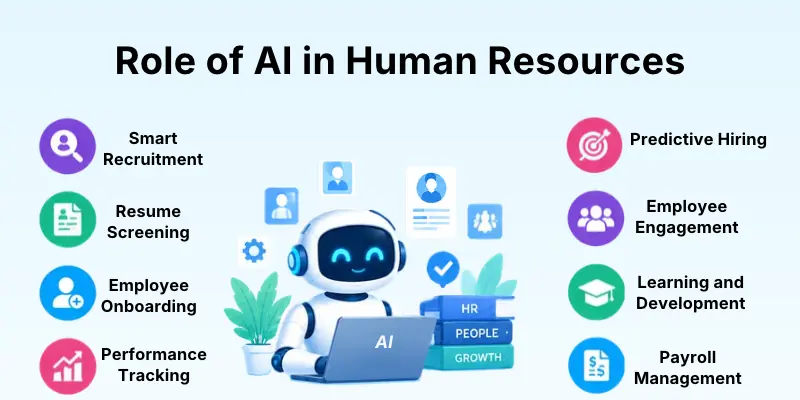
Guys, to understand the role of artificial intelligence in human resources is to mainly know about the applications of AI in HR industry:
- Smart Recruitment
- Resume Screening
- Employee Onboarding
- Performance Tracking
- Predictive Hiring
- Employee Engagement
- Learning and Development
- Payroll Management
- Workforce Planning
- Employee Retention
- Diversity and Inclusion
- Sentiment Analysis
- Attendance Monitoring
- Internal Communication
- Succession Planning
Let’s cover all these roles in detail.
1. Smart Recruitment
In my HR experience, I’ve seen how technology makes hiring smarter. It helps find and shortlist candidates quickly by checking skills and experience. It removes manual errors and gives a list of people who truly fit the job. I can focus more on interviews and culture fit rather than endless resume checks. It makes the process faster and more accurate.
Benefits:
- Saves hiring time
- Improves candidate quality
- Reduces human bias
Examples:
- Automated job matching tools
- Screening systems that rank candidates by skill match
Smart hiring tools help HR teams find suitable candidates faster while improving the overall recruitment process. This allows recruiters to spend more time building strong teams and choosing the right talent.
2. Resume Screening
I’ve spent hours reading resumes before, but now smart systems handle that job better. They scan thousands of applications and highlight the best ones. This keeps the process fair and consistent. I only review the top matches and make better hiring choices.
Benefits:
- Saves manual effort
- Filters based on job criteria
- Avoids missing good candidates
Examples:
- Keyword based resume ranking
- Skill match software used in HR portals
Automated screening systems make it easier to review applications and identify candidates who match job requirements. As a result, recruiters can save time and focus on the most promising applicants.
3. Employee Onboarding
Starting a new job should be smooth, and technology makes it easier. I use digital onboarding tools that guide employees through training, forms, and introductions. It creates a friendly start and helps them adjust fast. This improves their early experience and confidence.
Benefits:
- Speeds up onboarding
- Reduces HR workload
- Improves employee satisfaction
Examples:
- Automated onboarding platforms
- Self guided digital training programs
Digital onboarding solutions help new employees settle into their roles with less stress and confusion. A smooth start also improves employee confidence, satisfaction, and long term commitment.
4. Performance Tracking
Tracking performance used to be complex, but now it’s simple. I can see how each employee is doing through data and progress charts. It helps me reward high performers and support those who need help. This brings fairness and clarity to performance reviews.
Benefits:
- Clear performance insights
- Fair evaluations
- Increases motivation
Examples:
- Employee dashboards
- Data based performance reports
Data driven performance tools help managers understand employee progress and identify areas for improvement. These insights support fair reviews, better feedback, and stronger workplace productivity.
5. Predictive Hiring
I use predictive hiring tools to guess how well a candidate might perform before they even join. It studies past data to predict job success. This helps avoid wrong hires and improves team quality. It makes recruitment more strategic.
Benefits:
- Reduces bad hires
- Improves retention
- Builds stronger teams
Examples:
- Predictive analytics for hiring outcomes
- Tools that assess job fit probability
Predictive analytics gives HR teams useful insights into potential job performance and candidate suitability. When combined with human judgment, these insights can support smarter hiring decisions and reduce costly recruitment mistakes.
6. Employee Engagement
Keeping employees happy is one of my main goals. I use digital surveys and engagement tools to see how people feel. It helps me fix problems before they grow. A more engaged team performs better and stays longer.
Benefits:
- Increases job satisfaction
- Builds trust
- Reduces turnover
Examples:
- Pulse surveys
- Feedback tracking platforms
Employee engagement tools help businesses understand workplace concerns and improve staff satisfaction. By responding to feedback early, HR teams can build trust, strengthen relationships, and reduce employee turnover.
7. Learning and Development
Continuous learning keeps the team strong. I use smart systems that recommend training based on each person’s role and goals. It helps employees grow faster and stay up to date. The best part is seeing their confidence improve.
Benefits:
- Personalized training
- Better career growth
- Higher employee satisfaction
Examples:
- Learning platforms that suggest courses
- Skill based development plans
Personalized learning platforms help employees develop relevant skills and prepare for future career opportunities. This approach supports continuous learning, improves job performance, and creates a more capable workforce.
8. Payroll Management
Payroll used to take days, but not anymore. I now use automated payroll tools that handle salaries, taxes, and records correctly. It reduces errors and saves so much time. This keeps employees happy and confident about their pay.
Benefits:
- Error free payments
- Time savings
- Easy financial reports
Examples:
- Payroll automation tools
- Digital salary tracking systems
Payroll automation simplifies salary calculations, tax records, and payment processing while reducing manual mistakes. These digital solutions help HR teams manage payroll more efficiently and maintain employee trust.
9. Workforce Planning
Managing workforce needs can be tricky. I use digital tools to predict when and where we’ll need more staff. This helps with budgeting and avoids overstaffing. It’s a big help for long term planning.
Benefits:
- Smarter hiring forecasts
- Lower costs
- Better resource use
Examples:
- Workforce forecasting tools
- Demand supply planning systems
Workforce analytics helps companies predict staffing needs and make better decisions about hiring and budgets. With accurate forecasts, businesses can use their resources wisely and prepare for future growth.
10. Employee Retention
It’s always hard to lose good employees. I use systems that track warning signs like low morale or poor engagement. This helps me act early and keep the right people. Retention rates have improved a lot.
Benefits:
- Early problem detection
- Stronger loyalty
- Better workplace culture
Examples:
- Retention analytics
- Exit risk monitoring systems
Predictive insights help HR professionals identify possible reasons for employee dissatisfaction before they lead to resignations. Taking timely action can improve workplace loyalty, strengthen team stability, and retain valuable talent.
11. Diversity and Inclusion
Fair hiring is a must in every company. I use systems that remove bias from job posts and candidate screening. It helps me create a diverse team that brings new ideas. This builds a healthy, open culture.
Benefits:
- Fair hiring process
- More creativity
- Positive company image
Examples:
- Bias free screening tools
- Inclusive job description analyzers
Inclusive hiring technologies can help identify biased language and support fairer recruitment practices. When used responsibly, these solutions help companies welcome different perspectives and create a more inclusive workplace.
12. Sentiment Analysis
I often check how employees feel through feedback and messages. These tools help me read the overall mood of the workplace. It’s like having a window into team emotions. I can act quickly if morale drops.
Benefits:
- Better understanding of employees
- Early issue detection
- Stronger communication
Examples:
- Feedback analysis tools
- Mood tracking dashboards
Sentiment analysis tools turn employee feedback into useful insights about workplace morale and satisfaction. These findings help managers address concerns early and create a healthier, more supportive work environment.
13. Attendance Monitoring
Tracking attendance manually can be tiring. Now I use digital systems that record attendance automatically. It keeps data accurate and saves time for HR. This helps in fair salary and leave management.
Benefits:
- Accurate records
- Saves HR effort
- Improves transparency
Examples:
- Attendance tracking software
- Biometric systems
Automated attendance systems make it easier to track working hours, manage leave, and maintain accurate employee records. This improves HR efficiency while supporting transparent attendance and payroll practices.
14. Internal Communication
Good communication keeps everyone aligned. I use digital chat systems that keep the team connected. It helps new employees learn faster and boosts collaboration. Everyone stays updated on company goals.
Benefits:
- Stronger teamwork
- Faster updates
- Easier coordination
Examples:
- HR chat platforms
- Company communication tools
Smart communication platforms help employees share information, solve problems, and stay connected across teams. Better collaboration keeps everyone informed and supports a more productive workplace.
15. Succession Planning
I plan for the future by finding who can take key roles next. This helps avoid sudden leadership gaps. It prepares employees for bigger responsibilities. It keeps the company stable and ready for change.
Benefits:
- Strong leadership pipeline
- Reduced role gaps
- Smooth transitions
Examples:
- Talent pipeline software
- Future role mapping systems
Talent analytics helps organizations identify future leaders and prepare employees for important roles. This forward thinking approach reduces leadership gaps and supports smooth business operations during periods of change.
General Benefits of AI in Human Resources
In this section, I want to show how it helps everyone involved in HR, from managers to employees to the company as a whole. I’ve seen how it changes the daily flow of work, reduces stress, and helps build a better workplace.
For HR Managers:
- Saves time on daily HR work
- Makes reports and data more accurate
- Helps choose the right people for jobs
- Reduces human errors and bias
- Makes planning and reviews easier
For Employees:
- Easy joining and training process
- Quick help and answers from HR
- Fair performance checks
- Better learning and skill growth
- More job comfort and confidence
For Companies:
- Lowers hiring and training costs
- Keeps employees happy and loyal
- Builds stronger work culture
- Improves overall performance
- Supports long term company growth
Modern HR technologies help managers make informed decisions, give employees a better work experience, and improve overall business performance. By combining automation with human expertise, companies can build more efficient, supportive, and productive workplaces.
Challenges of Implementing AI in Human Resources
Using technology in HR has many benefits, but it also brings some challenges. Many companies face these issues when they start.
Key Challenges:
- Data Safety: Keeping employee data private and secure is hard.
- HR Training: Teams need time to learn new systems.
- High Cost: Small companies may find setup expensive.
- Too Much Dependence: Relying only on machines can reduce the human side of HR.
- Regular Updates: Systems need care and updates to work well.
It’s important to keep a balance between people and technology. HR tools help, but human care and judgment still matter most.
Future of AI in Human Resources
The future of HR will be smarter and more people focused. Smart tools will handle most daily HR work like hiring, payroll, and reports. This will give HR teams more time to focus on people and growth. Systems will also study work patterns to find what employees need before problems appear.
Training will be more personal, and career paths will be easier to plan. Companies will use data to build fair and happy workplaces. I believe technology will support HR teams, not replace them. The real future of HR will still depend on care, trust, and human connection.
Final Note
In this guide, we have covered the detailed role of AI in human resources and how it is changing the HR industry. I have explained how it helps in hiring, training, payroll, and employee engagement. We also looked at its benefits, common challenges, and what the future of HR may look like.
It’s clear that technology is making HR smarter, faster, and more people friendly. Thank you for reading this guide. Stay connected for more articles where I’ll share how AI is transforming other industries too.
FAQs About AI in HR
Here are some of the most common questions about artificial intelligence in HR, its benefits, and how modern HR teams use smart technology in the workplace.
1. What is artificial intelligence HR?
Artificial intelligence HR means using smart digital systems to support hiring, training, payroll, and employee management. It helps HR teams complete daily tasks faster, reduce errors, and improve workplace decisions.
2. How does human resources artificial intelligence help in hiring?
Human resources artificial intelligence supports hiring by:
- Screening resumes quickly
- Shortlisting suitable candidates
- Matching skills with job requirements
- Reducing manual recruitment work
- Helping recruiters make faster decisions
3. What are the main benefits of AI in HR?
The main benefits include:
- Saving time and reducing paperwork
- Improving HR decision making
- Reducing repetitive tasks and errors
- Supporting employee training and engagement
- Making HR processes more efficient
4. How does artificial intelligence HR improve employee experience?
It improves the employee experience through a few simple steps:
Step 1: Provides quick answers and HR support.
Step 2: Makes onboarding and training easier.
Step 3: Gives employees faster feedback and useful resources.
Step 4: Creates a smoother and more connected workplace experience.
5. What is human resources transformation with AI?
Human resources transformation means replacing slow, traditional HR processes with digital and intelligent systems. This can make hiring, payroll, employee reviews, and workforce planning faster, more organized, and more transparent.
6. How do AI tools for HR support managers?
| HR Need | How Smart Tools Help |
| Reporting | Organize employee data |
| Performance | Track progress and goals |
| Planning | Provide useful workforce insights |
| Decision making | Support faster, data based choices |
7. Why do companies use the best AI tools for human resources?
Companies use these tools to simplify important HR tasks and reduce operational costs. They can manage hiring, payroll, employee information, and reporting while reducing manual errors and improving overall efficiency.
8. Can small businesses use artificial intelligence HR systems?
Yes, small businesses can use these systems as well. Many platforms offer simple solutions that can help smaller teams manage:
- Recruitment
- Employee records
- Payroll
- Training
- Everyday HR tasks
9. How is AI in HR used for employee training?
Smart learning systems can create more personalized training by following these steps:
- Review an employee’s current skills.
- Identify areas that need improvement.
- Suggest suitable courses or lessons.
- Track learning progress.
- Recommend further development opportunities.
10. What is the future of human resources in artificial intelligence?
The future of human resources will become more data driven, connected, and personalized. Smart technology can help HR teams predict workforce needs, improve recruitment, support employee growth, and build better workplace experiences.




- Be Respectful
- Stay Relevant
- Stay Positive
- True Feedback
- Encourage Discussion
- Avoid Spamming
- No Fake News
- Don't Copy-Paste
- No Personal Attacks
- Be Respectful
- Stay Relevant
- Stay Positive
- True Feedback
- Encourage Discussion
- Avoid Spamming
- No Fake News
- Don't Copy-Paste
- No Personal Attacks
