Role of AI in supply chain management in 2026 – How AI Is Cutting Costs and Boosting Efficiency
Published: 10 Nov 2026
To understand the role of AI in supply chain management, we first need to know how smart systems help in moving goods from one place to another.
It means using AI to plan, manage, and improve every step of the supply chain. I see AI as a strong tool that saves time and reduces mistakes. It helps companies keep track of products, meet customer needs, and cut costs. From forecasting demand to managing delivery, AI is now part of every process.
In this lesson, I’ll explain how AI works in supply chains, its main uses, benefits, challenges, and the future ahead.
Influence of AI in Supply Chain Management
The role of artificial intelligence in supply chain management is to bring speed, accuracy, and smart decisions into daily work.
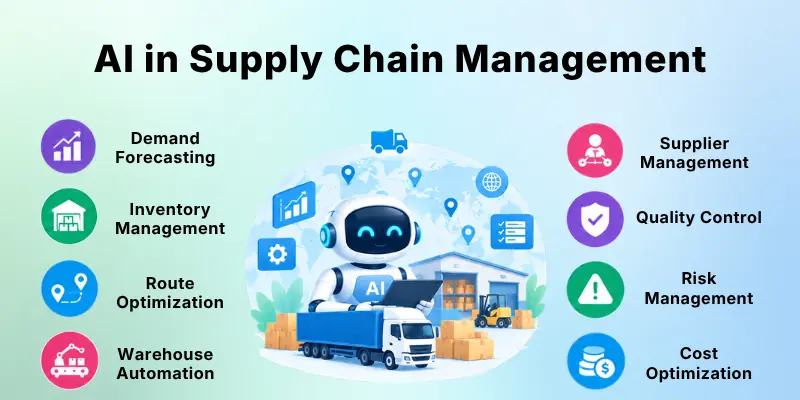
Here are the main roles of AI in supply chain management:
- Demand Forecasting
- Inventory Management
- Route Optimization
- Warehouse Automation
- Supplier Management
- Quality Control
- Risk Management
- Cost Optimization
- Real Time Tracking
- Process Planning
- Order Management
- Customer Experience
Let’s go over all these in detail.
1. Demand Forecasting
AI studies old sales, customer trends, and seasonal changes to guess future demand. It looks at data from stores, weather, and holidays. I’ve seen how this helps companies plan better and reduce waste. It keeps production on track and shelves full. It helps avoid both shortage and extra stock. It also saves time and money on guesswork. For me, this is one of the most useful AI roles.
Benefits:
- Reduces stock waste and shortage
- Improves product planning
- Helps meet customer needs easily
Example: A food company uses AI to predict higher snack sales before summer holidays.
2. Inventory Management
AI keeps live records of every product in storage. It tracks what sells fast and what moves slowly. I like how it helps balance stock levels easily. It can also send alerts when stock runs low. This stops both overstocking and empty shelves. It helps managers restock at the right time. With AI, inventory becomes more simple and accurate.
Benefits:
- Stops overstock and product shortage
- Saves space and storage cost
- Makes restocking quick and easy
Example: A retail store uses AI to reorder top selling items automatically.
3. Route Optimization
AI finds the best routes for trucks and deliveries. It studies maps, traffic, and weather to plan faster paths. I’ve noticed how it cuts travel time and saves fuel. It can change the route instantly if a road gets blocked. This keeps deliveries smooth and on time. Drivers spend less time on the road and reach more customers. I think it makes transport smart and stress free.
Benefits:
- Reduces travel time and cost
- Improves delivery speed
- Saves fuel and resources
Example: A courier company uses AI to choose the quickest routes for same day deliveries.
4. Warehouse Automation
AI runs robots that pick, pack, and move goods in warehouses. It helps finish tasks faster and with fewer errors. I find this very helpful for big orders and tight deadlines. It keeps storage areas organized and easy to handle. AI also tracks where each item is kept. It saves workers time and avoids confusion. I think automated warehouses are the future of logistics.
Benefits:
- Speeds up warehouse operations
- Reduces human errors
- Lowers labor costs
Example: Amazon uses AI robots to move and sort packages inside warehouses.
5. Supplier Management
AI checks supplier data to find the best business partners. It studies prices, delivery time, and product quality. I like how it makes supplier choices fair and data based. It warns managers if a supplier delays or fails. It helps build long term trust with reliable suppliers. It also tracks performance to keep things on track. With AI, managing suppliers becomes clear and simple.
Benefits:
- Builds better supplier relations
- Reduces supply risks
- Ensures smooth and steady operations
Example: A car maker uses AI to compare suppliers and pick the most reliable one.
6. Quality Control
AI checks every product during and after production. It spots small errors that humans can miss. I’ve seen how this keeps quality high and customer returns low. It saves time by automating inspection tasks. It helps companies fix issues early in the process. AI learns from past defects and improves accuracy. This gives customers safe and reliable products every time.
Benefits:
- Improves product quality
- Reduces waste and rework
- Keeps customers happy
Example: A phone factory uses AI cameras to find screen cracks before packaging.
7. Risk Management
AI studies supply chain data to spot future risks early. It checks weather, transport, and market changes. I like how it gives warnings before problems happen. It helps managers plan backup options quickly. This avoids costly delays and losses. AI also tracks global events that may affect shipping. It keeps the business prepared and safe.
Benefits:
- Helps prevent supply problems
- Improves safety and planning
- Keeps business running smoothly
Example: A shipping company uses AI to predict delay risks during storms.
8. Cost Optimization
AI finds areas where companies can save money. It looks at fuel, labor, and production costs. I find it great for improving profit without hurting performance. It suggests cheaper routes or suppliers when needed. It also helps avoid waste and overuse of materials. AI gives data based ideas for spending wisely. This helps companies grow while keeping costs low.
Benefits:
- Reduces total business expenses
- Improves profit and output
- Saves time and resources
Example: A factory uses AI to control power use during low production hours.
9. Real Time Tracking
AI tracks every product’s journey from start to delivery. It shows where goods are and when they will arrive. I find this feature very useful for avoiding confusion. It sends alerts if shipments are delayed or misplaced. Both customers and managers stay informed easily. It builds trust and reduces delivery stress. I think tracking is one of the most practical uses of AI.
Benefits:
- Gives live delivery updates
- Improves customer confidence
- Reduces loss and misplacement
Example: A logistics firm uses AI to give live package tracking to customers.
10. Process Planning
AI helps plan every step in the supply chain. It studies data to find the best order of tasks. I like how it keeps operations smooth from start to end. It reduces waiting time between stages. It helps teams know what to do next without confusion. AI improves coordination between departments. It makes every process more clear and efficient.
Benefits:
- Improves work flow and timing
- Reduces errors between steps
- Makes planning simple and quick
Example: A factory uses AI to schedule machine work in the best order.
11. Order Management
AI tracks and manages all customer orders from start to delivery. It checks payments, packaging, and shipping details. I’ve seen how this reduces order mix ups. It sends updates to both staff and customers automatically. It also studies order data to improve service next time. It helps businesses handle thousands of orders with ease. I think it keeps customers satisfied and loyal.
Benefits:
- Reduces order mistakes
- Speeds up delivery process
- Keeps customers informed
Example: An online store uses AI to handle order updates and customer messages.
12. Customer Experience
AI helps companies serve customers better and faster. It answers questions through chatbots and tracks delivery progress. I like how it gives personal suggestions and reminders. It studies customer feedback to improve products and services. It makes users feel valued and understood. It builds trust between the brand and the customer. With AI, support becomes quick, simple, and friendly.
Benefits:
- Improves service quality
- Builds customer loyalty
- Saves time for both sides
Example: A shopping site uses AI chatbots to guide users and answer common questions.
Key Advantages of AI in Modern Supply Chains
In this section, we’ll explore the benefits of AI in supply chain management by looking at how it supports the different roles in this industry. Each role in the supply chain becomes faster, smarter, and more reliable with the help of AI.
- Demand Forecasting: Predicts demand accurately and avoids stock problems.
- Inventory Management: Keeps stock balanced and reduces extra storage costs.
- Route Optimization: Finds best delivery routes and saves travel time.
- Warehouse Automation: Speeds up warehouse work with fewer mistakes.
- Supplier Management: Helps choose reliable suppliers and prevent delays.
- Quality Control: Detects product issues early and keeps quality high.
- Risk Management: Predicts risks early and helps avoid losses.
- Cost Optimization: Reduces waste and lowers daily operation costs.
- Real Time Tracking: Gives live updates on goods and shipments.
- Customer Experience: Improves service with faster and clearer support.
AI helps modern supply chains manage inventory, optimize deliveries, and minimize risks.
Common Problems with AI in Supply Chain Management
In this section, we’ll look at the main challenges businesses face when using AI in supply chain management.
While AI brings great benefits, it also comes with a few hurdles that companies need to handle carefully.
- High Setup Cost: AI tools and systems need big starting investments.
- Data Quality Issues: Poor or missing data can lead to wrong results.
- Skill Gaps: Many teams lack the right AI knowledge and training.
- Integration Problems: Old systems often don’t match with new AI tools.
- Cybersecurity Risks: AI systems can face data theft or hacking.
- Privacy Concerns: Handling large customer data needs strict control.
- Dependence on Technology: Too much automation may reduce human judgment.
- Change Resistance: Some workers fear or resist new AI systems.
- Maintenance Needs: AI tools need regular updates and technical care.
- Legal and Ethical Issues: Rules for AI use are still not always clear.
With proper planning and human oversight, businesses can overcome AI challenges and improve supply chain performance.
Future of AI in Supply Chain operations
The future of AI in supply chain management looks bright and full of growth. I believe we’ll see more companies using AI to make every step faster and smarter.
From real time tracking to self learning systems, supply chains will become more connected and automatic. AI will help predict problems before they happen and suggest quick fixes. It will also improve communication between teams, suppliers, and customers.
In the coming years, AI will not just support supply chains, it will lead them toward full automation, better planning, and stronger global reach.
Final Note
In this guide, we have covered the role of AI in supply chain management in great detail. We talked about how AI improves every part of the supply chain, from demand forecasting and warehouse automation to supplier management and customer experience. You also learned about the key benefits, challenges, and exciting future of AI in this fast moving industry. Each section showed how AI makes work faster, smarter, and more reliable for businesses everywhere.
If you want to make your supply chain more efficient and future ready, start exploring AI tools today and see how technology can transform the way you manage your business.
Frequently asked question About AI in Supply Chain Management
Discover how artificial intelligence is transforming supply chain management in 2026. From smarter inventory control to faster deliveries, AI helps businesses improve efficiency, reduce costs, and make better decisions.
Here are some of the most commonly asked questions related to the AI in supply chain:
1. How Does Supply Chain Artificial Intelligence Work?
Supply chain AI analyses data from sales, inventory, suppliers, and transportation to forecast demand, track goods, and identify potential delays. It turns complex information into smarter business decisions.
2. What Are Some Examples of Supply Chain Management Using AI?
AI is transforming supply chain operations through several practical applications:
- Smart warehouses: Automate picking and packing.
- Route optimisation: Find efficient delivery routes.
- Demand forecasting: Predict future product needs.
- Inventory tracking: Monitor stock levels.
3. How Does AI in Supply Chain Management Help Businesses?
AI helps businesses improve performance in three important ways:
| Business challenge | AI solution |
| High operating costs | Identifies inefficiencies |
| Stock shortages | Predicts demand |
| Delivery delays | Improves route planning |
4. What Is Artificial Intelligence in Supply Chain Management Used For?
AI supports the supply chain from purchasing raw materials to delivering finished products. Its main uses include forecasting, inventory management, supplier evaluation, shipment tracking, and risk detection.
5. Why Do Companies Use AI for Supply Chain Management?
Companies use AI to improve efficiency and stay competitive. Key benefits include:
- Reducing operational waste
- Improving demand forecasting
- Speeding up business decisions
- Enhancing delivery planning
6. What Is AI in Supply Chain Optimisation?
AI optimises supply chain operations through a simple process:
- Analyse: Examine inventory, demand, and logistics data.
- Identify: Detect delays and inefficiencies.
- Optimise: Recommend better routes, stock levels, and schedules.
7. How Does Machine Learning Improve Supply Chain Planning?
Machine learning studies historical data to identify patterns and predict future needs. It helps businesses forecast seasonal demand, estimate raw material requirements, and prepare for possible delivery delays.
8. How Does AI for Supply Chain Optimisation Save Money?
AI identifies opportunities to reduce unnecessary expenses across different operations.
| Cost area | Potential benefit |
| Transportation | Lower fuel consumption |
| Warehousing | Better space utilisation |
| Inventory | Less excess stock |
| Maintenance | Earlier fault detection |
9. Why Is AI in the Supply Chain Important Today?
Modern supply chains face changing demand, supplier disruptions, and rising efficiency expectations. AI helps businesses monitor operations, identify risks earlier, and respond more effectively to unexpected changes.
10. What Are the Current Trends in Supply Chain Management With AI in 2026?
Emerging AI technologies are creating new opportunities for smarter, more connected supply chains:
- Generative AI: Assists with planning and reporting.
- Predictive analytics: Forecasts demand and disruptions.
- Warehouse robotics: Automates selected tasks.
- Digital twins: Simulate supply chain scenarios.
- Sustainability AI: Helps monitor waste and emissions.
The Role of AI in Pharmaceuticals in 2026 - Work Faster, Cure Sooner, and Transform Healthcare





- Be Respectful
- Stay Relevant
- Stay Positive
- True Feedback
- Encourage Discussion
- Avoid Spamming
- No Fake News
- Don't Copy-Paste
- No Personal Attacks
- Be Respectful
- Stay Relevant
- Stay Positive
- True Feedback
- Encourage Discussion
- Avoid Spamming
- No Fake News
- Don't Copy-Paste
- No Personal Attacks
