Role of AI in the Energy Sector in 2026: How AI Is Powering a Smarter Future
Published: 11 Nov 2026
The energy sector is changing fast with new smart systems. These systems help manage electricity, fuel, and power use in better ways. I believe this change makes the whole process faster and more reliable. Companies can save resources, and people get stable energy at lower costs.
In this guide, we will cover the complete concept of the role of AI in the energy sector. You will also learn about its benefits, challenges, and future growth.
Function of AI in Energy Sector
Here we will cover the main discussion of our article. The use of intelligent systems in energy helps improve supply, storage, and power efficiency.
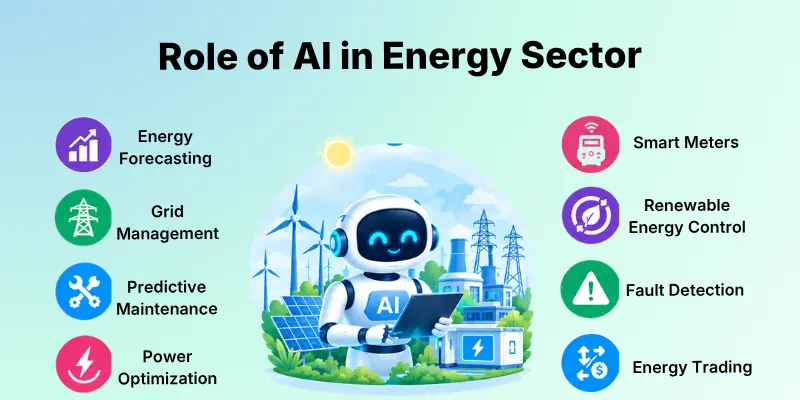
These systems help industries reduce waste and plan better. Main applications of AI in energy sector are:
- Energy Forecasting
- Grid Management
- Predictive Maintenance
- Power Optimization
- Smart Meters
- Renewable Energy Control
- Fault Detection
- Energy Trading
- Demand Management
- Sustainability Monitoring
Let us learn about each in detail.
1. Energy Forecasting
This process helps predict future energy demand and usage patterns. It works by reading past records and current data. I think it helps energy companies balance supply with real needs. Forecasting reduces blackouts and saves resources. It keeps systems steady even when usage changes daily.
Benefits:
- Reduces energy waste
- Balances supply and demand
- Prevents power shortages
- Helps plan production better
Example: Power companies use forecasting to plan daily energy generation based on weather data.
2. Grid Management
Grid management means controlling how energy flows across networks. It helps keep electricity stable and avoids overloads. I find it very useful because it improves reliability during high demand times. Systems can adjust power flow quickly and prevent breakdowns.
Benefits:
- Keeps power stable
- Avoids sudden outages
- Improves network performance
- Balances electricity load
Example: Smart grids adjust voltage automatically when energy demand increases in any area.
3. Predictive Maintenance
This method helps find problems before they cause damage. It uses system data to track how machines work. I like how it saves time and cost by avoiding failures. Companies can fix machines at the right time instead of waiting for issues.
Benefits:
- Reduces repair costs
- Prevents downtime
- Increases equipment life
- Improves safety in plants
Example: Wind farms use predictive systems to detect motor issues before they stop working.
4. Power Optimization
Power optimization means improving how energy is used in systems. It adjusts processes to lower waste and boost output. I find it important because it keeps power use balanced. It makes machines run efficiently without losing performance.
Benefits:
- Reduces electricity waste
- Saves energy cost
- Improves machine output
- Supports clean energy goals
Example: Factories use smart systems to control power use during peak hours.
5. Smart Meters
Smart meters record and send real time energy use data. I find them helpful for both users and suppliers. They show how much power is being used at any time. This helps reduce bills and manage energy better.
Benefits:
- Tracks power use instantly
- Helps users control usage
- Reduces billing errors
- Supports fair energy pricing
Example: Homes with smart meters can see power use live through apps.
6. Renewable Energy Control
This helps manage solar, wind, and water energy systems. It adjusts production based on weather and demand. I like how it improves green energy use and reduces waste. It makes renewable power more stable and dependable.
Benefits:
- Improves renewable power stability
- Reduces energy waste
- Helps use green sources efficiently
- Balances power supply and demand
Example: Solar plants use monitoring tools to store power when sunlight is high.
7. Fault Detection
Fault detection helps find issues in energy networks early. It checks system health and reports any problem quickly. I believe this helps avoid power cuts and accidents. It also makes repair work faster and safer.
Benefits:
- Finds problems early
- Prevents system breakdowns
- Reduces repair time
- Keeps operations safe
Example: Power stations use sensors to find faults in transformers instantly.
8. Energy Trading
Energy trading systems help buy and sell electricity in real time. They track prices and choose the best trade time. I find it useful because it keeps the market fair and efficient. It also helps balance supply across different regions.
Benefits:
- Improves pricing accuracy
- Increases profit and savings
- Balances market supply
- Reduces energy waste
Example: Energy markets use digital tools to trade electricity between cities daily.
9. Demand Management
Demand management controls how much power people use at a time. It shifts usage during peak hours to reduce load. I think it helps avoid blackouts and saves power. It supports a more stable and balanced energy flow.
Benefits:
- Prevents overload on grids
- Saves energy during peak time
- Keeps costs stable
- Supports grid health
Example: Homes use smart devices that run washing machines at low demand hours.
10. Sustainability Monitoring
This role tracks how energy use affects the environment. It helps measure emissions and resource waste. I like how it supports clean energy targets. It allows companies to meet global green goals easily.
Benefits:
- Tracks pollution levels
- Supports green policies
- Reduces carbon footprint
- Promotes clean operations
Example: Power plants monitor emissions daily to meet environmental standards.
Benefits of AI in Power Sector
Guys, in this section we will learn the main benefits that come from these systems. These benefits show how energy companies, customers, and the planet all gain from smart operations.
Main benefits:
- These systems reduce power waste and improve overall energy savings.
- They help keep all energy networks stable and reliable.
- Smart tools cut down repair work and maintenance costs easily.
- Clean energy production increases through better control and planning.
- Service delivery becomes faster, smoother, and more accurate.
- Both users and companies save more money on energy bills.
- Operations remain safe and efficient across all power systems.
- Carbon emissions and pollution levels drop in every region.
- Global clean energy goals become easier to achieve.
- Transparency builds trust between companies and energy consumers.
Overall,AI is building a cleaner, smarter, and more sustainable energy future.
Challenges of Implementing AI in Power Industry
Guys, in this section we will learn the main challenges this industry faces.
Main challenges:
- Setting up and upgrading systems requires a high investment cost.
- There is a strong need for more skilled technical workers.
- Data safety and privacy protection remain big concerns today.
- Old power systems are difficult to connect with new ones.
- Systems must receive constant updates to run efficiently and safely.
- Cybersecurity threats and hacking risks can cause serious damage.
- Rules and policies for energy data are still unclear.
- Heavy loads can lead to system failures and outages.
- Many people still lack awareness about these modern tools.
- Managing power from multiple sources is complex and time consuming.
Overcoming these challenges requires better security, skilled workers, and reliable energy systems. Addressing these issues can help the energy sector use AI safely, efficiently, and effectively.
Future of Energy Sector
I believe the future of the energy sector looks strong and stable. Smart systems will make grids more flexible and cleaner.
Renewable energy will grow faster with better storage and monitoring. Homes will manage power use automatically. Companies will depend more on connected systems for planning and safety. This will help the world move closer to a green, sustainable energy future.
Final Note
In this guide, we have covered the detailed concept of the role of AI in the energy sector. We discussed how it helps in forecasting, grid control, renewable energy, and safety. We also looked at benefits, challenges, and future changes. These systems will continue to shape a cleaner, safer, and smarter energy world.
FAQs
Discover how AI is transforming the energy sector in 2026, from smarter power management to renewable energy and reduced operating costs.
Here are some of the most commonly asked questions related to the role of AI in the energy sector.
1. What is the main role of AI in the energy sector?
AI helps energy companies manage electricity, storage, and supply more efficiently. It also predicts future energy demand, reduces waste, and improves power system performance.
2. How does AI make energy systems more efficient?
AI improves energy efficiency by:
- Analysing data: Identifies energy consumption patterns.
- Balancing power: Adjusts electricity distribution automatically.
- Reducing waste: Prevents unnecessary energy use.
- Improving reliability: Helps maintain a stable power supply.
3. How does AI use water in the energy sector?
AI helps energy companies monitor and manage water consumption, especially in power plants and cooling systems. It identifies waste, improves water efficiency, and supports more sustainable energy production.
4. How much water does ChatGPT use in operations?
ChatGPT’s data centres use water for cooling in some facilities. The amount varies depending on the location, cooling technology, and computing demand. AI can help data centres monitor water consumption and improve cooling efficiency.
5. How much energy does ChatGPT use daily?
ChatGPT’s daily electricity consumption varies with user demand, computing workloads, and data centre efficiency. There is no single publicly verified figure for its total daily energy use. AI can help data centres optimise power consumption through smarter workload management.
6. How does AI help renewable energy systems?
AI supports renewable energy through these key steps:
- Forecasting: Predicts solar and wind energy production.
- Storing: Helps manage excess electricity in energy storage systems.
- Distributing: Balances supply with changing demand.
- Optimising: Improves the reliability of clean energy supplies.
7. Can AI reduce power plant costs?
Yes, AI can lower power plant operating costs by predicting equipment failures, reducing downtime, and improving maintenance planning.
| AI application | Main benefit |
| Predictive maintenance | Fewer unexpected repairs |
| Energy optimisation | Reduced operating waste |
| Fault detection | Faster problem resolution |
8. How does AI improve energy safety?
AI improves energy safety by monitoring equipment and identifying potential hazards before they become serious problems. Companies can use this simple checklist to strengthen safety:
- Monitor equipment performance.
- Detect faults and unusual activity.
- Send alerts to maintenance teams.
- Schedule timely inspections and repairs.
9. How does AI support global clean energy goals?
AI helps countries and energy companies move towards cleaner energy by:
- Tracking carbon emissions.
- Reducing energy waste.
- Improving renewable energy integration.
- Supporting data driven climate planning.
These applications can contribute to long term sustainability goals when combined with effective policies and responsible energy management.
10. What is the future of AI in the energy sector?
The future of AI in the energy sector is expected to bring smarter, cleaner, and more connected energy systems.
Key developments to watch:
- Smart grids that balance electricity demand.
- Better integration of solar and wind power.
- More efficient energy storage.
- Lower operating costs and reduced emissions.
As AI technology advances, it could help make energy systems more reliable, efficient, and sustainable.




- Be Respectful
- Stay Relevant
- Stay Positive
- True Feedback
- Encourage Discussion
- Avoid Spamming
- No Fake News
- Don't Copy-Paste
- No Personal Attacks
- Be Respectful
- Stay Relevant
- Stay Positive
- True Feedback
- Encourage Discussion
- Avoid Spamming
- No Fake News
- Don't Copy-Paste
- No Personal Attacks
