Role of AI in Marketing in 2026 – Future Tech in Modern Branding
Published: 29 Oct 2026
The role of AI in marketing is all about using smart technology to understand customers better, create personalized experiences, and improve business results.
It helps businesses make faster decisions, predict trends, and reach the right people with the right message at the right time. In simple words, it makes marketing more effective and efficient by focusing on what really matters to customers.
In this guide, we will explore the role of AI in marketing in detail and see how it is changing the way businesses connect with their audience.
What are the Major Roles of AI in Promotional Strategies
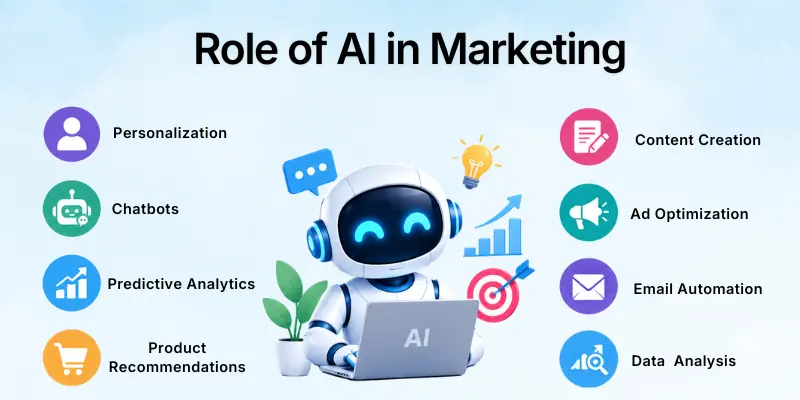
To understand the role of AI in promotional strategies , we need to see the main ways AI in marketing is used. These show how businesses reach customers, save time, and grow. Key applications include:
- Personalization
- Chatbots
- Predictive Analytics
- Product Recommendations
- Content Creation
- Ad Optimization
- Email Automation
- Data Analysis
- Website Improvement
- Lead Generation
- Social Media Tracking
- Market Monitoring
- Pricing Strategy
- Sales Forecasting
- Customer Segmentation
Let’s cover all of these in detail.
1. Personalization
AI helps me show the right content to each person. It learns what customers like. I can make offers and messages fit each person. AI makes marketing feel personal. Customers notice and engage more. Businesses grow faster with this approach.
Benefits:
- Higher engagement
- Better customer satisfaction
- Increased sales
Examples:
- Personalized website banners
- Custom product recommendations
- Tailored email messages
Personalized marketing helps businesses connect with customers through relevant offers and messages. This AI marketing strategy can improve customer engagement, build trust, and support business growth.
2. Chatbots
AI lets me talk to customers anytime. Chatbots answer questions fast. They help without needing a human. AI learns from conversations and improves. Customers get instant support. Businesses save time and effort.
Benefits:
- 24/7 support
- Quick answers
- Reduces staff workload
Examples:
- Website live chat
- Messenger bots for questions
- Booking and order help
AI-powered chatbots make customer service faster and easier at any time of day. They improve the customer experience while helping businesses manage support requests with less effort.
3. Predictive Analytics
AI helps me guess what customers will do next. It studies past behavior and trends. I can plan marketing campaigns smarter. AI reduces errors and wasted effort. Businesses reach the right people at the right time. Decisions become faster and better.
Benefits:
- Predicts customer needs
- Improves planning
- Increases conversions
Examples:
- Forecasting product demand
- Suggesting items to customers
- Planning ad campaigns
Predictive analytics helps marketers understand customer behavior and plan better campaigns. These AI marketing tools can improve decisions, reach the right audience, and increase conversions.
4. Product Recommendations
AI helps me suggest products customers may like. It looks at past purchases and preferences. Recommendations make shopping easier. Customers feel understood. Sales increase naturally. Repeat purchases grow.
Benefits:
- Boosts sales
- Increases customer loyalty
- Improves shopping experience
Examples:
- “You may also like” sections
- Recommended items in apps
- Personalized checkout suggestions
Smart product recommendations help customers find items that match their interests. This personalized marketing approach can improve the shopping experience, increase sales, and encourage repeat purchases.
5. Content Creation
AI helps me generate content ideas. It can write or suggest text for posts, emails, or descriptions. I save time creating content. AI keeps it consistent and relevant. Marketing becomes easier. Customers enjoy helpful and interesting content.
Benefits:
- Saves time
- Keeps content consistent
- Engages audience
Examples:
- Blog posts
- Social media captions
- Product descriptions
AI content creation tools help marketers prepare useful content in less time. They support content marketing by generating fresh ideas for blogs, emails, social media posts, and product descriptions.
6. Ad Optimization
AI helps me show ads to the right people. It analyzes data to decide who sees the ad. Ads perform better with less waste. AI adjusts campaigns in real time. Businesses spend less and earn more. Marketing becomes smarter.
Benefits:
- Higher click rates
- Reduced ad spend
- Better campaign results
Examples:
- Targeted social media ads
- Dynamic display ads
- Automatic budget allocation
AI-powered ad optimization helps businesses improve ad targeting and manage campaign budgets. These smart marketing tools can reduce wasted spending, increase clicks, and improve advertising results.
7. Email Automation
AI helps me send emails at the perfect time. It decides what message each person should get. I don’t need to do it manually. AI improves engagement. Emails feel personal. Campaigns become more effective.
Benefits:
- Saves time
- Increases open and click rates
- Sends the right message
Examples:
- Welcome emails
- Follow ups after purchase
- Birthday or anniversary emails
Automated email marketing helps businesses send timely and relevant messages to their audience. With AI-driven personalization, email campaigns can improve engagement, build customer relationships, and support sales.
8. Data Analysis
AI helps me understand customer behavior. It looks at patterns and trends. I can see what works and what doesn’t. AI gives insights faster than humans. Businesses make smarter choices. Marketing decisions are more accurate.
Benefits:
- Clear customer insights
- Better decision making
- Reduces guesswork
Examples:
- Website analytics
- Campaign performance reports
- Customer behavior patterns
AI marketing analytics helps businesses understand customer needs and measure campaign results. These data driven insights support smarter marketing decisions and help improve future campaigns.
9. Website Improvement
AI helps me make websites better. It suggests design changes and personal experiences. Visitors navigate easily and stay longer. AI identifies weak points and fixes them. Conversions increase. The website becomes more user friendly.
Benefits:
- Better user experience
- More engagement
- Higher conversions
Examples:
- Personalized homepages
- Navigation suggestions
- Layout improvements
AI-powered website optimization helps create a smoother and more personal user experience. These improvements can keep visitors engaged, make navigation easier, and increase website conversions.
10. Lead Generation
AI helps me find potential customers. It analyzes data to find people who might buy. Leads are more qualified. AI prioritizes the best ones. Businesses spend less time searching. Sales results improve.
Benefits:
- More qualified leads
- Faster lead collection
- Better conversion chances
Examples:
- Scoring leads from website visits
- Tracking social media interactions
- Identifying hot prospects
AI lead generation tools help marketers find and rank potential customers more easily. This smart marketing approach saves time, improves lead quality, and supports better sales results.
11. Social Media Tracking
AI helps me track engagement and mentions. It shows what people think about my brand. I can respond faster. AI finds trends and measures success. Posts become more effective. Businesses understand their audience better.
Benefits:
- Better content strategy
- Quick responses
- Improved engagement
Examples:
- Tracking comments and shares
- Monitoring trending topics
- Measuring post performance
AI-powered social media monitoring helps businesses understand audience reactions and follow online trends. These insights can improve social media marketing strategies and build stronger customer relationships.
12. Market Monitoring
AI helps me watch competitors and trends. It alerts me to changes in the market. I can adjust strategies fast. AI analyzes prices, campaigns, and products. Businesses stay ahead. Decisions are more informed.
Benefits:
- Stay competitive
- Identify opportunities
- Adjust strategies quickly
Examples:
- Competitor price tracking
- Monitoring competitor ads
- Tracking industry trends
AI market monitoring helps businesses track competitors, prices, and industry changes. These marketing insights make it easier to spot new opportunities and respond to market trends.
13. Pricing Strategy
AI helps me set the right price. It looks at demand, competition, and behavior. I can adjust prices dynamically. AI maximizes profit. Customers see fair prices. Businesses sell more efficiently.
Benefits:
- Increased profit
- Competitive pricing
- Attracts customers
Examples:
- Dynamic e-commerce pricing
- Personalized discounts
- Price comparisons
AI-driven pricing tools help businesses set competitive prices based on demand and market conditions. A smart pricing strategy can support profits while keeping offers attractive to customers.
14. Sales Forecasting
AI helps me predict future sales. It studies patterns and trends. I can plan inventory and campaigns better. AI reduces errors and surprises. Marketing and sales teams prepare smarter. Growth becomes more predictable.
Benefits:
- Better planning
- Reduced stock issues
- Smarter campaigns
Examples:
- Predicting holiday demand
- Forecasting monthly revenue
- Planning launches
AI sales forecasting helps businesses estimate future demand and plan marketing campaigns with greater confidence. These predictions can support better stock control, budgeting, and business growth.
15. Customer Segmentation
AI helps me group customers by behavior or needs. I can target messages accurately. Segments improve marketing efficiency. Customers get relevant content. AI increases engagement and loyalty. Businesses connect with the right audience.
Benefits:
- Better targeting
- Improved engagement
- Higher conversions
Examples:
- Segment by purchase history
- Segment by location
- Segment by interest
AI-powered customer segmentation helps marketers deliver relevant messages to different audience groups. This targeted marketing approach can improve engagement, build customer loyalty, and increase conversions.
Benefits of Using AI in Marketing
Let’s look at how AI is used in marketing and how it helps different people in the field. Every role sees unique advantages that make their work easier and more effective.
For Marketers:
- Saves time on repetitive tasks like scheduling posts and emails
- Helps create personalized campaigns for better engagement
- Provides insights to improve strategy and content
For Business Owners:
- Gives clear data on what is working and what is not
- Helps plan budgets efficiently and increase ROI
- Forecasts sales trends for smarter decision making
For Sales Teams:
- Identifies high potential leads faster
- Suggests the right products for the right customers
- Helps close deals with data backed insights
For Content Creators:
- Suggests topics and content ideas
- Optimizes messages for better engagement
- Speeds up the content creation process
For Social Media Managers:
- Tracks engagement and performance easily
- Monitors competitor activity and trends
- Improves post targeting and reach
For Customer Support Teams:
- Offers instant answers to customers 24/7
- Reduces workload by handling common questions
- Provides insights into common issues to improve service
For Email Marketing Specialists:
- Sends personalized messages at the right time
- Segments audiences automatically
- Tracks performance to improve open and click rates
For Product Managers:
- Recommends products based on customer behavior
- Improves product launch strategies
- Helps understand customer preferences
For Brand Managers:
- Creates more personalized experiences for customers
- Monitors brand perception online
- Helps plan campaigns that resonate with the audience
For Strategy & Analytics Teams:
- Provides clear insights from marketing data
- Helps make better decisions faster
- Identifies new opportunities and market trends
Challenges of AI in Marketing
While AI brings many benefits to marketing, it also comes with challenges. Every business may face different problems when using AI in marketing. Understanding these challenges helps companies make better decisions and avoid common mistakes.
- High Cost of Implementation: Setting up tools can be expensive for small businesses.
- Data Privacy Concerns: Collecting and using customer data must follow rules and regulations.
- Dependence on Data: Poor or incomplete data can lead to wrong insights.
- Loss of Human Touch: Too much automation can make marketing feel impersonal.
- Complex Technology: Some tools require skilled staff to manage and operate.
- Integration Issues: Combining new tools with existing systems can be tricky.
- Over reliance on Automation: Relying too much on tools may reduce creativity.
- Security Risks: Storing large amounts of customer data can attract cyber threats.
- Keeping Up with Changes: Technology changes fast, and businesses need to adapt quickly.
Businesses can overcome these challenges by choosing the right AI tools, protecting customer data, and keeping human creativity at the center of their marketing strategies.
Future of AI in Marketing
Marketing is changing fast. Smart tools will help businesses do more and reach customers better. Here are some trends to watch:
- More Personalized Marketing: Messages and offers will fit each person better.
- Voice and Image Search: People will use voice or pictures to find products.
- Smarter Content Creation: Tools will help make blogs, videos, and posts faster.
- Predicting Customer Needs: Businesses will know what customers want before they ask.
- Better Chatbots: Customer support will be faster and more helpful.
- Real Time Insights: Marketers will see results instantly and act quickly.
- Smarter Ads: Ads will reach the right person at the right time automatically.
- Improved Customer Experience: Websites and apps will adapt to each user.
- Work Across Channels: Marketing will connect email, social media, apps, and websites.
- Responsible Marketing: Focus on using data safely and being honest with customers.
The future of AI in marketing will help businesses create more useful, personalized, and effective campaigns. By using these technologies wisely, companies can improve customer satisfaction, save time, and stay competitive in the changing digital world.
Final Note
In this guide, we have covered everything about the role of artificial intelligence in marketing. From its key uses to benefits, challenges, and future trends, you now have a clear idea of how it can help businesses grow.
If you are a marketer, business owner, or part of a sales team, my advice is to start exploring these tools step by step. Focus on the areas that matter most to your business and learn as you go. Don’t try to do everything at once.
For more quick answers and tips, check out the FAQs below to see common questions about AI in marketing.
Frequently Asked Questions About AI in Marketing
These FAQs explain how AI in marketing works, its key benefits, common applications, and future opportunities. Find quick answers to help you understand how businesses can use AI to improve their marketing strategies.
1. What is AI and marketing?
AI in marketing means using artificial intelligence tools to understand customers, create content, and improve campaigns. It helps businesses make smarter decisions and deliver more relevant messages.
2. How can businesses benefit from using artificial intelligence in marketing?
Businesses can use AI to:
- Save time by automating repetitive tasks.
- Personalize offers and customer messages.
- Understand customer behavior.
- Improve advertising results and sales.
3. What are the main AI applications in marketing?
Businesses can apply AI in these simple steps:
- Analyze customer data to understand their needs.
- Create personalized content and product recommendations.
- Optimize ads and email campaigns.
- Measure results and improve future marketing efforts.
4. How does using AI in marketing change daily work for marketers?
AI helps marketers complete routine tasks faster, giving them more time for planning and creative work.
Quick Checklist:
- Schedule social media posts.
- Generate content ideas.
- Analyze campaign performance.
- Automate email marketing.
5. How can AI be used in marketing to increase sales?
AI can help businesses identify potential customers, recommend relevant products, and improve advertising campaigns. These actions can increase conversions when the tools are used effectively.
6. How does AI affect marketing strategies?
AI makes marketing strategies more data driven. Businesses can use its insights to understand what works and adjust their campaigns accordingly.
7. What is the role of AI in digital advertising?
| AI Application | Main Benefit |
|---|---|
| Audience targeting | Reaches relevant customers |
| Budget optimization | Uses ad spending more efficiently |
| Ad personalization | Shows relevant ads |
| Performance analysis | Identifies effective campaigns |
8. How does machine learning marketing work?
Machine learning in marketing uses data to identify patterns and predict customer behavior. It helps businesses improve product recommendations, audience targeting, and campaign performance.
9. What is AI-driven advertising, and why is it important?
AI-driven advertising uses AI to automate and improve ad delivery. It helps businesses target suitable audiences, adjust campaigns, and use advertising budgets more effectively.
10. What are the pros and cons of artificial intelligence in marketing?
Advantages:
- Saves time and improves efficiency.
- Supports personalized marketing.
- Helps analyze large amounts of data.
Challenges:
- Can involve high setup costs.
- Requires careful data protection.
- May reduce the human touch if overused.
Businesses should balance automation with human creativity to get better marketing results.






- Be Respectful
- Stay Relevant
- Stay Positive
- True Feedback
- Encourage Discussion
- Avoid Spamming
- No Fake News
- Don't Copy-Paste
- No Personal Attacks
- Be Respectful
- Stay Relevant
- Stay Positive
- True Feedback
- Encourage Discussion
- Avoid Spamming
- No Fake News
- Don't Copy-Paste
- No Personal Attacks
