Role of AI in Waste Management in 2026 – How Smart Tech Fixes Trash
Published: 10 Nov 2026
Waste management is one of the most significant environmental challenges today. Every day, the world generates millions of tons of waste, making efficient management increasingly challenging.
I’ve noticed that traditional systems struggle with sorting, recycling, and predicting waste patterns. That’s where Artificial Intelligence (AI) steps in.
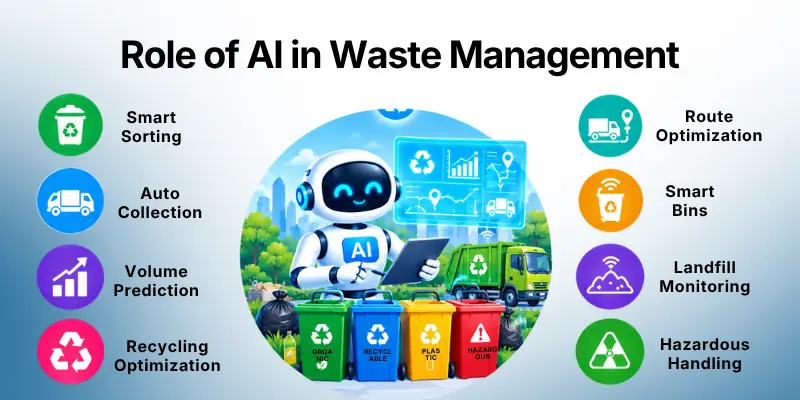
In this guide, we’ll explore how AI is transforming the waste management industry, making it smarter, cleaner, and more sustainable.
So, without wasting any time, let us discuss the role of AI in waste management in great detail.
Influence of AI in Waste Management
Here are the key roles AI plays in making waste management smarter and more sustainable.
- Smart Waste Sorting
- Automated Waste Collection
- Waste Volume Prediction
- Recycling Optimization
- Route Optimization for Trucks
- Smart Bins
- Landfill Monitoring
- Hazardous Waste Handling
- Predictive Maintenance
- Energy Recovery from Waste
- Data Analytics for Policy Making
- AI in E-Waste Recycling
- Plastic Waste Control
- Process Automation
- Public Awareness and Education
- Waste Source Tracking
- Supply Chain Optimization
- Real Time Reporting
- Circular Economy Support
- Sustainability Tracking
Let’s go over it all in detail.
1. Smart Waste Sorting
AI helps in identifying and sorting waste automatically. I’ve seen systems that use sensors and cameras to tell if an item is plastic, paper, or metal. It reduces human effort and errors. Sorting becomes faster and cleaner. Recycling centers benefit from better quality materials. The whole process becomes smoother and less wasteful.
Benefits:
- Saves time and labor.
- Improves recycling accuracy.
- Reduces contamination in waste streams.
Example: AI sorting robots in recycling plants automatically separate recyclable materials like plastic bottles from general waste.
2. Automated Waste Collection
AI powered waste trucks collect garbage based on real time bin data. Smart bins send alerts when full. This helps avoid overflow and missed collections. I’ve noticed it also saves fuel and time. It ensures every route is efficient.
Benefits:
- Reduces fuel use.
- Keeps streets cleaner.
- Prevents overflowing bins.
Example: Cities like Amsterdam use AI driven garbage trucks that collect waste only when sensors show bins are full.
3. Waste Volume Prediction
AI predicts how much waste a city or factory will produce. It studies past data and patterns. I find this helps in planning manpower and resources. It avoids sudden overloads in collection centers. Everything stays organized.
Benefits:
- Helps in better planning.
- Reduces unexpected pile ups.
- Improves waste facility use.
Example: Municipalities use AI models to forecast waste during festivals or holidays.
4. Recycling Optimization
AI makes recycling more effective. It learns to recognize which materials can be reused. This helps recycling plants reduce waste sent to landfills. It increases profit and supports the circular economy. Recycling becomes smarter and faster.
Benefits:
- Boosts recycling rate.
- Reduces landfill waste.
- Saves resources.
Example: AI powered scanners in recycling plants identify reusable plastics from waste piles.
5. Route Optimization for Trucks
AI creates the best routes for waste collection trucks. It uses live traffic and bin data. I’ve seen how it helps drivers save fuel and time. It ensures all areas are covered smoothly. It makes operations eco friendly and efficient.
Benefits:
- Saves time and cost.
- Cuts emissions.
- Improves route planning.
Example: AI route planners guide waste trucks to take the shortest, traffic free routes.
6. Smart Bins
Smart bins are powered by AI and sensors. They track waste levels and send alerts to collection teams. This avoids delays and messy surroundings. It keeps the system well coordinated. I find it a clean and clever idea.
Benefits:
- Keeps areas tidy.
- Improves waste collection timing.
- Reduces manual checks.
Example: Smart bins in Seoul send fill level alerts to waste management systems automatically.
7. Landfill Monitoring
AI uses drones and sensors to watch landfill sites. It tracks gas levels, leaks, and temperature changes. I’ve seen it help in spotting hazards before they grow. It keeps the environment and workers safe.
Benefits:
- Prevents pollution.
- Improves safety.
- Monitor gases efficiently.
Example: AI drones scan landfills for methane leaks and send instant alerts.
8. Hazardous Waste Handling
AI systems identify and handle dangerous materials safely. They detect chemical waste, batteries, and toxic materials. This prevents health and fire risks. It keeps both people and nature safe.
Benefits:
- Reduces risk of accidents.
- Protects workers.
- Detects danger early.
Example: Factories use AI sensors to separate hazardous waste from general trash.
9. Predictive Maintenance
AI predicts when machines in waste plants will need repair. I’ve seen how this reduces downtime. It avoids sudden breakdowns and delays. This keeps all recycling and sorting machines working smoothly.
Benefits:
- Saves repair cost.
- Prevents sudden failures.
- Keeps workflow steady.
Example: AI maintenance software alerts plant managers before a machine fails.
10. Energy Recovery from Waste
AI helps turn waste into energy. It studies what materials are suitable for energy conversion. It improves the efficiency of waste to energy plants. This reduces reliance on fossil fuels.
Benefits:
- Produces renewable energy.
- Cuts pollution.
- Makes waste valuable.
Example: AI tools manage incinerator settings to generate maximum energy from waste.
11. Data Analytics for Policy Making
AI analyzes waste data and helps governments make smart plans. I’ve seen cities use it to design better recycling laws. It shows which areas need improvement. It supports long term waste reduction goals.
Benefits:
- Helps create smarter laws.
- Tracks progress.
- Find problem zones.
Example: City authorities use AI reports to design recycling awareness programs.
12. AI in E-Waste Recycling
AI identifies valuable parts in old electronics. It separates metals and plastics safely. This reduces waste and recovers resources. It makes e-waste recycling faster and safer.
Benefits:
- Saves rare materials.
- Reduces electronic waste.
- Prevents toxic exposure.
Example: AI robots in e-waste plants sort circuit boards for reuse.
13. Plastic Waste Control
AI tracks plastic waste in supply chains. It identifies where leakage happens. This helps companies reduce plastic pollution. It keeps oceans and land cleaner.
Benefits:
- Cuts plastic pollution.
- Improves recycling flow.
- Protects marine life.
Example: AI models track how much plastic packaging ends up in landfills.
14. Process Automation
AI automates boring and repetitive tasks like sorting and weighing. Workers can focus on quality checks. I’ve seen how this boosts productivity. It reduces errors and speeds up work.
Benefits:
- Increases speed.
- Reduces mistakes.
- Saves labor.
Example: Automated AI systems handle weighing and recording waste in plants.
15. Public Awareness and Education
AI based apps teach people how to separate waste correctly. I like how they make it fun with tips and quizzes. This improves habits at home. It leads to cleaner cities overall.
Benefits:
- Educates people.
- Promotes clean habits.
- Supports recycling efforts.
Example: AI chatbot apps guide users on how to dispose of each item.
16. Waste Source Tracking
AI traces where waste is coming from. It helps find areas creating more waste. This lets authorities take early action. It supports cleaner city planning.
Benefits:
- Helps control excess waste.
- Improves resource use.
- Supports data based action.
Example: AI systems show which neighborhoods produce the most food waste.
17. Supply Chain Optimization
AI makes waste supply chains smoother, from collection to recycling. It keeps track of every stage. I’ve seen it help reduce delays and waste. It makes the entire system more efficient.
Benefits:
- Cuts transport time.
- Improves coordination.
- Reduces costs.
Example: AI monitors waste pickup, transport, and recycling flow in real time.
18. Real Time Reporting
AI reports issues as soon as they occur. Overflowing bins, route delays, or damaged equipment, it detects all. This helps teams fix problems quickly. It improves service quality.
Benefits:
- Faster response.
- Better service.
- Real time monitoring.
Example: AI systems alert staff when a collection truck is delayed.
19. Circular Economy Support
AI promotes reuse instead of disposal. It tracks material flow and suggests how to reuse it. This reduces overall waste. It helps businesses become more sustainable.
Benefits:
- Encourages reuse.
- Cuts down waste.
- Supports sustainability.
Example: AI tools suggest how to redesign products for recycling.
20. Sustainability Tracking
AI measures how much waste is reduced over time. I’ve seen dashboards that show live progress. It helps companies and cities track success. This encourages continuous improvement.
Benefits:
- Tracks eco progress.
- Increases transparency.
- Supports long term planning.
Example: Smart dashboards show real time recycling rates in big cities.
Benefits of AI in Waste Management
In this section, we’ll explore the benefits of AI in waste management by looking at its different roles in the industry.
- Smart Waste Sorting: Reduces errors and boosts recycling rates.
- Automated Waste Collection: Saves time and fuel with data driven routes.
- Recycling Optimization: Improves resource recovery and profitability.
- Route Optimization: Cuts emissions and ensures timely pickups.
- E-Waste Management: Recovers valuable parts safely and efficiently.
- Smart Bins: Prevents overflow and improves urban hygiene.
- Landfill Monitoring: Detects risks early and reduces pollution.
- Public Awareness: Encourages responsible waste disposal habits.
- Predictive Maintenance: Lowers repair costs and avoids machine breakdowns.
- Plastic Waste Control: Minimizes pollution through better tracking.
Overall, AI helps improve waste collection, increase recycling efficiency, reduce pollution, and make waste management more effective and sustainable.
Challenges of AI in Waste Management
Here are some of the major challenges faced in waste management due to AI:
- High setup and maintenance costs.
- Need for trained AI professionals.
- Data collection difficulties in rural areas.
- Integration with old systems is tough.
- Privacy concerns with sensors and cameras.
Overall, addressing these challenges is essential for using AI effectively in waste management while controlling costs, protecting privacy, and improving waste management systems.
Future of AI in Waste Management
I believe the future of waste management will be smart and sustainable. AI will make every part of the system, from collection to recycling, fully automated. Cities will use real time dashboards to monitor cleanliness and emissions. Robots and drones will handle risky tasks. And people like us will have access to smarter apps that help reduce waste at home.
Final Note
In this guide, we’ve explored the role of AI in waste management in detail, from sorting and recycling to tracking and sustainability.
We’ve covered how AI makes systems faster, safer, and cleaner for everyone. If you care about a greener planet, it’s time to support AI based waste solutions. Together, we can make waste management smarter and our environment cleaner.
FAQs: AI in Waste Management
Artificial intelligence in waste management is transforming how cities collect, sort, and recycle waste. Explore these frequently asked questions to discover how smart technology supports cleaner cities, efficient recycling, and a more sustainable future.
1. How is technology for waste management changing the industry?
Technology for waste management is making waste collection and recycling faster, smarter, and more efficient. Key improvements include:
- Smart bins: Detect when containers are full.
- AI powered sorting: Identifies recyclable materials more accurately.
- Smart collection routes: Helps reduce fuel use and operating costs.
These innovations help reduce pollution and keep public spaces cleaner.
2. What is the link between technology and waste management today?
Technology and waste management work together to improve efficiency and sustainability. AI tools analyze waste data, monitor bins, optimize collection routes, and support recycling. This reduces human error and helps waste management companies make better decisions.
3. How does modern waste disposal technology help the environment?
Modern waste disposal technology helps protect the environment through several methods:
- Reduces landfill waste by improving recycling and material recovery.
- Supports waste to energy systems that convert suitable waste into usable energy.
- Lowers emissions by optimizing collection routes and waste processing.
These solutions support cleaner communities and more sustainable waste disposal.
4. What is garbage AI and how does it work?
Garbage AI refers to artificial intelligence systems that identify, sort, and manage waste automatically. It typically works in three steps:
- Detection: Cameras and sensors collect information about waste materials.
- Identify: AI analyzes the materials and classifies them.
- Sort: Automated machines separate suitable materials for recycling or further processing.
This technology helps recycling facilities improve sorting speed and accuracy.
5. How does waste AI improve recycling processes?
Waste AI makes recycling more accurate by identifying different materials and separating them efficiently.
| Feature | Recycling benefit |
| Material recognition | Identifies recyclable items |
| Automated sorting | Speeds up processing |
| Contamination detection | Helps keep recyclable materials cleaner |
| Data analysis | Supports better recycling decisions |
The result can be more efficient recycling and less recoverable material sent to landfills.
6. What are the benefits of using AI waste management systems?
AI waste management systems offer several practical benefits:
- Greater efficiency: Automates repetitive waste handling tasks.
- Lower costs: Helps optimize collection routes and resources.
- Better planning: Predicts waste volumes using data.
- Cleaner surroundings: Helps prevent overflowing bins.
- Less environmental impact: Supports recycling and more efficient collection.
These benefits help cities manage waste more effectively.
7. How does AI in waste management help local governments?
AI in waste management helps local governments make data driven decisions. It provides insights into collection patterns, recycling performance, and areas with recurring waste problems.
Governments can use this information to:
- Improve waste collection schedules.
- Identify underserved or high waste areas.
- Monitor recycling targets.
- Develop more effective environmental policies.
This can improve public services and support cleaner neighborhoods.
8. What is automated waste disposal and how does it work?
Automated waste disposal uses machines, sensors, robots, and AI to handle waste with less manual intervention.
How the process works:
- Sensors detect waste levels or incoming materials.
- AI systems identify waste types and determine how to handle them.
- Automated equipment collects, moves, or sorts the waste.
- Suitable materials are directed toward recycling or other processing.
Automation can improve speed, safety, and consistency in waste management facilities.
9. How does trash AI make cities cleaner?
Trash can AI refers to smart bins equipped with sensors that monitor how full they are. When a bin approaches capacity, it can send an alert to waste collection teams.
This helps cities:
- Schedule pickups when needed.
- Reduce overflowing bins and unpleasant odors.
- Avoid unnecessary collection trips.
- Keep streets and public spaces cleaner.
10. What is the future of artificial intelligence in waste management?
The future of artificial intelligence in waste management will likely involve more advanced automation, smarter monitoring, and data driven recycling systems.
Key developments to watch include:
- AI powered robots that identify and sort waste.
- Smart sensors and connected bins that improve collection planning.
- Drones and monitoring systems that help inspect large or difficult to access waste sites.
- Predictive analytics that forecast waste volumes and improve resource allocation.
As these technologies develop, they could help reduce landfill use, improve recycling, and make waste management more sustainable.
Role of AI in supply chain management in 2026 - How AI Is Cutting Costs and Boosting Efficiency




- Be Respectful
- Stay Relevant
- Stay Positive
- True Feedback
- Encourage Discussion
- Avoid Spamming
- No Fake News
- Don't Copy-Paste
- No Personal Attacks
- Be Respectful
- Stay Relevant
- Stay Positive
- True Feedback
- Encourage Discussion
- Avoid Spamming
- No Fake News
- Don't Copy-Paste
- No Personal Attacks
