Role of AI in Sports in 2026 – AI Is Shaping the Future of Sports
Published: 15 Nov 2026
Sports have always been about skill, passion, and strategy, but now technology plays a huge part too. When I talk about the role of AI in sports, I mean how artificial intelligence helps players, coaches, and teams perform better and make smarter decisions.
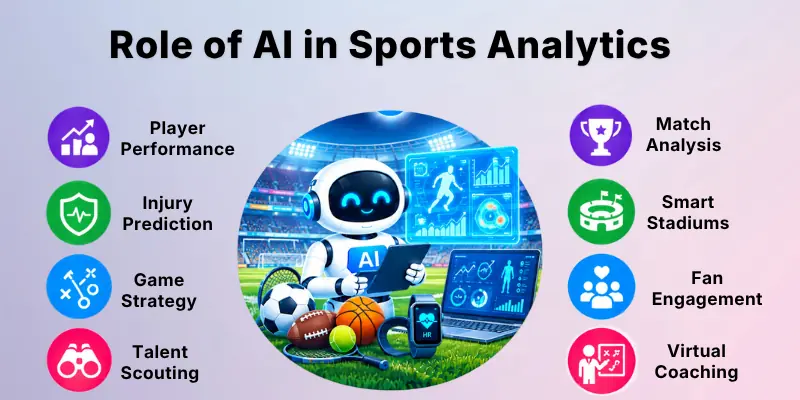
From tracking player performance to predicting game results, AI is changing how sports are played, managed, and enjoyed.
In this guide, I’ll explain how AI is transforming sports step by step, covering every role it plays, both on and off the field.
Contribution of AI in Sports
AI supports the sports industry in many ways, from improving player training to boosting fan experiences.
- Player Performance Analysis
- Injury Prediction and Prevention
- Game Strategy Planning
- Talent Scouting and Recruitment
- Match Prediction and Analysis
- Referee Assistance and Fair Play
- Fan Engagement and Experience
- Virtual Coaching
- Performance Tracking Wearables
- Sports Broadcasting and Highlights
- Smart Stadium Management
- Equipment Performance Optimization
- Personalized Training Plans
- Game Simulation and Practice
- Data Driven Decision Making
- Sports Marketing and Sponsorships
- Mental Health and Performance Support
- Weather and Field Condition Prediction
- Referee Training and Evaluation
- Sports Data Analytics Platforms
Let’s go through each role in detail.
1. Player Performance Analysis
AI studies every move a player makes, from speed to accuracy. I’ve seen systems that collect data during games and show strengths and weaknesses instantly. Coaches can use this to design personal training plans. It makes improvement faster and measurable. Players get real feedback, not just guesses.
Benefits:
- Tracks every action with accuracy.
- Helps players improve faster.
- Build better game strategies.
Example: AI tools like Catapult track athletes’ movements to enhance performance.
2. Injury Prediction and Prevention
AI can predict possible injuries before they happen. It studies body stress, workload, and training data. This helps trainers manage recovery better. I’ve noticed this reduces downtime for players. It keeps them fit throughout the season.
Benefits:
- Reduces player injuries.
- Improves training safety.
- Saves treatment costs.
Example: AI models analyze player fatigue levels to prevent muscle injuries.
3. Game Strategy Planning
AI studies past matches and finds patterns in play. Coaches use this to plan winning strategies. I’ve seen teams prepare specific plays based on AI predictions. It gives them an edge in tough matches. Decisions become data driven instead of guesses.
Benefits:
- Predicts opponent moves.
- Supports smarter decisions.
- Improves team coordination.
Example: AI tools like IBM Watson analyze player data to suggest tactical plans.
4. Talent Scouting and Recruitment
AI helps find new talent faster. It scans thousands of player profiles and match videos. I find this helps clubs discover hidden stars. It saves time and removes bias in selection. Recruitment becomes fairer and data backed.
Benefits:
- Speeds up player scouting.
- Reduces human error.
- Finds the best fit players.
Example: AI scouting systems rank athletes based on skill performance and potential.
5. Match Prediction and Analysis
AI predicts game outcomes based on statistics and past results. It shows win probabilities and key performance trends. This helps fans, teams, and analysts prepare better. It’s exciting to see how accurate some predictions can be.
Benefits:
- Gives performance insights.
- Improves team planning.
- Engages fans with data.
Example: AI sports platforms like Stats Perform predict match outcomes using machine learning.
6. Referee Assistance and Fair Play
AI supports referees with real time decision making. Tools like VAR and goal line technology detect errors quickly. I’ve noticed it makes the game fairer. Wrong calls are reduced, and matches stay more transparent.
Benefits:
- Ensures fair results.
- Reduces referee errors.
- Improves game accuracy.
Example: VAR systems in football use AI to check offside or goal decisions instantly.
7. Fan Engagement and Experience
AI makes watching sports more fun and personal. Chatbots answer fan questions instantly. Recommendation systems show favorite player highlights. It keeps fans connected 24/7. I’ve seen how it makes fans feel part of the team.
Benefits:
- Boosts fan loyalty.
- Improves interaction.
- Personalizes content easily.
Example: AI chatbots on team websites provide updates and event info for fans.
8. Virtual Coaching
AI based virtual coaches guide athletes with real time feedback. They analyze moves and suggest corrections instantly. It feels like having a personal coach anytime. I find this great for solo athletes or beginners.
Benefits:
- Offers instant feedback.
- Helps remote training.
- Improves performance accuracy.
Example: AI fitness apps guide users through personalized virtual coaching sessions.
9. Performance Tracking Wearables
Smart wearable devices powered by AI collect player data nonstop. They track heart rate, distance, and recovery time. I’ve seen this help trainers adjust workouts for better results. It keeps athletes performing at their best.
Benefits:
- Tracks health in real time.
- Prevents overtraining.
- Supports data based progress.
Example: AI wearables like Whoop measure player fatigue and recovery levels.
10. Sports Broadcasting and Highlights
AI edits and creates sports highlights automatically. It identifies key moments in a game without human help. Broadcasters save hours of editing time. It also ensures fans never miss big plays.
Benefits:
- Saves time for editors.
- Enhances viewer experience.
- Creates personalized highlights.
Example: AI software like WSC Sports auto generates video highlights from matches.
11. Smart Stadium Management
AI manages crowd flow, ticketing, and security in large stadiums. Cameras detect congestion and guide people safely. I’ve noticed this makes stadium visits smoother and safer. It improves the entire fan experience.
Benefits:
- Enhances safety.
- Speeds up entry and exits.
- Improves stadium management.
Example: Smart stadiums use AI to monitor crowd behavior in real time.
12. Equipment Performance Optimization
AI tracks sports gear performance like shoes, rackets, or bats. It tells when replacement or tuning is needed. This ensures players always perform at their peak. I think it’s a small but powerful support tool.
Benefits:
- Improves gear efficiency.
- Reduces performance drops.
- Extends equipment life.
Example: AI tennis sensors monitor racket tension and ball impact.
13. Personalized Training Plans
AI creates training plans based on each athlete’s data. It studies physical stats, diet, and past performance. This helps athletes train smarter, not harder. I’ve seen players progress faster with personalized AI support.
Benefits:
- Customizes workouts.
- Boosts player results.
- Prevents injuries.
Example: AI training apps adjust workouts daily based on player fatigue levels.
14. Game Simulation and Practice
AI simulates real match scenarios for players to train virtually. This lets teams test strategies safely. It’s an amazing way to prepare without the risk of injury. I think it helps teams perform more confidently in real matches.
Benefits:
- Prepares teams better.
- Saves training time.
- Improves mental readiness.
Example: AI based VR systems simulate live sports games for team practice.
15. Data Driven Decision Making
AI gives coaches and managers access to real time data insights. It helps make smarter substitutions or tactical changes. Decisions become faster and more accurate. This brings science into every game plan.
Benefits:
- Improves decisions.
- Reduces guesswork.
- Makes results predictable.
Example: AI dashboards show live player stats to help coaches during matches.
16. Sports Marketing and Sponsorships
AI analyzes fan behavior and social media trends. Brands use this to plan sponsorships and campaigns. I’ve seen it make sports marketing more targeted and successful. It connects fans and brands in better ways.
Benefits:
- Targets the right audience.
- Boosts engagement.
- Improves campaign success.
Example: AI tools suggest ideal brand partnerships based on fan interest data.
17. Mental Health and Performance Support
AI tracks stress and mood levels in athletes. It alerts when mental pressure is high. I like how it helps players maintain balance and focus. It improves both emotional health and game performance.
Benefits:
- Monitors mental wellbeing.
- Prevents burnout.
- Builds focus and confidence.
Example: AI wellness apps help athletes manage stress and relaxation cycles.
18. Weather and Field Condition Prediction
AI predicts weather patterns before matches. It helps teams prepare equipment and strategy accordingly. This reduces game day surprises. It also ensures safer play conditions.
Benefits:
- Improves safety.
- Prevents game delays.
- Supports strategic planning.
Example: AI weather models forecast rain and humidity for outdoor sports.
19. Referee Training and Evaluation
AI evaluates referee performance using video data. It helps them review mistakes and improve accuracy. I’ve seen this make officiating fairer over time. It also helps build trust among teams and fans.
Benefits:
- Improves referee accuracy.
- Builds fair play.
- Reduces disputes.
Example: AI tools analyze referee decisions and game footage for feedback.
20. Sports Data Analytics Platforms
AI powers advanced analytics tools for entire sports organizations. They combine data from games, training, and fans. It creates a full view of team performance. I think this helps clubs plan for both short term and long term success.
Benefits:
- Brings all data together.
- Improves overall performance.
- Helps teams grow strategically.
Example: AI analytics platforms like SAP Sports One unify all sports data in one dashboard.
Benefits of AI in Sports
In this section, I’ll walk you through how AI helps everyone involved in sports, from players to fans.
Players
- Improves skills through data based training.
- Detects early signs of injury.
- Tracks daily progress and performance.
- Offers real time feedback during practice.
- Helps create balanced training routines.
Coaches
- Designs personalized training plans easily.
- Gives clear insights into player performance.
- Saves time with automated video analysis.
- Helps in strategy planning and adjustments.
- Reduces guesswork with accurate data.
Referees and Umpires
- Reduces human error during matches.
- Ensures fair and transparent decisions.
- Supports fast video replays for review.
- Builds trust among teams and fans.
- Keeps game flow smooth and accurate.
Team Managers
- Simplifies player data and team tracking.
- Improves scheduling and workload management.
- Predicts injuries and fatigue early.
- Optimizes budgets and resource use.
- Makes travel and logistics more efficient.
Sports Analysts
- Analyzes massive data in seconds.
- Predicts match outcomes more accurately.
- Spots trends and hidden performance issues.
- Provides detailed reports for teams and media.
- Improves decision making with real evidence.
Fans
- Gives personalized updates and match highlights.
- Improves fan engagement through chatbots.
- Suggests content fans actually enjoy.
- Makes virtual experiences more fun.
- Keeps fans connected anytime, anywhere.
Broadcasters and Media
- Automates creation of match highlights.
- Enhances live coverage with AI stats.
- Reduces editing and production time.
- Makes broadcasts more interactive.
- Increases viewer satisfaction and reach.
Event Organizers
- Improves crowd safety and flow.
- Simplifies ticketing and seat planning.
- Predicts event risks in advance.
- Tracks stadium performance in real time.
- Ensures smooth and safe event operations.
Sports Equipment Designers
- Designs gear using real player data.
- Tests equipment digitally before launch.
- Improves comfort and performance.
- Reduces material waste during design.
- Supports faster product innovation.
Sports Organizations
- Helps manage data across teams easily.
- Supports fair and transparent policies.
- Tracks league wide performance trends.
- Reduces costs with smarter decisions.
- Drives long term growth and planning.
Overall, AI helps players improve their performance, coaches make better decisions, and teams deliver fairer, safer, and more engaging sports experiences for everyone.
Challenges of AI in Sports
While AI improves every role, it also brings challenges. I’ve noticed that data, privacy, and cost are some of the biggest issues teams and players face. Here’s how challenges differ for each role involved in sports.
- It costs a lot of money to use new smart systems in sports.
- Collecting player data can cause privacy problems.
- Teams can become too dependent on technology and forget human skills.
- The system can give wrong results if the data is not right.
Many teams do not have trained people to handle these tools. - It is hard to connect new systems with old sports equipment.
- Some players and coaches do not like to change their old methods.
- Using smart systems can create unfair choices for players.
- If the data is not complete, the results will not be useful.
- Sports data can get stolen if it is not protected well.
Overall, addressing these challenges is essential to using AI responsibly in sports while protecting player data, ensuring fairness, and maintaining the importance of human judgment.
Future of AI in Sports
The future of sports with AI looks amazing. I believe we’ll soon see fully data driven teams, virtual coaches, and stadiums run by AI systems. Fans will enjoy personalized experiences with AR and VR support. AI will also bring new safety tools for players. As innovation grows, AI will continue to shape every part of the sports world, making it smarter, fairer, and more exciting for everyone.
Final Note
In this guide, we’ve covered the role of AI in sports in detail, from player training and coaching to fan engagement and broadcasting. We’ve seen how AI is improving performance, accuracy, and entertainment at every level.
If you’re passionate about sports like I am, now is the best time to understand how technology can take it to the next level. Smarter play, fairer results, and better fan experiences, that’s the real power of AI in sports.
FAQs: Artificial Intelligence in Sports
Artificial intelligence in sports is transforming how athletes train, coaches plan strategies, and teams analyze performance. Explore these FAQs to discover how AI powered tools are improving player fitness, game analysis, and the future of sports.
1. What is artificial intelligence in sports?
Artificial intelligence in sports uses smart computer systems to analyze data and improve athletic performance. It helps teams and coaches make better decisions through:
- Player performance tracking
- Personalized training plans
- Match analysis and strategy development
These tools help athletes improve their skills and support better team results.
2. How are ai and sports connected today?
AI and sports are connected through data analysis, fitness tracking, and performance monitoring. Today, AI helps sports teams:
- Monitor player health and fitness.
- Identify potential injury risks.
- Analyze matches and improve strategies.
- Support fairer decisions through video analysis tools.
These applications help athletes perform more effectively and safely.
3. What does artificial intelligence sport focus on?
Artificial intelligence sport focuses on improving athletic performance, training efficiency, and player safety. It analyzes movement, speed, and reaction times to help coaches understand each athlete’s needs.
Key areas include:
- Performance monitoring
- Fitness assessment
- Movement analysis
- Personalized workouts
4. How is AI for sports improving coaching?
AI for sports helps coaches turn performance data into practical training and match strategies. The process often follows these steps:
- Collect data: Gather information from matches, videos, and fitness trackers.
- Analyze performance: Identify strengths, weaknesses, and recurring patterns.
- Adjust strategies: Develop targeted training sessions and game plans.
- Track progress: Compare results and refine coaching decisions.
This helps coaches make more informed decisions for individual players and entire teams.
5. What is ai athletics used for?
AI athletics helps athletes and trainers measure performance in activities such as running, jumping, and sprinting.
| Application | Benefit |
| Speed tracking | Measures progress over time |
| Movement analysis | Identifies technique improvements |
| Fitness monitoring | Helps guide training intensity |
| Performance reports | Supports personalized workouts |
These tools can make athletic training more targeted, measurable, and effective.
6. How does AI in sports analytics help teams?
AI in sports analytics examines large amounts of match and player data to uncover patterns that may be difficult to identify manually.
Its main benefits include:
- Identifying opponents’ strengths and weaknesses.
- Evaluating player performance.
- Supporting tactical decisions.
- Helping teams prepare for future matches.
Although AI can improve decision making, match outcomes still depend on many unpredictable factors.
7. What is the role of machine learning and sports together?
Machine learning helps sports teams discover patterns in performance data and make predictions. It can support several activities:
- Talent identification: Find athletes with promising performance indicators.
- Fitness monitoring: Estimate changes in workload and performance.
- Match preparation: Analyze opponents and possible game scenarios.
- Training optimization: Personalize workouts based on performance trends.
These insights help teams make faster, more data informed decisions.
8. How is artificial intelligence in soccer changing games?
Artificial intelligence in soccer is changing how teams analyze matches, track player movement, and evaluate tactics. For example, AI tools can:
- Track player positioning and movement.
- Analyze passing patterns and possession.
- Provide match insights to coaches.
- Support officiating through technologies such as video review and automated tracking.
These applications can improve tactical planning and help officials make more informed decisions.
9. What does ai sports analytics mean for the sports ai market?
AI sports analytics is creating opportunities for growth in the sports AI market. Teams, leagues, and technology companies are developing tools for performance tracking, match analysis, and fan engagement.
Major market opportunities include:
| Area | Opportunity |
| Performance analytics | Data driven coaching tools |
| Video analysis | Faster match reviews |
| Fan engagement | More personalized experiences |
| Sports technology | New AI products and services |
These developments create opportunities for sports organizations, technology providers, and sports businesses.
10. What kind of sports ai jobs are growing with new technology in sports examples?
As AI adoption expands in sports, several technology focused career paths are becoming increasingly relevant.
Examples of sports AI jobs include:
- Sports data analyst: Studies player and match statistics.
- Performance analyst: Evaluates athlete movement and fitness data.
- Machine learning engineer: Develops predictive sports models.
- Sports technology developer: Builds smart tracking and video analysis tools.
Examples of technology in sports include wearable fitness trackers, AI powered video analysis, and automated performance monitoring. These innovations create new opportunities for people with skills in sports science, data analysis, and software development.





- Be Respectful
- Stay Relevant
- Stay Positive
- True Feedback
- Encourage Discussion
- Avoid Spamming
- No Fake News
- Don't Copy-Paste
- No Personal Attacks
- Be Respectful
- Stay Relevant
- Stay Positive
- True Feedback
- Encourage Discussion
- Avoid Spamming
- No Fake News
- Don't Copy-Paste
- No Personal Attacks
